2026 Top Lithium Battery Types for Global Buyers?
Lithium Batteries are not a single product category. For global buyers, choosing a chemistry means balancing usable energy, service life, cost, weight, and operating conditions. Lithium iron phosphate (LFP) often suits buyers who value long cycle life and thermal stability. Nickel-rich chemistries, including NMC and NCA, can offer higher energy density where space and weight matter. Lithium titanate (LTO) serves more specialized needs, such as frequent charging. There is no universal winner.
Battery-industry leader Elon Musk has described a key market constraint: “The fundamental limiting factor in electric vehicles is battery cell production.” That observation matters, but it does not settle a buyer’s choice. Check the cell chemistry, pack design, warranty terms, and independently documented performance. Ask how a system behaves in the actual climate and duty cycle. A cold warehouse and a hot delivery route are different tests. Small details count.
This guide compares leading lithium battery types and explains where each may fit. It also considers cost, safety features, energy density, and lifecycle claims. A datasheet can look precise. Real-world results may still vary. Buyers should verify supplier evidence and avoid treating one laboratory figure as a guarantee. Imperfect comparisons are unavoidable. The goal is a clearer shortlist, not a perfect answer.
How Lithium-Ion Batteries Are Classified by Chemistry and Design
2026 Top Lithium Battery Types for Global Buyers?
How Lithium-Ion Batteries Are Classified by Chemistry and Design
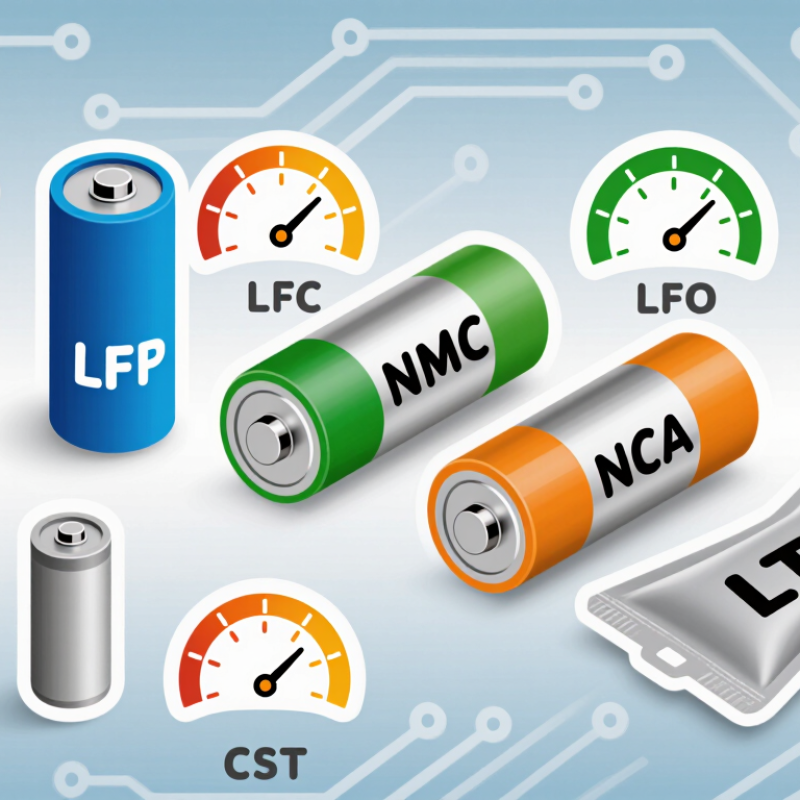
Lithium-ion batteries are classified by their cathode chemistry and physical construction. Chemistry shapes voltage, energy density, cycle life, and thermal behavior. Lithium iron phosphate (LFP) is often chosen for long service life and thermal stability, though it usually stores less energy per kilogram than some alternatives. Nickel manganese cobalt (NMC) can provide a useful balance of energy and power. Its performance depends on cell design and careful temperature control. Lithium cobalt oxide (LCO) is common in compact electronics, while lithium titanate (LTO) supports fast charging and many cycles but has lower energy density. Chemistry matters.
Design describes the cell’s shape and how cells are assembled. Cylindrical cells use rigid metal cans; prismatic cells have rectangular cases; pouch cells use flexible laminate. Shape matters too. It affects how a battery fits into a device, vehicle, or storage cabinet, but does not identify its chemistry. Cells can be connected into modules and packs, where a battery management system monitors voltage and temperature. A buyer comparing specifications should check usable capacity, cycle-life test conditions, operating temperature, and warranty terms. Labels can make two batteries look similar, yet test methods and real-world performance may differ. I would not choose by chemistry name alone; the application and verified test data matter.
2026 Top Lithium Battery Types for Global Buyers
How lithium-ion batteries are classified by chemistry and design
The chart compares typical nominal voltage per cell; actual values can vary by formulation and product specification. LFP is lithium iron phosphate, LCO is lithium cobalt oxide, NMC is lithium nickel manganese cobalt oxide, NCA is lithium nickel cobalt aluminum oxide, and LTO is lithium titanate. Cylindrical, prismatic, and pouch describe cell formats—not chemistries—and each format can be made with different chemistries.
Major Lithium Battery Types Available to Global Buyers in 2026
Global buyers in 2026 will find several lithium-ion chemistries, each suited to different priorities. Lithium iron phosphate (LFP) is widely chosen for its long cycle life and strong thermal stability. Its energy density is generally lower than that of some nickel-rich alternatives, so packs may need more space. For stationary storage or vehicles with room for larger packs, that compromise can make sense.
Nickel manganese cobalt (NMC) cells offer higher energy density, useful when weight and range matter. Their performance depends on cell design and careful thermal management.
Lithium cobalt oxide (LCO) remains common in compact electronics, where small size is important, but it is less suited to applications demanding long service life under heavy cycling.
Lithium titanate (LTO) can support rapid charging and many cycles, though its lower energy density and higher cost may limit its appeal. Trade-offs remain.
Nickel cobalt aluminium (NCA) is another high-energy option, but buyers should assess the complete battery system rather than chemistry alone. Compare usable capacity, operating temperature, cycle-life test conditions, safety documentation, and warranty terms. Ask suppliers how performance changes in cold weather or under frequent fast charging. Then check sample data against real operating needs. No chemistry wins everywhere. A specification sheet may look convincing; real-world validation still matters.
How Battery Chemistries Compare in Safety, Cost, and Performance
Lithium battery choice is a trade-off, not a simple ranking. LFP cells generally offer strong thermal stability and long cycle life, but store less energy by weight than NMC cells. NMC can suit weight-sensitive vehicles, though its nickel and cobalt content can increase cost exposure. The IEA’s Global EV Outlook 2024 reports that LFP reached nearly 40% of the global electric-car battery market in 2023, up from under 10% in 2020. That shift reflects cost and supply choices, not a universal safety verdict.
Price moves quickly. BloombergNEF’s 2024 Battery Price Survey put the average lithium-ion pack at US$115 per kilowatt-hour, down 20% from 2023. That is a market average, not a guaranteed quote for a buyer’s order. LTO cells can deliver long service life and fast charging, but lower energy density and higher upfront cost may limit their fit. Real performance also depends on temperature, charging habits, pack design, and battery controls. A neat spreadsheet can still mislead.
Tips: Match chemistry to the duty cycle. For a stationary cabinet, compare usable capacity, warranty, and thermal controls. For a vehicle, check weight and range. Ask suppliers for test conditions and cycle-life data; figures from different methods are not directly comparable. Even a small detail—like frequent charging in high heat—can change the practical result.
Common Applications for Each Lithium Battery Type
Lithium iron phosphate (LFP) batteries are common in stationary energy storage, electric buses, and some passenger vehicles. Their chemistry can suit systems that value long cycle life and thermal stability over compact size. A battery cabinet in a home, for example, may have room for a heavier pack. Not every installation does. Confirm operating temperature and charging limits in the product specifications.
Nickel manganese cobalt (NMC) batteries are used in electric cars, power tools, and portable equipment where a balance of energy and output matters. Nickel cobalt aluminum (NCA) cells also serve some electric vehicles, where high energy density can help extend driving range. These labels do not guarantee identical performance; cell design and pack controls matter. Lithium cobalt oxide (LCO) is familiar in phones, cameras, and laptops, where small size is useful. Lithium manganese oxide (LMO) has been used in power tools and medical equipment, sometimes blended with other chemistries.
Lithium titanate (LTO) is suited to applications needing frequent charging and high power, such as certain buses or industrial systems. Its lower energy density may make it less practical where space is tight. There is no universal winner. Buyers should compare the actual duty cycle, usable capacity, temperature range, and certified safety data—not chemistry names alone. A missed detail can be costly.
Key Factors for Selecting and Sourcing Lithium Batteries Worldwide
Selecting lithium batteries for global sourcing starts with the job they must do. Lithium iron phosphate suits many applications where long cycle life and thermal stability matter. Nickel-rich lithium-ion chemistries can offer higher energy density, but may need tighter temperature and charging controls. Chemistry matters. Compare usable capacity, voltage range, discharge rate, operating temperature, and expected cycle life against the actual equipment—not just the product sheet.
Sourcing details can change the real cost. Ask for current test reports, traceable production records, clear warranty terms, and documentation suited to the destination market. Confirm cell format, pack dimensions, connector type, and battery-management functions before approving a sample. Small details count. A few millimeters can affect installation, while an unclear shipping specification can delay a delivery. Check packaging, transport arrangements, and after-sales support with the supplier early.
Price comparisons are useful, but not complete. A low-cost pack may require more frequent replacement or extra integration work. A premium specification may be unnecessary for a lightly used device. There is no universal winner, and comparison tables can hide differences in test conditions. Review samples under realistic loads, record temperatures during operation, and check performance after repeated charging. Leave room for uncertainty: field use rarely matches laboratory conditions exactly.

 +86-13928815851
 CONTACT NUMBER
 CONTACT NUMBER