What is a 2s Lipo Battery and How Does it Work?
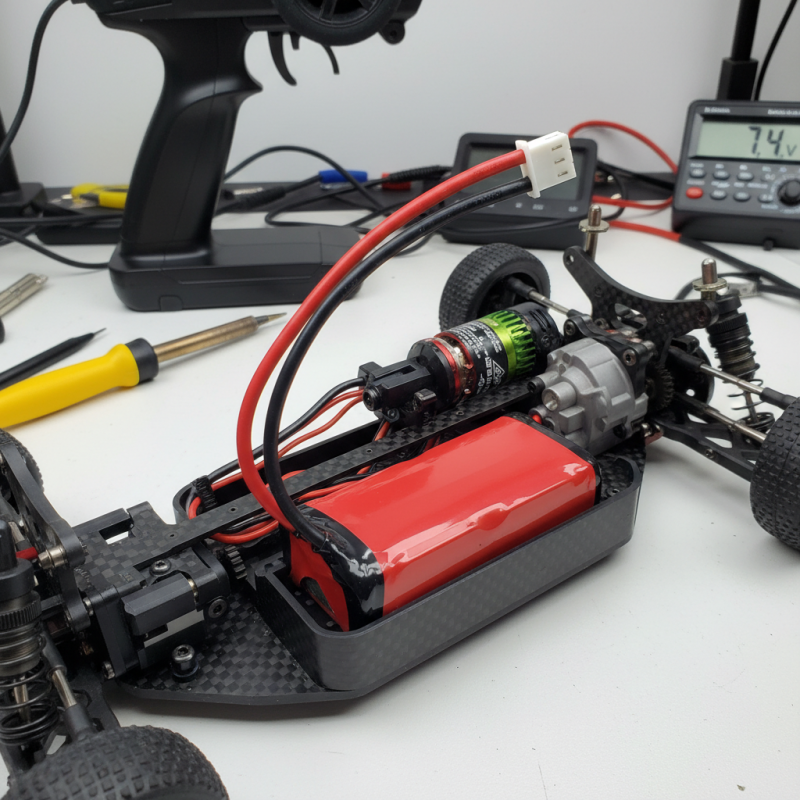
The "2s Lipo Battery" offers a unique solution for various applications, especially in remote-controlled vehicles. It comprises two lithium polymer cells connected in series. This configuration provides a nominal voltage of 7.4 volts, making it suitable for diverse power needs.
Understanding how a 2s Lipo Battery works involves looking at its chemistry and electrical principles. When charged, it stores energy efficiently. Users often appreciate its lightweight design, which enhances performance. However, improper handling can lead to issues. It’s crucial to monitor the battery’s condition regularly to prevent damage.
In practice, many enthusiasts experience challenges with battery longevity and charging. Not everyone knows how to maintain these batteries well. While they offer impressive power, they also require careful management. The balance between performance and safety should always be considered when using a 2s Lipo Battery.
What Defines a 2s Lipo Battery in the RC Industry?
A 2s LiPo battery consists of two lithium polymer cells connected in series. This configuration increases the voltage while keeping the capacity from each cell. In the RC industry, a common setup is 7.4V for a 2s battery, making it popular for various applications. This includes drones, RC cars, and boats, where lightweight and increased performance are essential.
What truly defines a 2s LiPo battery is its discharge rate. This specification tells users how quickly it can deliver power. Higher C ratings suggest more powerful bursts for demanding applications. However, potential buyers must consider the trade-offs. Higher rates often lead to shorter lifespans. Additionally, balancing cell voltage is crucial to avoid damaging the battery over time. Without care, even a well-constructed battery can fail.
Understanding the features of a 2s LiPo battery can help users make informed choices. Voltage, capacity, and discharge rate must align with specific project needs. Performance may vary in practice. Even enthusiasts might experience challenges with temperature or compatibility issues. Emphasizing proper handling and care is vital to enjoying the benefits these batteries offer.
Battery Capacity Comparison for 2S Lipo Batteries
This chart represents the comparison of capacities for various 2S Lipo batteries commonly used in the RC industry. The capacity is measured in milliamp hours (mAh), reflecting how much charge a battery can hold.
Understanding the Series Configuration of 2s Lipo Batteries
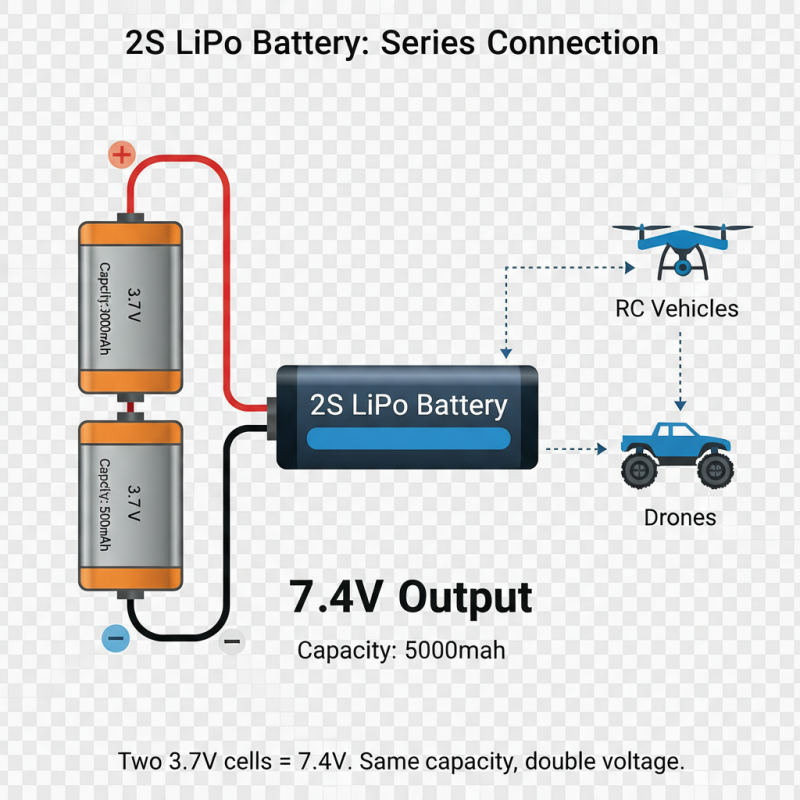
A 2s LiPo battery consists of two lithium polymer cells connected in series. This series connection doubles the voltage output while maintaining the same capacity of a single cell. For example, two 3.7V cells combine to provide a total of 7.4V. This configuration is widely used in various applications, particularly in remote-controlled vehicles and drones.
Understanding the series setup of a 2s LiPo battery is crucial for effective usage. Each cell in the pack must be balanced to ensure optimal performance. An unbalanced cell can lead to degradation or failure. Users should regularly check voltage levels for both cells. It can be daunting at first. In many cases, users overlook this step, leading to inefficiencies.
Series connections also have specific charging requirements. A balanced charger is necessary. Charging both cells simultaneously prevents one from overcharging or undercharging. This is where many beginners struggle. They often use standard chargers that do not support balancing, risking damage to the battery. Careful attention is vital for safety and long-term use.
Key Specifications: Voltage, Capacity, and Discharge Rates Explained
A 2s LiPo battery consists of two lithium polymer cells connected in series. Understanding its key specifications is essential for optimal performance. The voltage of a 2s configuration is typically 7.4 volts when fully charged. Each cell contributes approximately 3.7 volts. However, keep in mind that the voltage will drop as the battery discharges.
Capacity is vital as it determines how much energy the battery can store. This is usually measured in milliamp-hours (mAh). A higher capacity means longer run times but can also increase weight. Ensure that the capacity matches your device needs. For instance, a high-performance drone may require a high-capacity battery for extended flight times.
Discharge rates indicate how quickly the battery can release energy. This is often expressed as a "C" rating. A 30C rating means the battery can discharge at 30 times its capacity. If you have a 2000mAh 2s LiPo, it can theoretically deliver 60 amps. But, overdischarging can lead to reduced lifespan, so manage your usage carefully. Balancing these specifications is crucial for effective functionality.
Applications of 2s Lipo Batteries in Drones and Remote Control Vehicles
2s LiPo batteries are gaining popularity in various applications, particularly in drones and remote control vehicles. These batteries consist of two lithium polymer cells connected in series, providing a nominal voltage of 7.4V. This makes them suitable for many multipurpose devices, delivering power efficiently.
In drones, 2s LiPo batteries offer a good balance between weight and performance. They help achieve longer flight times without adding excessive weight. However, users must monitor battery health closely. Over-discharging can lead to reduced lifespan and performance issues.
For remote control vehicles, these batteries provide quick bursts of power. They allow for high-speed action and improved maneuverability. Yet, some users might struggle with charging. Not all chargers are compatible with 2s LiPo packs. Understanding the specs is crucial for optimal use. Balancing power and safety remains a constant challenge for many enthusiasts.
Safety Considerations and Best Practices for Using 2s Lipo Batteries
When using a 2s Lipo battery, safety should be your top priority. These batteries can be volatile if not handled correctly. Always inspect the battery for any damage before use. Unusual bulges, dents, or leaks indicate a potential hazard. Store them at a stable temperature, away from flammable materials. An ideal range is between 20°C to 25°C.
Proper charging techniques are crucial. Use a charger designed for Lipo batteries. Never exceed the recommended charging voltage. Overcharging can lead to fires or explosions. Additionally, consider using a fireproof bag during storage or charging. It’s a simple precaution that can save you from serious danger.
Understanding battery management systems can help prevent issues. These systems monitor voltage, current, and temperature. While they enhance safety, they are not foolproof. Regularly monitor your battery during use. If you notice any strange behaviors, disconnect it immediately. Lipo batteries require respect. They can be powerful, but reckless handling can lead to severe consequences. Always be vigilant.

 +86-13928815851
 CONTACT NUMBER
 CONTACT NUMBER