What is a 3s Lipo Battery and How Does It Work for Your RC Needs
The 3s Lipo Battery has emerged as a crucial component for various remote control (RC) applications, providing unmatched power and efficiency. This lithium polymer battery configuration, characterized by three series cells, delivers a nominal voltage of 11.1 volts, allowing for a significant improvement in performance compared to its 2s counterparts. According to a recent industry report by the Battery Innovation Association, the demand for high-performance batteries, particularly in the hobbyist and competitive RC sectors, is projected to grow by 15% annually in the coming years. This surge is attributed to advancements in battery technology that enhance energy density, charge time, and discharge rates, making the 3s Lipo Battery an ideal choice for enthusiasts seeking greater speed and maneuverability in their RC vehicles.
Moreover, the 3s Lipo Battery's reputation for lower weight and compact design has made it increasingly favored among professionals and hobbyists alike. A study by the International Journal of Electronics Engineering highlights that optimizing battery performance can lead to substantial gains in flight time for drones and improved handling for RC cars. As such, understanding how a 3s Lipo Battery works is essential for anyone involved in the RC community, as it underpins the very performance capabilities that drivers and pilots desire. This article will delve deeper into the mechanics, benefits, and applications of the 3s Lipo Battery, shedding light on why it has become an indispensable tool for RC enthusiasts.

What is a 3s Lipo Battery: Definition and Basics
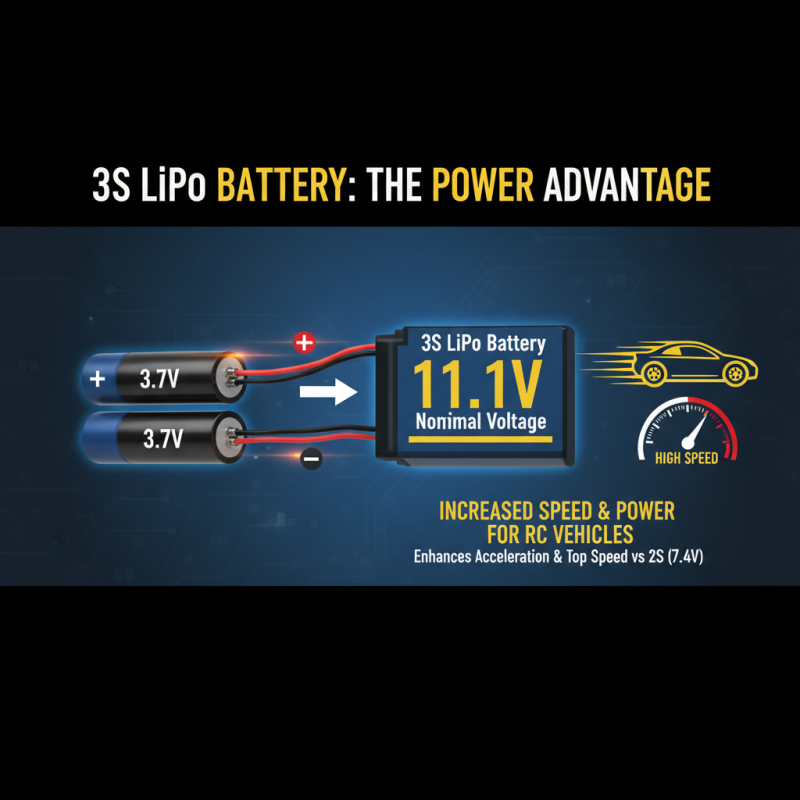
A 3s LiPo battery, also known as a lithium polymer battery, consists of three cells connected in series. This configuration provides a nominal voltage of 11.1V (3.7V per cell) and offers a robust energy output, making it an ideal choice for remote control (RC) applications. The "3s" designation indicates the battery's series structure, with "s" representing series connection, allowing for increased voltage while maintaining the compact size and lightweight characteristics that are crucial in RC vehicles, drones, and other hobbyist applications.
One of the fundamental features of 3s LiPo batteries is their high discharge rates, which can support the intense energy demands of high-performance RC devices. These batteries are built using lightweight materials, facilitating longer flight times or extended run durations compared to traditional battery types. Additionally, the polymer composition enhances flexibility in design, allowing for various shapes and sizes to fit different RC models.
Tips: When using 3s LiPo batteries, ensure you regularly monitor their voltage levels to prevent over-discharging, which can lead to reduced battery lifespan. Furthermore, always use a compatible charger specifically designed for LiPo batteries to ensure safe and efficient charging. Lastly, consider investing in a LiPo safe bag for storage and transport to minimize risks associated with battery mishandling.
Key Components of a 3s Lipo Battery Explained
A 3s Lipo battery consists of three individual lithium polymer cells connected in series. This configuration significantly increases the voltage output compared to single-cell batteries. Each cell in a 3s Lipo battery typically has a nominal voltage of 3.7 volts, resulting in a combined nominal voltage of about 11.1 volts. The series arrangement not only enhances the power delivery but also allows for efficient energy storage, making it a popular choice for various remote-controlled (RC) applications, including cars, drones, and airplanes.
Key components of a 3s Lipo battery include the individual cells, a protective circuit board, and the balance connector. The individual cells are the heart of the battery, responsible for energy storage. The protective circuit board plays a crucial role in ensuring safe operation by preventing overcharging and over-discharging, which can damage the cells. Additionally, the balance connector is essential for maintaining equal voltage across all cells during the charging and discharging process. This balance is critical to optimize performance and extend the lifespan of the battery, ultimately providing RC enthusiasts with reliable power for their devices.
What is a 3s Lipo Battery and How Does It Work for Your RC Needs - Key Components of a 3s Lipo Battery Explained
| Component |
Description |
Function |
| Cell Configuration |
3 cells in series (3s) |
Provides higher voltage output |
| Nominal Voltage |
11.1V (3 cells x 3.7V) |
Standard voltage for most RC applications |
| Capacity |
Measured in mAh (milliampere-hour) |
Indicates how long the battery can supply a current |
| C-Rating |
Represents discharge rate capability |
Determines how much current can be drawn |
| Weight |
Lightweight construction |
Crucial for performance and manageability of RC vehicles |
| Connector Types |
Various types like XT60, Deans, EC3 |
Ensures compatibility with different RC systems |
How 3s Configuration Affects Voltage and Performance
The 3s configuration in a LiPo battery refers to its series arrangement of three cells, resulting in a nominal voltage of 11.1 volts. This configuration significantly impacts both the voltage output and the overall performance of RC vehicles. As each LiPo cell typically has a nominal voltage of 3.7 volts, when three cells are configured in series, they collectively offer a higher voltage, which translates into increased speed and power for the RC models. A study highlighted that utilizing a 3s LiPo battery can enhance the performance of electric RC cars, allowing them to accelerate more quickly and reach higher top speeds compared to their 2s counterparts, which deliver only 7.4 volts.
Furthermore, the performance of a 3s LiPo battery is reflected in its capacity to deliver higher discharge rates, essential for demanding applications such as racing or aerobatic drones. Industry reports indicate that a 3s configuration can support continuous discharge rates of around 30-50C, meaning it can safely deliver 30 to 50 times its capacity in amperes without overheating. This capability is crucial for maintaining optimal thrust and control during intense maneuvers. The increased voltage and discharge potential of a 3s battery not only enhance immediate performance but also contribute to better responsiveness, making it a favored choice among serious hobbyists and competitive racers.
Applications of 3s Lipo Batteries in RC Vehicles
3s LiPo batteries, which consist of three lithium polymer cells in series, are becoming increasingly popular in the RC (remote-controlled) vehicle community due to their high energy density and efficient performance. With a nominal voltage of 11.1V, these batteries provide a balance between power and weight, making them ideal for various RC applications. According to a report by the International Journal of Energy, LiPo batteries have the potential to offer up to 250 Wh/kg of energy density, which significantly improves flight times and performance in RC aircraft, drones, and cars.
In the realm of RC vehicles, 3s LiPo batteries are particularly favored for their ability to deliver high discharge rates, crucial for applications that require rapid acceleration and high speeds. For instance, electric RC cars and trucks can achieve noticeable increases in speed and torque when powered by these batteries, leading to enhanced overall performance. A study by the American Society of Mechanical Engineers illustrates that utilizing 3s LiPo batteries can result in an increase of up to 30% in run time and speed compared to traditional battery options, thus allowing hobbyists to enjoy longer and more exhilarating runs without constant recharging.
Furthermore, the lightweight nature of LiPo batteries contributes to improved handling and maneuverability in RC models. This advantage is essential for competitive racing and aerial maneuvers where every gram counts. As the RC industry continues to evolve, the adoption of 3s LiPo batteries is expected to rise, offering enthusiasts cutting-edge technology that meets their performance demands while keeping their vehicles lightweight and efficient.
3s Lipo Battery Performance in Various RC Applications
Tips for Maintaining and Charging 3s Lipo Batteries
When it comes to remote control (RC) hobbies, 3s LiPo batteries are a popular choice among enthusiasts for their impressive power-to-weight ratio and performance capabilities. These batteries, which consist of three lithium polymer cells in series, typically provide a nominal voltage of 11.1 volts. This voltage is ideal for applications that require high output power and extended run times. According to industry reports, many RC models, including drones and cars, benefit from the consistent discharge rates provided by 3s LiPo batteries, making them a go-to for hobbyists seeking optimal performance.
Maintaining and charging 3s LiPo batteries effectively is critical to ensuring longevity and safety. One essential tip is to always use a compatible charger designed specifically for lithium polymer batteries. Charging at the recommended C-rate, which is 1C for most batteries, ensures that the cells maintain their health and performance. Additionally, it’s crucial to monitor the voltage of each cell during charging; cells should not exceed 4.2 volts when fully charged. Regularly checking the internal resistance can also provide insight into the overall health of the battery. A higher internal resistance indicates that the battery may be aging and may not perform at its best.
Another key aspect of battery maintenance is storage. If you’re not planning to use the batteries for an extended period, storing them at around 3.8 volts per cell can help preserve their life. Additionally, keeping the batteries in a cool, dry place away from direct sunlight can prevent damage. By following these tips, you’ll maximize your 3s LiPo battery’s performance while ensuring safe operation for your RC needs.

 +86-13928815851
 CONTACT NUMBER
 CONTACT NUMBER