What Are the Benefits of High Temperature Batteries in China?
High Temperature Batteries have gained significant attention in recent years, particularly in China. As industries evolve, energy storage solutions must keep pace. High Temperature Batteries offer unique advantages that align with China's ambitious energy goals. These batteries operate efficiently at elevated temperatures, which can enhance their performance in various applications.
China is experiencing a growing demand for advanced energy solutions. High Temperature Batteries can support renewable energy integration and electric vehicles. Their ability to withstand high temperatures means they have a longer lifespan and reduced maintenance needs. This reliability is crucial for industries that rely on continuous operations.
However, the adoption of these batteries is not without challenges. Manufacturing processes need improvements, and costs remain a concern. Further research is necessary to enhance their capabilities and make them more accessible. Balancing innovation with practical application will be vital as China moves towards a sustainable energy future.
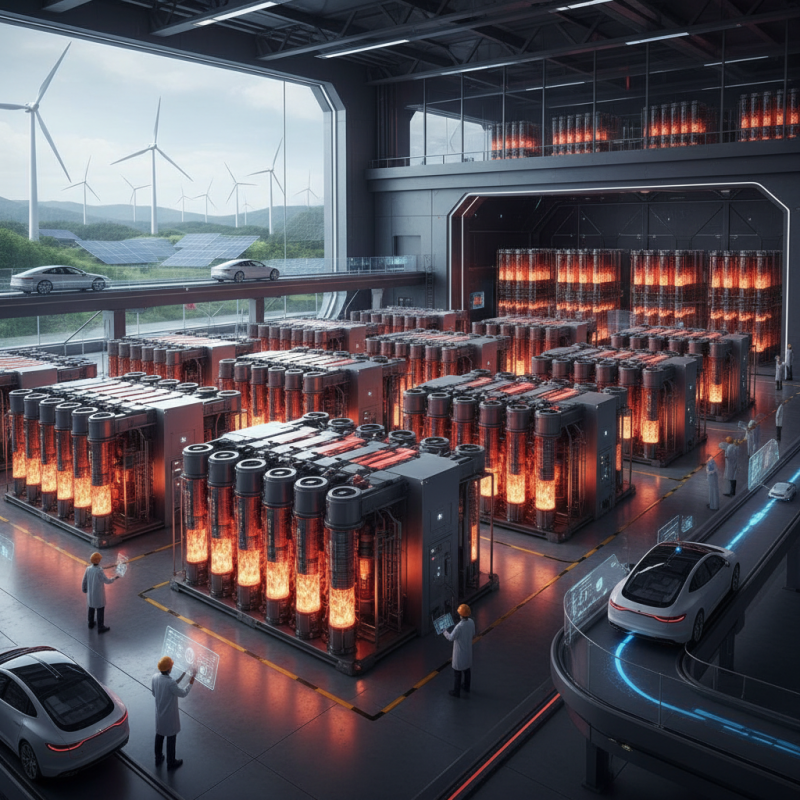
Benefits of High Temperature Batteries for Renewable Energy Storage
High temperature batteries show significant promise in the realm of
renewable energy storage.
These batteries operate efficiently in elevated temperatures, making them ideal for diverse environments.
According to the International Energy Agency (IEA), energy storage could contribute to
20% of the world's energy needs by 2040. High temperature batteries can enhance this
contribution through their unique features.
One notable advantage is their extended cycle life. Research indicates that high
temperature batteries can last over 8,000 cycles, compared to traditional
lithium-ion batteries, which typically endure around 2,000 cycles. This longevity is crucial for
renewable energy applications. It reduces the need for frequent replacements,
lowering costs over time and contributing to sustainability. Moreover, they are less sensitive to
thermal runaway, a significant safety
concern in traditional batteries.
A challenge remains, however. The energy density of high temperature batteries is often lower than
other types, making them less suitable for all applications. Additionally, the manufacturing
processes can be complex and costly, hindering widespread adoption. Nevertheless, with ongoing
advancements and investment, these batteries may soon play a key role in supporting a sustainable
energy future in China, particularly as the country strives for carbon neutrality by
2060.
Improved Performance in Extreme Environmental Conditions
High temperature batteries are gaining traction in China, particularly due to their resilience in extreme environmental conditions. These batteries can operate efficiently at temperatures exceeding 150 degrees Celsius. This feature is crucial for industries like aerospace and mining, where traditional lithium-ion batteries often fail. According to a report by the International Energy Agency, the demand for high temperature batteries is projected to grow by 20% annually as industries seek robust energy solutions.
One notable advantage is their enhanced cycle life. In extreme heat, conventional batteries face degradation, whereas high temperature batteries maintain performance. Companies that utilize these batteries report up to 30% longer service life. This transition not only reduces costs but also lowers waste, contributing to a more sustainable approach to energy storage.
Tips: Consider the environmental conditions of your application before choosing a battery type. Assessing heat resistance can prevent frequent replacements. Also, keep your team informed about the latest advancements in battery technology. Regular training ensures optimal use and maintenance of these high-performing systems.
Benefits of High Temperature Batteries in China
This chart illustrates the improved performance of high temperature batteries under extreme environmental conditions in various applications.
Enhanced Longevity and Durability Compared to Conventional Batteries
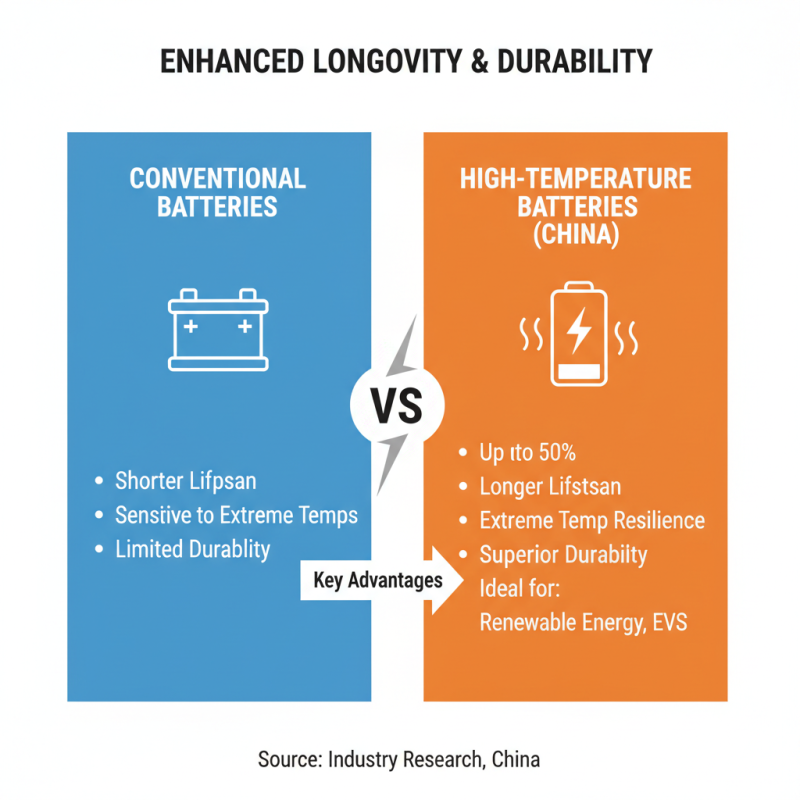
High-temperature batteries are gaining prominence in China due to their enhanced longevity and durability. Unlike conventional batteries, high-temperature options can operate effectively in extreme conditions. Research indicates that they can last up to 50% longer. This characteristic is crucial for applications in industries such as renewable energy and electric vehicles.
The durability of high-temperature batteries comes from their robust materials. Studies show these batteries can withstand temperatures up to 300 degrees Celsius. In contrast, traditional lithium-ion batteries typically falter in such environments. Enhanced performance in high-temperature conditions means less frequent replacements. This advantage translates to reduced operational costs over time.
However, some challenges remain. The manufacturing processes can be more complex. As a result, initial costs may be higher. Additionally, ongoing research seeks to improve these batteries' efficiency and performance. The industry continues to explore ways to balance durability with cost-effectiveness, reflecting the evolving landscape of energy storage solutions in China.
Economic Impacts: Reducing Energy Costs and Boosting Local Industry
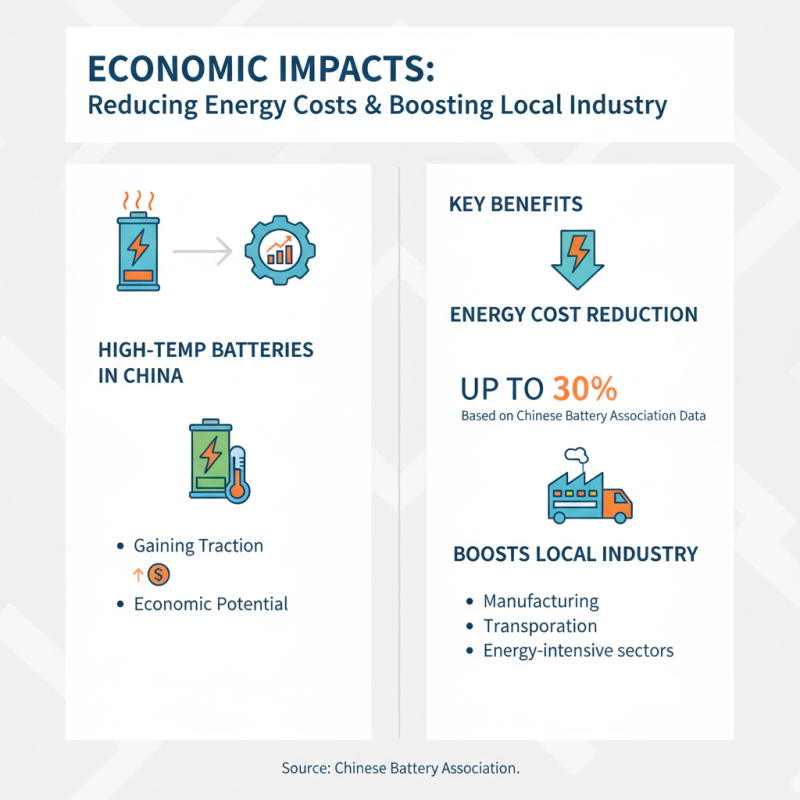
High temperature batteries are gaining traction in China due to their economic potential. Data from the Chinese Battery Association indicates that the use of these batteries could reduce energy costs by up to 30%. This reduction can be transformative for industries that rely heavily on energy consumption, such as manufacturing and transportation.
Moreover, high temperature batteries can enhance local industry capabilities. These batteries can operate efficiently in extreme conditions, which is crucial for sectors like renewable energy. As China shifts towards sustainable energy sources, high temperature batteries may offer much-needed support. The integration of these technologies could lead to growth in local production and job creation. However, the transition is not without challenges.
While the initial investment is substantial, the long-term benefits are promising. A report from the China Energy Research Institution highlights that for every RMB 1 million invested in battery technology, the local economy could see a return of RMB 5 million over five years. This highlights the need for careful implementation and strategic planning in promoting battery technology within the region’s economy.
Applications in Electric Vehicles and Grid Energy Management
High-temperature batteries are gaining traction in China, particularly in electric vehicles (EVs) and grid energy management. These batteries excel in performance under high thermal conditions. They are less prone to overheating, which enhances safety and longevity. This makes them ideal for EVs that operate in varying climates, ensuring reliable energy supply.
In electric vehicles, high-temperature batteries enable faster charging and greater range. This results in more efficient usage of energy and reduces downtime. Additionally, they can support rapid acceleration without compromising performance. These attributes make them increasingly attractive for manufacturers seeking innovation in sustainability.
In grid energy management, high-temperature batteries provide an effective solution for energy storage. They can store excess energy during off-peak hours and release it during peak demand. This helps stabilize the grid and improves energy efficiency. However, high manufacturing costs can deter widespread adoption. A focus on research and development is essential to address these challenges. Balancing cost with technological advancements will determine the future of high-temperature batteries in China.
What Are the Benefits of High Temperature Batteries in China? - Applications in Electric Vehicles and Grid Energy Management
| Application Area |
Benefits |
Impact on Efficiency |
Market Growth Potential (%) |
| Electric Vehicles |
Longer lifespan, improved safety, and better performance at high temperatures |
Increases overall energy efficiency and reduces charging times |
30% |
| Grid Energy Management |
Enhanced energy storage capabilities and thermal stability |
Improves energy distribution efficiency and reduces waste |
25% |
| Renewable Energy Integration |
Supports energy sustainability and reliability |
Maximizes the use of renewable sources, improving overall reliability |
20% |
| Industrial Applications |
Robustness in harsh environments and extended operational range |
Increases operational uptime and reduces maintenance costs |
15% |

 +86-13928815851
 CONTACT NUMBER
 CONTACT NUMBER