Best 2s Lipo Battery for Optimal Performance and Longevity?
In the world of remote control hobbies, the 2s Lipo Battery has gained significant attention. Known for its light weight and high energy density, it plays a crucial role in maximizing performance. According to the latest report by Battery University, a high-quality 2s Lipo Battery can improve flight times and overall efficiency by as much as 30%. This data underlines the importance of choosing the right battery for optimal longevity.
Expert Michael Tran, a renowned figure in battery technology, emphasizes, "The right 2s Lipo Battery can make or break your setup." His insights shed light on the nuances of battery selection, underscoring the impact of quality on user experience. Choosing a reliable brand is essential to avoid common pitfalls like battery swelling and reduced cycle life.
While many hobbyists may overlook these details, the consequences are significant. A poorly chosen 2s Lipo Battery can lead to poor performance and short battery life. Thus, understanding the specifications and chemistry of these batteries is essential for enthusiasts aiming for peak performance and durability in their devices.
Understanding 2s Lipo Batteries: Key Features and Specifications
When choosing a 2s Lipo battery, it's crucial to understand its key features and specifications. A 2s configuration means there are two cells in series, providing a nominal voltage of 7.4 volts. This setup is popular in various applications, such as drones and RC vehicles. The capacity, measured in milliamp-hours (mAh), determines how long the battery will run. Higher capacity means more flight time, but it also adds weight. Finding a balance can be tricky.
Another important specification is the discharge rate, denoted by "C." This factor influences how quickly the battery can release energy. A higher discharge rate allows for burst power when needed, which is vital in competitive racing. However, selecting a battery with too high a C rating can lead to inefficiencies. It’s essential to match the battery’s capabilities to the requirements of your device for optimal performance.
The cycle life of a 2s Lipo battery is also significant. Cycle life refers to how many charge and discharge cycles a battery can endure before it degrades. Maintaining a battery can be complex. Improper charging practices can lead to damage. Regularly checking the balance of cells is crucial, as imbalances can affect performance and longevity. Keeping these details in mind creates a more reliable battery experience.
Optimal Performance of 2s Lipo Batteries
Factors Influencing Performance in 2s Lipo Batteries
When selecting the best 2s LiPo battery, several factors significantly influence performance. One crucial aspect is the battery's discharge rate, often denoted as the "C" rating.
A higher C rating allows for greater current output, crucial for applications requiring immediate power.
Data shows that batteries with a 30C rating can sustain higher demand than those rated at 15C.
Users must weigh the advantages of higher discharge rates against potential drawbacks, such as reduced battery lifespan when consistently pushed to their limits.
Temperature is another critical factor impacting battery performance and longevity.
Operating at extreme temperatures can decrease efficiency and damage the internal chemistry.
Studies indicate that LiPo batteries perform best between 20°C and 25°C.
Poor thermal management can lead to swelling or even failure over time.
This serves as a reminder that proper care and monitoring are essential to maximize the lifespan.
Additionally, the charging method influences how well a 2s LiPo battery performs.
Fast charging offers convenience but risks overcharging and overheating.
Reports reveal that slower charge rates extend battery longevity but may require more planning for users.
Balancing speed and safety is vital. Users often overlook these details, which can lead to suboptimal performance and shortened battery life.
Top Brands for 2s Lipo Batteries and Their Performance Ratings
When considering optimal performance in 2s LiPo batteries, several key brands emerge as industry leaders. These brands consistently receive high ratings based on performance metrics like discharge rate, cycle life, and overall reliability. Market data indicates that batteries with a higher discharge rating often provide better power management and efficiency during intense usage scenarios.
In 2023, a comparative study revealed that many commonly used 2s LiPo batteries showcased an average cycle life of approximately 300 to 500 cycles. However, variations exist, with some brands offering up to 600 cycles under ideal conditions. A battery’s longevity can falter if it sustains frequent high-drain applications. Users often overlook the impact of temperature and charging habits on battery health. Incorrect charging practices can lead to reduced performance over time.
User reviews highlight that performance discrepancies can arise even within top-rated brands. Some users report shortened battery life due to insufficient maintenance. Regularly inspecting a battery's health, along with proper storage, impacts performance considerably.
Performance ratings should not be the sole factor in choosing a battery. Considering user experiences can provide deeper insights into longevity and optimal use.
Maintenance Tips for Ensuring Longevity of 2s Lipo Batteries
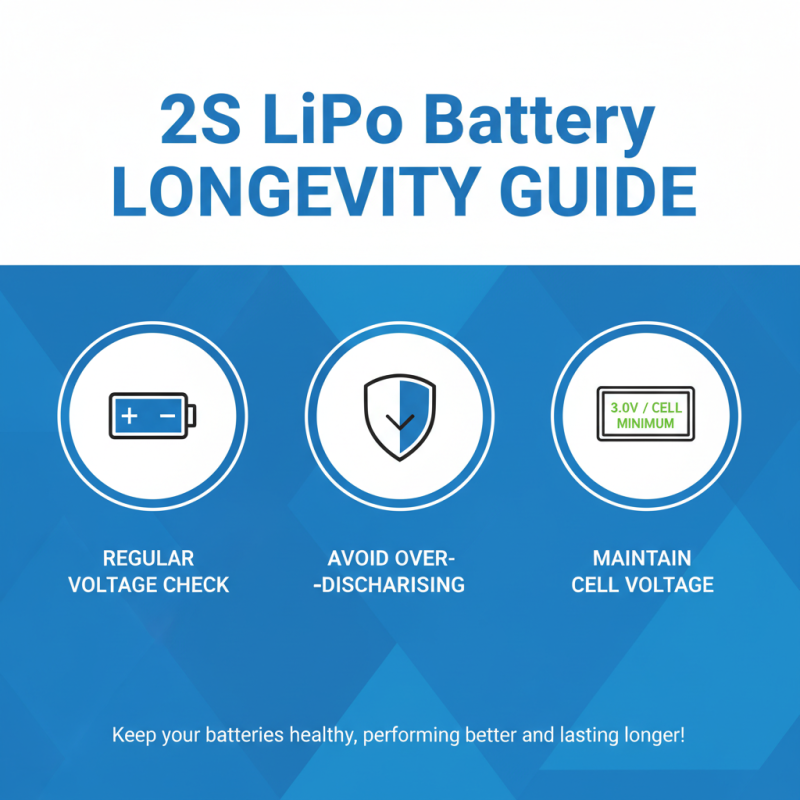
Proper maintenance is crucial for ensuring the longevity of 2s LiPo batteries. These batteries can provide excellent performance if looked after correctly. One essential step is to regularly check the voltage. Over-discharging can damage the cells. Aim to keep each cell above a minimum voltage to maintain health and performance.
Temperature management plays a significant role in battery lifespan. Charging in extreme heat or cold can lead to decreased capacity. Store your batteries at room temperature. It might seem simple, but this small action can significantly enhance their longevity. Additionally, unnecessary stress during usage, like rapid acceleration or hard braking in RC vehicles, should be avoided.
There’s always room for improvement. Sometimes, users may forget to balance charge their batteries. This oversight can lead to uneven wear over time. Utilize a balance charger regularly. It helps to maintain optimal voltage levels across cells. Keeping a maintenance log can also be beneficial. Noting the charging cycles and voltage levels can reveal patterns that might need addressing.
Comparative Analysis of 2s Lipo Battery Models and Their Usability
When evaluating various 2s Lipo battery models, usability and performance remain key factors. The ideal 2s battery typically features a voltage range of 7.4V and a capacity between 1000mAh to 5000mAh. Battery capacity directly impacts run time, making it crucial in choosing the right model. A recent industry report indicated that batteries rated at 2200mAh tend to deliver an optimum balance between weight and run time for most hobbyist applications.
Different chemistries and constructions can affect performance. For instance, high C-rate batteries are favored for their ability to discharge power quickly. They support high-drain applications, like racing drones or RC cars. Analysis shows that batteries with a C-rate of 30C or higher typically provide better acceleration and responsiveness. However, these high-performance batteries can also lead to overheating if not managed properly, which raises concerns about longevity.
Moreover, environmental factors also play a role. Temperature fluctuations can degrade battery performance. Batteries stored in extreme conditions often suffer from reduced capacity and shorter life spans. Industry standards recommend operating at temperatures between 20°C to 25°C for optimal performance. Understanding these nuances helps users make informed decisions. Battery selection isn't just a technical choice; it’s also about understanding your specific needs and the conditions in which you'll be using them.
Best 2s Lipo Battery for Optimal Performance and Longevity
| Model |
Capacity (mAh) |
Discharge Rate (C) |
Weight (g) |
Cycle Life (Times) |
Price ($) |
| Model A |
2200 |
30 |
180 |
300 |
25.99 |
| Model B |
3000 |
40 |
220 |
400 |
30.99 |
| Model C |
1500 |
25 |
150 |
250 |
19.99 |
| Model D |
2600 |
35 |
200 |
350 |
28.50 |
| Model E |
4000 |
50 |
250 |
500 |
35.99 |

 +86-13928815851
 CONTACT NUMBER
 CONTACT NUMBER