10 Best 3s Lipo Battery Options for High Performance in 2026?
As the demand for high-performance devices continues to grow, selecting the right power source is crucial. A 3s Lipo battery has emerged as a popular choice for various applications, particularly in the realms of drones, RC cars, and racing boats. These batteries are known for their impressive energy density and lightweight design, which can significantly enhance performance.
However, with the vast options available, finding the best 3s Lipo battery can be overwhelming. Different brands and specifications may cater to specific needs, making it essential to carefully consider key factors. Users often overlook vital aspects like discharge rates and capacity. This can lead to less-than-optimal performance, even with the best equipment. Balancing power requirements and operational time is a common challenge.
In 2026, innovations in battery technology will likely continue to evolve. Choosing the right 3s Lipo battery isn't just about power; it's also about compatibility with your setup. This guide will explore the ten best options available, helping users make informed choices. Performance is paramount, but understanding limitations is equally vital.
Best 3s Lipo Battery Overview: Key Features and Specifications
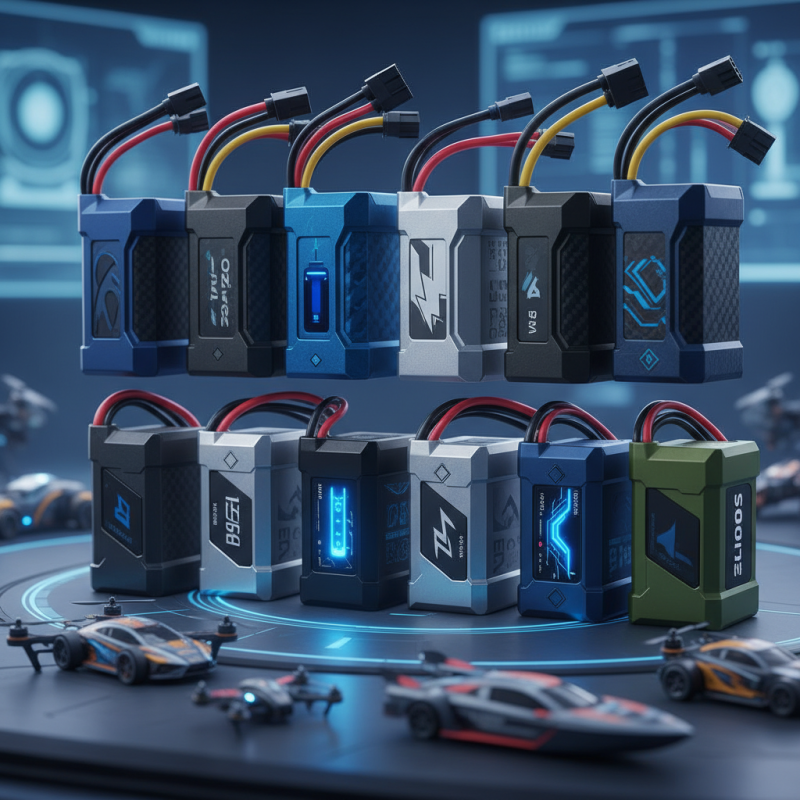
When selecting the best 3s lipo battery for high performance in 2026, several critical features stand out.
Capacity plays a vital role in determining the battery’s runtime. Batteries typically range from 1300mAh to 8000mAh. A larger capacity provides longer flight times or run times.
C-rate is another important specification. It defines how quickly the battery can discharge power. For example, a 30C battery can provide 30 times its rated capacity at peak performance. This is crucial for high-demand devices. It's essential to balance capacity and C-rate for optimal performance.
Physical dimensions are equally notable. Weight can affect your equipment’s agility and structure. Compact and lightweight designs are favored in high-performance scenarios. Users often overlook connectors and discharge plugs. Quality connections ensure efficiency and safety. Poor connections can lead to unreliable performance and charging issues. Proper research involves considering these details critically. Reflect on your specific needs before making a decision.
The Impact of C-Rating on Performance in High-Drain Applications
In high-drain applications, the C-rating of a LiPo battery is crucial. It dictates how much current a battery can safely deliver. A higher C-rating means more power at difficult moments, such as during rapid acceleration or heavy loads. This can significantly improve performance in racing drones, RC cars, and other high-performance devices.
For example, a battery rated at 30C can theoretically provide 30 times its capacity in amperes. If you have a 2000mAh battery, it can offer up to 60A. Yet, performance can vary based on temperature and age. Often, batteries may not reach their full potential due to these factors. Some users report inconsistent performance when battery conditions aren’t optimal.
Discussing C-ratings, many overlook the importance of thorough testing. Not all batteries perform as advertised. Users sometimes experience disappointing results in real-world scenarios. This disconnect highlights the need for more cautious assessments before purchasing batteries. Understanding these nuances can lead to better choices in high-performance environments.
Comparative Analysis of Battery Life: Cycle Count and Discharge Rates
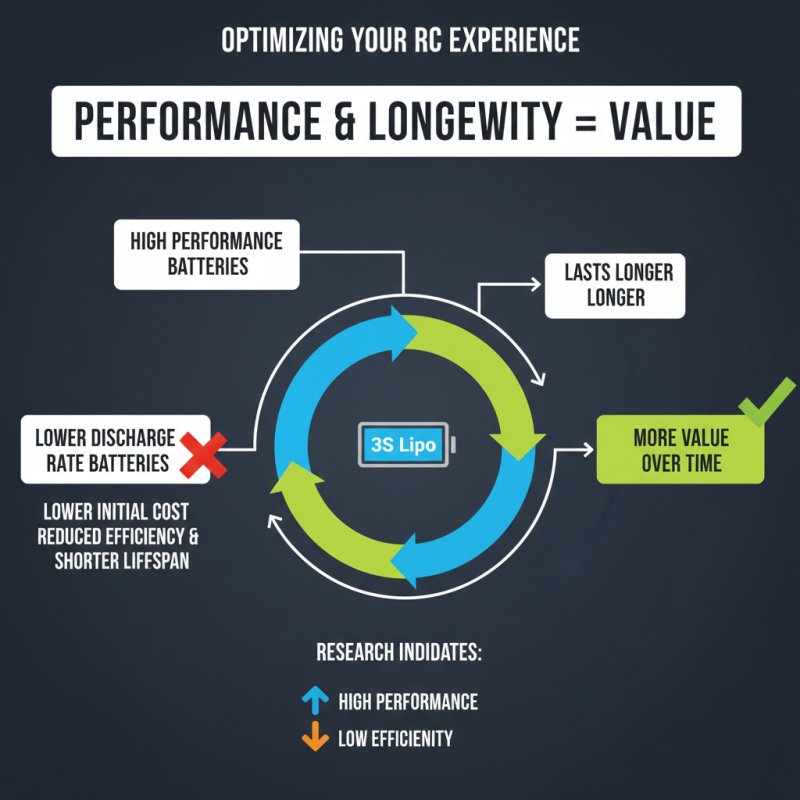
When evaluating high-performance 3s LiPo batteries in 2026, cycle count and discharge rates are crucial. Cycle count reflects battery lifespan. Higher counts mean longer usage time. Discharge rates indicate how quickly a battery releases energy. A balanced approach between these two factors is essential for optimal performance.
For enthusiasts, understanding these metrics can be daunting. Some batteries may promise high discharge rates but fail in cycle longevity. Testing is vital. Real-world scenarios often reveal that manufacturers' claims may not hold up. Observe performance over time; look for patterns in capacity drop. Not every battery will meet your needs perfectly.
It’s also essential to consider cooling and power management. Heat can affect both cycle count and discharge. Users often overlook this aspect. An efficient battery management system can mitigate risks. Frequent monitoring and adjustments may improve performance significantly. Each battery has its own character, requiring careful attention.
User Reviews and Performance Metrics: Real-World Testing Results
When searching for high-performance 3s LiPo batteries, real-world testing often proves invaluable. User reviews provide insights into battery longevity, discharge rates, and thermal performance. Many users emphasize the importance of performance metrics in their evaluations. Some batteries excel in specific applications, while others struggle to meet expectations.
One common issue highlighted in user reviews is inconsistent power delivery. Many noted that certain batteries drained more quickly than anticipated. Others reported overheating during extended use. It's essential to assess how a battery holds up under demanding conditions. Some users found that the weight-to-power ratio significantly affected their experience. Smaller batteries often offer less power but are easier to manage.
A mix of performance metrics is key. Users appreciate transparency in reported specifications, including capacity and charge cycles. However, not all brands provide this information clearly. Thus, seeking batteries with robust user feedback can lead to better choices. It's crucial to balance expectations with real-world capabilities. Performance may vary across different setups and uses. Making informed decisions based on thorough user input can enhance overall satisfaction in optimizing battery life.
Performance Comparison of Top 3s Lipo Batteries in 2026

 +86-13928815851
 CONTACT NUMBER
 CONTACT NUMBER