Leave Your Message

Who Are the Best Lipo Battery Manufacturers in China?

Choosing among China’s best Lipo Battery manufacturers takes more than comparing prices or advertised capacity. A reliable supplier should explain its cell chemistry, production controls, testing process, and after-sales support in clear terms. Details matter. Ask whether the company manufactures cells, assembles battery packs, or does both. Those roles require different capabilities, and a polished product page cannot answer every question.

Battery scientist Jeff Dahn is known for research on lithium-ion cells. A practical paraphrase of the lesson buyers can draw from that work—not a verbatim quotation—is: “Trust measured durability more than a capacity claim.” That principle makes evidence essential. Look for traceable test records, consistent sample results, clear specifications, and realistic cycle-life conditions. Check how the supplier manages temperature, protection circuitry, and quality checks across production batches. A factory visit or independent audit may reveal gaps that a brochure will not. Still, no single document proves every claim.

This guide examines manufacturers through practical criteria: technical capability, product consistency, communication, and service after delivery. It also distinguishes established production experience from claims that are difficult to verify. A neat ranking can still miss a supplier suited to a specific application. That takes careful comparison. Use the shortlist as a starting point, then confirm specifications and test evidence directly with each manufacturer.

Who Are the Best Lipo Battery Manufacturers in China?

How LiPo Batteries Are Manufactured in China

How LiPo Batteries Are Manufactured in China

LiPo production begins with tightly controlled electrode preparation. Cathode and anode powders are mixed into slurry, coated onto metal foil, dried, and pressed to a precise thickness. Workers or automated systems then stack or wind the electrodes with separators, place them in flexible pouch packaging, and add electrolyte. The pouch is sealed, then cells undergo formation cycles, aging, and capacity grading. Small defects matter. A speck of contamination or uneven coating can affect performance. The IEA’s Global EV Outlook 2024 estimates that China produces nearly 80% of the world’s battery cells; this figure covers lithium-ion cells broadly, not LiPo alone.

Quality checks continue after assembly. Manufacturers inspect pouch seals, measure voltage and internal resistance, and test sample cells under controlled charge and discharge conditions. Results should be traceable to production batches, not just shown as a single factory-wide pass rate. Still, process descriptions can sound tidier than real production: yields vary, and a certificate does not reveal every cell’s history. Buyers should ask for test methods, sample results, and consistency data.

Tips: Request the cell’s capacity tolerance, cycle-test conditions, and temperature limits. Compare results from several production batches. A clear datasheet helps, but real test records are better.
Criteria for Evaluating Chinese LiPo Battery Manufacturers

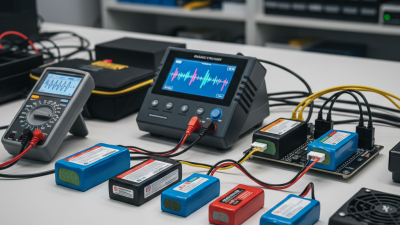
Choosing a Chinese LiPo battery manufacturer takes more than comparing prices or capacity figures. Begin with clear technical documentation: cell chemistry, voltage range, dimensions, discharge limits, and recommended charging conditions. A reliable supplier should explain how its stated cycle life was measured. Test results mean little without the temperature, load, and end-of-life criteria.

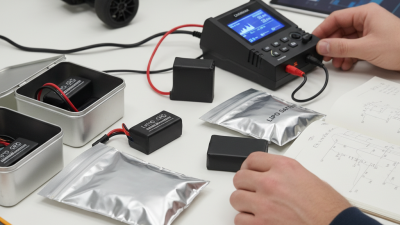
Look for evidence of repeatable production. Ask how incoming cells are inspected, how batches are traced, and what checks occur before shipment. Review relevant quality certificates, but confirm their scope and validity rather than treating a certificate as proof of every capability. Request sample packs and test them under your actual load. Check connector fit, voltage consistency, surface finish, and temperature during operation.

Small details matter.

Factory visits or independent audits can reveal whether documented procedures match daily practice. Ask how the manufacturer handles defects, engineering changes, and production delays. Clear answers are useful; vague promises are not.

A polished website proves little. No supplier is flawless, and a sample may not represent every batch. That limitation is easy to overlook.

Set acceptance criteria in writing, then confirm them with production records and agreed inspection tests.

Leading LiPo Battery Manufacturers in China

China has a broad LiPo battery manufacturing base, with suppliers serving drones, handheld electronics, robotics, and other compact devices. The strongest manufacturers are not defined by capacity alone. They combine stable cell production with careful pack assembly, traceable materials, and repeatable quality checks. Details matter.

A capable supplier should explain how it matches cells, controls welding, and checks finished packs for capacity, voltage consistency, and insulation. Ask for test records tied to a specific production lot, not only a general product sheet. Facility visits can reveal practical things: clean assembly areas, calibrated instruments, and clear handling procedures. These signs are useful, though no single visit proves long-term reliability.

Manufacturers also differ in engineering support. Some can adjust pack dimensions, connectors, or protection settings for a device; others mainly offer standard designs. Request sample units and test them under realistic loads before committing to volume. Review delivery history and how the supplier handles defects. That conversation can be awkward, but it is revealing. A polished presentation is not enough. Even experienced buyers sometimes overlook small differences between sample and production batches, so define acceptance checks in writing and repeat them when orders change.

Who Are the Best Lipo Battery Manufacturers in China? — Leading LiPo Battery Manufacturers in China

Evaluation Dimension Relevant Benchmark or Requirement What to Verify When Comparing Suppliers
Cell format and chemistry LiPo batteries commonly use lithium-ion cells in a pouch format. Electrical characteristics depend on the specific cell design and chemistry. Request the cell datasheet, chemistry description, nominal voltage, operating limits, and confirmation that the proposed cell matches the application.
Voltage specifications Many conventional single-cell lithium-ion pouch cells are rated at 3.7 V nominal and 4.2 V for full charge; these values are not universal. Check the exact cell datasheet for nominal voltage, maximum charging voltage, discharge cutoff, and the required charger settings.
Capacity and dimensions Capacity is specified in ampere-hours or milliampere-hours. Cell dimensions, tabs, and protective circuitry affect the finished pack size. Compare rated capacity and tolerance alongside sample measurements, pack drawings, tab configuration, and the final assembled-battery dimensions.
Discharge capability Allowable continuous and pulse discharge rates are cell- and pack-specific; a higher advertised rate should be supported by test conditions and data. Request continuous and peak current limits, test duration, temperature conditions, voltage drop, and thermal test results for the proposed battery pack.
Protection and battery management A battery pack may incorporate protection against conditions such as overcharge, over-discharge, and overcurrent, depending on its design. Review the protection-circuit specifications, component details, cutoff thresholds, fault-response tests, and whether protection is included in the quoted pack.
Transport testing UN Manual of Tests and Criteria, subsection 38.3, sets out tests for lithium batteries transported by air, sea, road, or rail. Request a UN 38.3 test summary for the applicable battery type and check that the tested design corresponds to the product being supplied.
Product safety standards IEC 62133-2 covers safety requirements and tests for portable sealed secondary lithium cells and batteries. Applicable requirements depend on the product and destination market. Confirm the relevant standard and edition with the buyer or certification body, and review the test report and certificate scope for the exact cell or pack.
Chinese product standard GB 31241-2022 is a Chinese safety standard for lithium-ion cells and batteries used in portable electronic products. Check whether the product falls within the standard’s scope and request applicable test documentation for the specific model.
Quality management An ISO 9001 certificate indicates a quality-management-system certification; it does not, by itself, certify battery safety or performance. Verify the certificate issuer, validity, site scope, and manufacturing location, then review inspection procedures and product-level test records separately.
Production consistency Capacity, internal resistance, dimensions, and finished-pack performance should be checked against documented specifications and acceptance criteria. Ask for incoming-material checks, cell matching criteria, in-process controls, final inspection records, and a sample batch test report.
Customization and engineering support Custom pack design can involve cell selection, electrical protection, connectors, wiring, enclosure design, and integration with the end product. Assess drawing review, prototype support, engineering-change control, traceability, and the supplier’s ability to document the final approved configuration.
Best-fit supplier selection There is no single best supplier for every use case; suitability depends on application, market, design constraints, and required compliance evidence. Compare suppliers using the same specification, sample-test plan, document checklist, production-audit criteria, and written acceptance limits.

Note: Figures and compliance requirements must be confirmed against the specific cell, battery pack, product application, and destination market. A standard reference alone does not establish that a particular product is certified or compliant.

How Manufacturer Capabilities Compare Across Key Applications

China’s LiPo battery manufacturers differ less by catalog size than by how well their processes fit an application. For slim consumer devices, compare cell thickness control, capacity consistency, and connector options. A sample may fit the enclosure perfectly, yet perform differently under load. Ask for discharge curves at the temperatures your product will face. Details matter.

For robotics or portable industrial equipment, look beyond rated capacity. Check peak-current data, cycle-life test conditions, pack protection, and weld inspection records. A capable supplier should explain its limits clearly, not just send a polished specification sheet. Medical-device projects call for thorough documentation, stable change control, and lot traceability. No manufacturer is best for every use. I would still verify specifications with tested samples; paperwork can look complete while real-world fit remains uncertain.

Tips: Request a small pilot batch. Record dimensions, weight, and voltage under load. Test it. Compare results under identical conditions, and ask questions when supplier answers are vague. A missed detail early can lead to an expensive redesign.

Factors to Consider When Choosing a LiPo Battery Supplier

Choosing a LiPo battery supplier in China requires more than comparing prices. Ask how the supplier controls cell consistency, assembly, and inspection. Request sample test records for capacity, cycle life, and performance under your stated conditions. Useful records should identify test methods and dates, not just display impressive numbers. Brochures prove little.

Match the battery specification to the real device. Confirm voltage, capacity, dimensions, connector type, and expected discharge rate in writing. Then inspect a sample for fit, labeling, and cable quality. A battery that works on a bench may behave differently inside a warm, tightly packed enclosure. No checklist catches everything. Pilot testing matters.

Check whether production batches are traceable and whether the supplier can explain its quality controls. Ask how it handles defects, design changes, and replacement samples. Clear answers are more useful than quick promises. Also discuss packaging, shipping conditions, and required documentation before placing an order. A low quote can look convincing, yet unclear testing or slow support may cost more later. Compare suppliers using the same specification sheet, and leave time to verify claims independently.