Why Choose Lipo Battery for Your Drone and RC Vehicle Needs
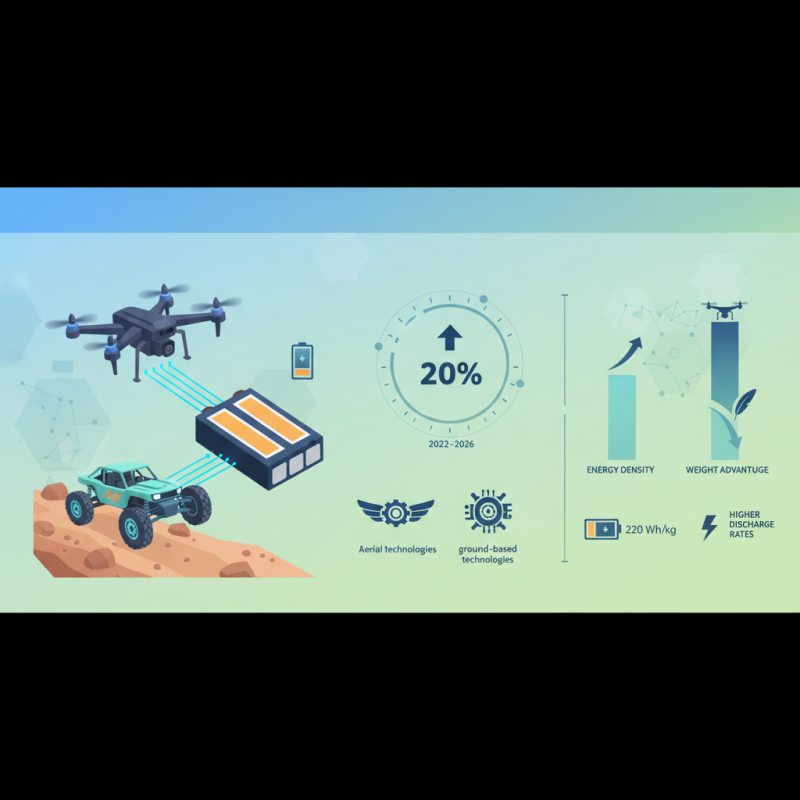
In recent years, the demand for high-performance power sources has surged within the drone and remote-controlled (RC) vehicle industries. Among various battery technologies, Lipo batteries have gained prominence due to their lightweight design and superior energy density, making them the preferred choice for both hobbyists and professionals. According to a report by TechNavio, the global market for Lipo batteries is expected to grow at a compound annual growth rate (CAGR) of 20% from 2022 to 2026, reflecting an increasing reliance on these batteries for innovation in aerial and ground-based technologies.
Industry expert Dr. Emily Chen, a leading researcher in battery technology, underscores the significance of Lipo batteries by stating, "The efficiency and weight advantages of Lipo batteries are unmatched in the RC and drone sectors, allowing operators to maximize flight times and performance." This testimony aligns with findings from the Battery University, which indicates that Lipo batteries can deliver up to 220 Wh/kg, providing consumers with enhanced capabilities in various applications.
As enthusiasts and professionals continue to seek ways to elevate their drone and RC vehicle experiences, the choice of power source becomes pivotal. Lipo batteries not only support extended operational ranges but also facilitate higher discharge rates needed for the demanding requirements of modern aerial and terrestrial technologies.
Advantages of LiPo Batteries for Drones and RC Vehicles
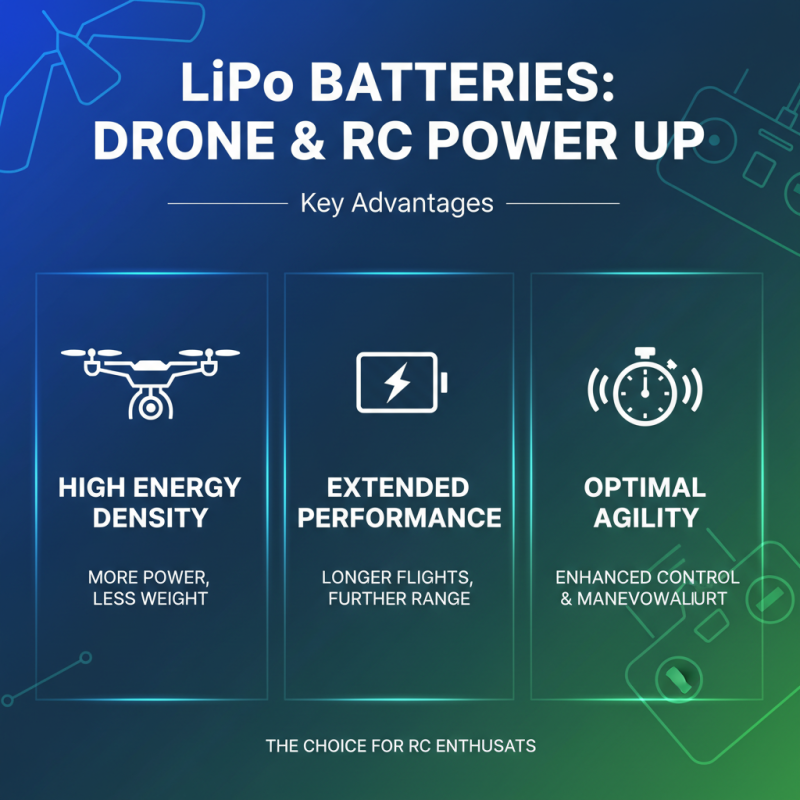
LiPo (Lithium Polymer) batteries have gained immense popularity in the realm of drones and RC vehicles due to their remarkable advantages. One of the primary benefits of LiPo batteries is their high energy density, allowing them to deliver more power while maintaining a lightweight form factor. This characteristic is crucial in the world of drones and remote-controlled vehicles, where performance and agility can often hinge on the weight of the power source. With LiPo batteries, users can achieve longer flight times and extended operational ranges, enhancing their overall experience.
In addition to their energy efficiency, LiPo batteries provide excellent discharge rates. This means they can release energy rapidly, which is essential for high-performance applications like racing drones or fast RC cars. The ability to deliver substantial bursts of power enables these vehicles to execute complex maneuvers and achieve impressive speeds. Furthermore, LiPo batteries can be charged more quickly compared to traditional battery types, reducing downtime and allowing more time for action. Overall, the combination of lightweight design, high energy output, and quick charging makes LiPo batteries an ideal choice for enthusiasts looking to maximize their drone and RC vehicle performance.
Comparative Analysis: LiPo vs. Other Battery Types
When comparing LiPo (Lithium Polymer) batteries to other types, such as NiMH (Nickel-Metal Hydride) and NiCd (Nickel-Cadmium), several factors come into play that highlight the advantages of LiPo technology for drones and RC vehicles. One significant advantage of LiPo batteries is their higher energy density, which allows them to store more power in a lighter and more compact package. This is particularly important in the world of drones and remote-controlled vehicles, where weight and size directly influence performance, flight times, and maneuverability.
Furthermore, LiPo batteries offer superior discharge rates, meaning they can provide a quick burst of energy when needed. This characteristic is essential for RC enthusiasts who require immediate power for acceleration and responsiveness during racing or aerial maneuvers. In contrast, while NiMH and NiCd batteries may be more robust in certain scenarios, they often fall short in terms of peak performance and overall weight efficiency. Additionally, LiPo batteries come with a more flexible design, allowing various shapes and configurations to fit specific needs in different aerial or ground-based applications.
Understanding LiPo Battery Specifications and Their Impact
When it comes to powering drones and RC vehicles, understanding LiPo (Lithium Polymer) battery specifications is essential. The capacity, typically measured in milliamp-hours (mAh), dictates how long a battery can run before needing a recharge. For instance, a LiPo battery rated at 5000mAh can theoretically provide a continuous current of 5A for one hour. Additionally, the discharge rate, noted as the "C rating," is critical for performance. A 20C battery can deliver 100A (20 times the capacity) at peak demand, which is crucial for racing drones that require quick bursts of power for acceleration and maneuverability.
Voltage also plays a significant role in the performance of LiPo batteries. Most commonly, drone systems utilize 3S (11.1V) or 4S (14.8V) setups, balancing weight while maximizing thrust. Research from various industry reports indicates that higher voltage leads to better efficiency; for instance, using a 4S setup can improve flight times by approximately 20% compared to a 3S setup in similar conditions. This can significantly enhance the operational range and effectiveness of drones during critical tasks or complex maneuvers.
Moreover, the internal resistance of a LiPo battery affects its overall performance and longevity. Lower internal resistance allows for more efficient power delivery and less heat generation, which can contribute to longer battery life. Industry data suggests that batteries with an internal resistance below 5 milliohms are optimal for high-performance applications. Understanding these specifications is vital for hobbyists and professionals alike to make informed decisions that impact efficiency, durability, and overall user satisfaction in their aerial and ground-based endeavors.
Best Practices for Charging and Maintaining LiPo Batteries
Lithium Polymer (LiPo) batteries are widely favored in the drone and RC vehicle community due to their high energy density and ability to deliver significant power in a lightweight package. However, ensuring the longevity and safety of these batteries requires adherence to best practices for charging and maintenance. According to a report from Battery University, improper charging can reduce a LiPo battery's lifespan by up to 50%, highlighting the importance of following specific protocols.
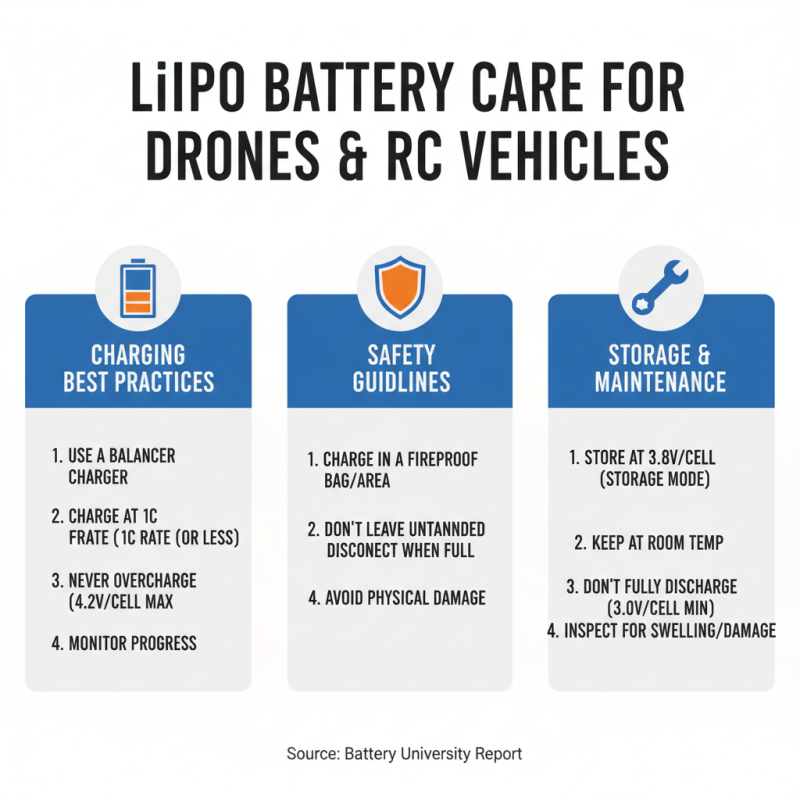
When charging a LiPo battery, it is crucial to use a charger specifically designed for this type of battery. Set the charger to the correct voltage and current based on the battery specifications, typically indicated in milliamp-hours (mAh). Charging at a rate of 1C is commonly recommended, meaning that if you have a 3000mAh battery, it should be charged at 3A. Additionally, it is best to monitor the battery's temperature during the charging process; once it exceeds 120°F (49°C), disconnect the charger immediately to prevent potential thermal runaway.
**Tips:** Always store LiPo batteries at a charge level between 30-50% to ensure optimal health, and utilize a fireproof bag for added safety during charging and storage. It is also advised to check the cells for balance regularly, as uneven cell voltage can lead to reduced performance and even damage the battery. By following these best practices, you can enhance the performance and lifespan of your LiPo batteries while minimizing the risk of accidents.
Safety Considerations When Using LiPo Batteries in RC Applications
When using LiPo batteries in remote-controlled (RC) applications, safety is paramount.
These batteries, known for their high energy density and lightweight characteristics, do require specific handling and care to prevent hazards. One of the primary concerns is the risk of fire due to overcharging or puncturing.
Therefore, it's essential to use a proper LiPo-compatible charger and to monitor the charging process closely. Never leave a charging battery unattended, and ensure it’s placed on a non-flammable surface during this process.
Additionally, proper storage of LiPo batteries is crucial. They should be kept in a cool, dry environment and ideally stored in a fireproof bag or container.
It’s recommended to keep the batteries at a storage voltage (around 3.7V to 3.8V per cell) if they are not going to be used for an extended period.
Regularly checking for any signs of damage, swelling, or corrosion is vital, as these issues can lead to dangerous situations.
By observing these safety considerations, users can enjoy the benefits of LiPo batteries for their drones and RC vehicles while minimizing the associated risks.

 +86-13928815851
 CONTACT NUMBER
 CONTACT NUMBER