How to Choose Ultra-Thin Batteries for Your Next Tech Project
In an age where technology is becoming increasingly compact and sophisticated, the demand for
ultra-thin batteries is at an all-time high. As designers and
engineers strive to create sleek, lightweight devices without compromising on performance, understanding
how to select the right ultra-thin batteries has become essential. According to Dr. Emily Chen,
a leading expert in the field of battery technology,
"The future of portable electronics hinges on our ability to innovate
within the constraints of size and efficiency, and ultra-thin batteries are key to making this happen."

Choosing the appropriate ultra-thin battery involves several considerations, including energy density,
lifespan, and compatibility with the device's design. It’s crucial to take
into account the specific power requirements and any unique integration challenges that might arise. An
informed decision can lead to a significant enhancement in the functionality and user experience of the
final product, allowing developers to push the boundaries of what is possible in technology today.
As we delve into the intricacies of selecting the best ultra-thin batteries for your next tech project,
understanding these vital aspects will enable you to harness the full potential of this
innovative energy solution.
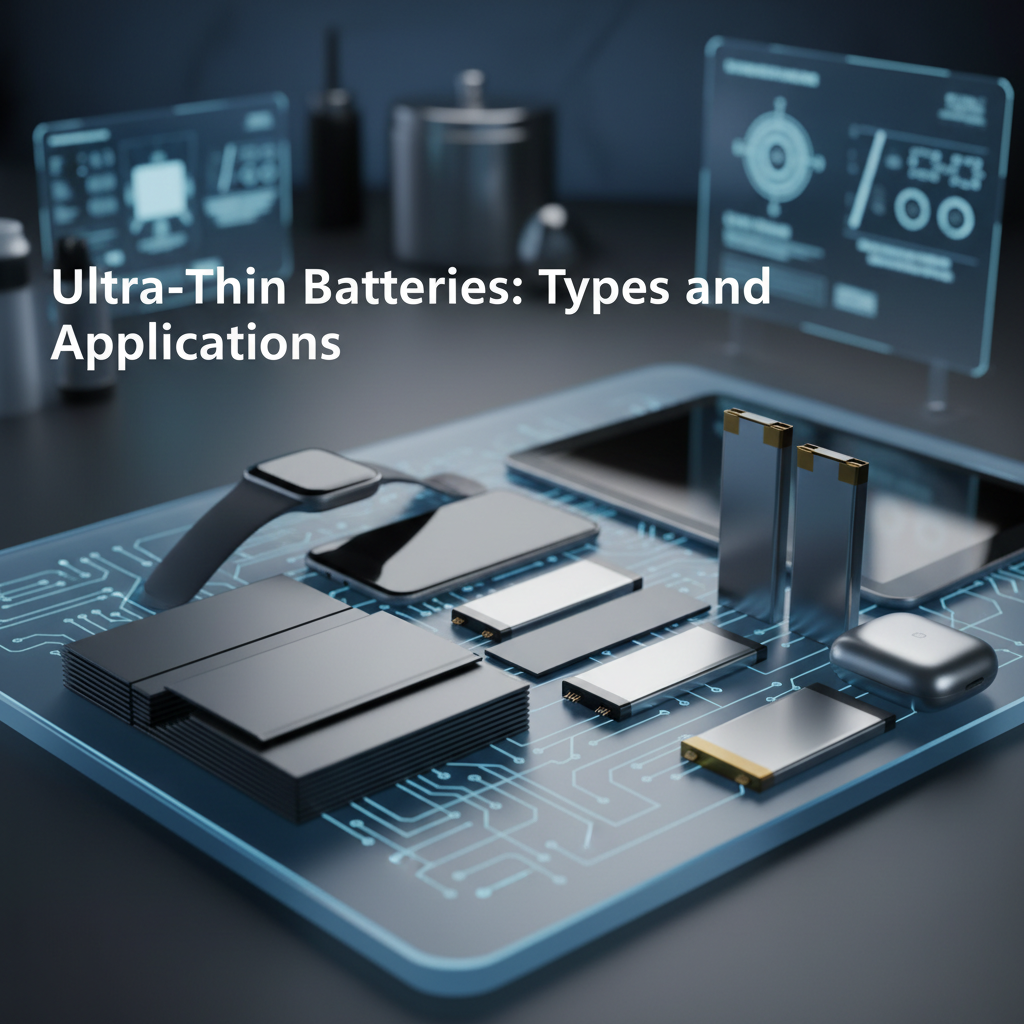
Understanding Ultra-Thin Battery Types and Their Applications
When considering ultra-thin batteries for your next tech project, it's essential to understand the various types available and their specific applications.
Lithium Polymer (LiPo) batteries are among the most popular choices due to their lightweight and flexible design. They are commonly used in mobile devices and wearable technology, providing a good balance between power capacity and size.
Another option is Lithium-ion (Li-ion) batteries, which are slightly thicker but offer higher energy density, making them ideal for devices requiring longer usage times and higher performance.
Tips: When selecting a battery, ensure it matches the power requirements of your device to avoid performance issues. Additionally, consider the charging cycles and lifespan of the battery; some types may degrade faster than others.
In specialized applications, such as smart textiles or ultra-thin sensors, consider using thin-film batteries. These batteries can be integrated seamlessly into materials, maintaining flexibility and contributing to the overall design.
Always assess the environmental conditions the battery will face, as factors like temperature and humidity can impact performance and longevity.
Key Factors to Consider When Selecting Ultra-Thin Batteries
When selecting ultra-thin batteries for your next tech project, several key factors come into play. The first consideration is energy density. According to the International Energy Agency (IEA), advancements in battery technology have led to energy densities reaching upwards of 300 Wh/kg for some ultra-thin lithium polymer batteries. This high energy density not only enhances the performance of slim devices but also reduces the weight, making it ideal for wearables and portable gadgets.
Another critical factor is the battery's form factor and dimensions. Many ultra-thin batteries come in varied shapes and sizes, enabling developers to integrate them seamlessly into their designs. Research from IDTechEx indicates that flexible and ultra-thin batteries are projected to capture a growing market share, with expected revenues reaching $34 billion by 2025. Thus, it’s imperative to choose a battery that matches your project's specific dimensional constraints without compromising on power delivery or life cycle. Furthermore, temperature performance and charging speed should also be assessed, as these can significantly impact overall device functionality and user experience.
How to Choose Ultra-Thin Batteries for Your Next Tech Project - Key Factors to Consider When Selecting Ultra-Thin Batteries
| Battery Type |
Thickness (mm) |
Capacity (mAh) |
Voltage (V) |
Discharge Rate (C) |
Temperature Range (°C) |
| Lithium Polymer |
0.5 |
1000 |
3.7 |
1C |
-10 to 60 |
| Lithium-Ion |
0.75 |
1500 |
3.7 |
0.5C |
0 to 45 |
| Sodium-Ion |
0.6 |
1200 |
3.6 |
0.7C |
-20 to 50 |
| Thin-Film |
0.3 |
500 |
2.5 |
2C |
-10 to 60 |
Comparing Performance Metrics of Leading Ultra-Thin Battery Brands
When selecting ultra-thin batteries for your tech project, understanding the performance metrics of leading brands is crucial. According to a recent report from the International Battery Association, the energy density of ultra-thin lithium polymer batteries can reach up to 300 Wh/kg, significantly surpassing that of traditional battery technologies. For instance, brands such as Samsung SDI and LG Chem have set benchmarks with their batteries achieving up to 350 Wh/kg, making them suitable for applications requiring both efficiency and compactness.
Additionally, cycle life is another critical metric to evaluate. Industry data indicates that the best ultra-thin batteries can endure over 500 charge-discharge cycles while maintaining 80% of their original capacity, a standard met by leading manufacturers like PANASONIC. However, not all products are created equal; for example, certain offerings from less-established brands have reported cycle lives as low as 300 cycles, which may not meet long-term project requirements. Therefore, when comparing ultra-thin battery options, it's essential to prioritize reputable brands that provide robust performance metrics, ensuring reliability in your tech innovations.
Innovative Technologies Enhancing Ultra-Thin Battery Efficiency
In the ever-evolving world of technology, the quest for ultra-thin batteries has led to significant innovations enhancing efficiency. A notable breakthrough comes from a Swiss startup that has developed eco-friendly ultra-thin batteries capable of charging in under a minute. This advancement signifies a shift towards sustainable technology, merging high performance with environmental considerations. Such rapid charging capabilities could revolutionize the user experience across various devices, from smartphones to wearables, pushing the limits of battery integration in sleek designs.
Furthermore, the development of silicon batteries is paving the way for improved energy retention, offering up to 15% more energy capacity than conventional technologies. This enhancement is particularly crucial for applications requiring longevity and efficiency, such as in hybrid electric vehicles and consumer electronics. Along with advancements like ultra-thin lithium anodes, researchers are unlocking potential that could extend battery life significantly, making these technologies vital for future tech projects aimed at achieving streamlined performance without compromising on power.
Best Practices for Integrating Ultra-Thin Batteries in Tech Projects
When integrating ultra-thin batteries into your tech projects, it is essential to consider their specific characteristics and how they will coexist with your overall design. These batteries are lightweight and space-efficient, making them perfect for applications where size and weight are critical factors. However, you need to take into account their energy density, discharge rates, and thermal management requirements to ensure optimal performance.
**Tips for Integration:**
1. **Choose the Right Configuration:** Selecting the appropriate battery configuration is key. Consider series versus parallel setups based on the required voltage and current. Each setup has its advantages, and understanding these can help you maximize the efficiency of your application.
2. **Thermal Management Strategies:** Ultra-thin batteries can be sensitive to temperature fluctuations. Incorporate thermal management solutions, such as heat sinks or insulating materials, to maintain optimal operating conditions and prolong battery life.
Careful planning and consideration of these factors will lead to smoother project execution and enhance the overall functionality of your tech innovations. Ensuring that the integration of ultra-thin batteries aligns with the intended use of your project is crucial for achieving sustainable and high-performance results.
Battery Capacity Comparison for Ultra-Thin Batteries

 +86-13928815851
 CONTACT NUMBER
 CONTACT NUMBER