How to Choose the Best High Temperature Battery for Your Needs?
Choosing the right High Temperature Battery is crucial for many applications. These batteries operate efficiently in extreme conditions. For industries like aerospace, automotive, and energy storage, selecting the right one can affect performance.
Factors such as material composition and design play a vital role. Batteries that withstand high temperatures are often more durable. Look for batteries that can perform well under stress. High temperature environments can be unpredictable, so reliability is key.
Consider your specific needs. Do you require quick charging times? How about battery life? Each choice might impact your overall success. Reflecting on these questions is essential. The right High Temperature Battery can enhance performance but also comes with challenges. It's important to weigh the pros and cons carefully.
Understanding High Temperature Batteries: Key Features and Benefits
High temperature batteries offer unique advantages for various applications. These batteries perform well in extreme environments, where regular batteries fail. They can operate efficiently at temperatures above 100 degrees Celsius. This feature is crucial for industries like aerospace, automotive, and energy storage. High temperature batteries are designed to resist thermal degradation, providing longer life cycles and consistent power.
When looking for a high temperature battery, consider key features such as thermal stability, energy density, and charge cycle efficiency. It's important to evaluate the battery's performance under extreme conditions. Some designs may prioritize performance but sacrifice durability, leading to potential disappointments. Understanding your specific needs will help you choose wisely.
Not all high temperature batteries are created equal. Some might excel in one area but struggle in others. A battery that performs well in one application may not be the best fit for another. Reflect on how you plan to use the battery. Are you in a setting with fluctuating temperatures? Will the battery experience heavy cycling? These considerations are vital for making an informed choice.
Identifying Your Specific Energy Needs and Applications
When choosing a high-temperature battery, identifying your specific energy needs is essential. Consider the application for which you require power. Are you using it for industrial processes, electronics, or perhaps for extreme environments? Each of these uses requires different energy levels. The temperature range also matters. Some applications may expose batteries to over 200 degrees Celsius, while others may need them to perform in milder heat.
It’s crucial to assess not only the energy output but also the longevity of the battery at high temperatures. Batteries can degrade quickly if they are not suited for the heat. Some batteries may only last weeks, while others may maintain performance for years. Efficiency is another aspect to think about. If a battery drains quickly, it may lead to frequent replacements. This can add to costs and downtime, which may not be practical for your operations. Sometimes, purchasing the cheapest option may feel right, but it’s often a false economy. Consider the long-term impact before making your decision.
How to Choose the Best High Temperature Battery for Your Needs? - Identifying Your Specific Energy Needs and Applications
| Battery Type |
Max Temperature (°C) |
Energy Density (Wh/kg) |
Cycle Life (Cycles) |
Applications |
| Lithium-ion |
60 |
150 |
500 |
Electric Vehicles, Drones |
| Nickel-Cadmium |
70 |
45 |
1000 |
Power Tools, Aviation |
| Sodium-Sulfur |
300 |
150 |
4000 |
Grid Storage, Renewable Integration |
| Lead-Acid |
50 |
30 |
300 |
Uninterruptible Power Supply, Solar Systems |
| Zinc-Air |
70 |
300 |
200 |
Hearing Aids, Medical Devices |
Comparing Different Types of High Temperature Batteries
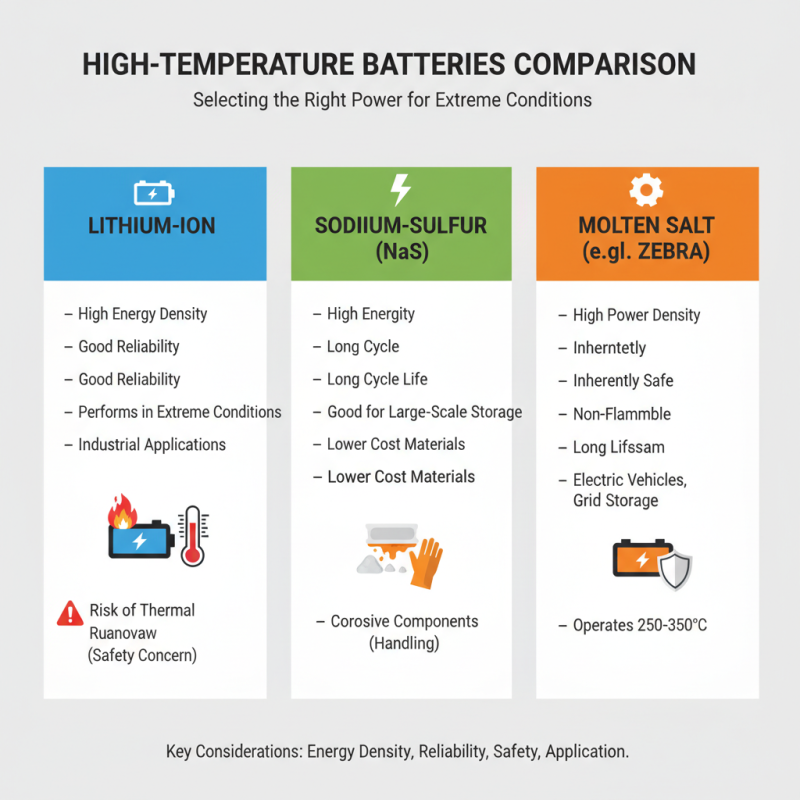
When selecting a high temperature battery, it's essential to consider various types available on the market. Lithium-ion batteries are popular for their energy density and reliability. They perform well in extreme conditions, making them suitable for many industrial applications. However, they can be sensitive to thermal runaway, leading to safety concerns.
Another option is nickel-metal hydride (NiMH) batteries. These batteries offer good performance in high temperatures. They are less prone to overheating compared to lithium-ion batteries. Despite this, NiMH batteries typically have a lower energy capacity, which might be a drawback for some users.
Lastly, thermal batteries can withstand intense heat for extended periods. These batteries may be less common, but they are unique in their capability. The challenge lies in their slower charge and discharge rates, which might not suit all needs. Evaluating these differences ensures you choose the most suitable battery for your specific application. Each type has strengths and weaknesses, and reflecting on these can lead to better decisions.
Evaluating Performance Metrics: Capacity, Lifespan, and Safety
When selecting a high temperature battery, performance metrics are essential. Capacity indicates how much energy the battery can store. Some batteries can hold up to 300 Wh/kg. This is significant for long-duration applications. Yet, higher capacity isn’t always better. Consider how frequently you will need to recharge.
Lifespan is another critical factor. Data shows that high temperature batteries typically last between 500 to 2,500 cycles. The right choice depends on your usage patterns. For instance, if you're using the battery in extreme conditions, a model with a lower cycle life might fail prematurely.
Safety should not be overlooked. Some batteries can be prone to thermal runaway. A 2022 report indicated that 10% of high temperature battery incidents resulted from poor thermal management. Always evaluate the safety ratings and design before making a choice. Understanding these metrics can greatly impact your satisfaction and performance.
Performance Metrics of High Temperature Batteries
Assessing Cost and Availability for Your High Temperature Battery Choice
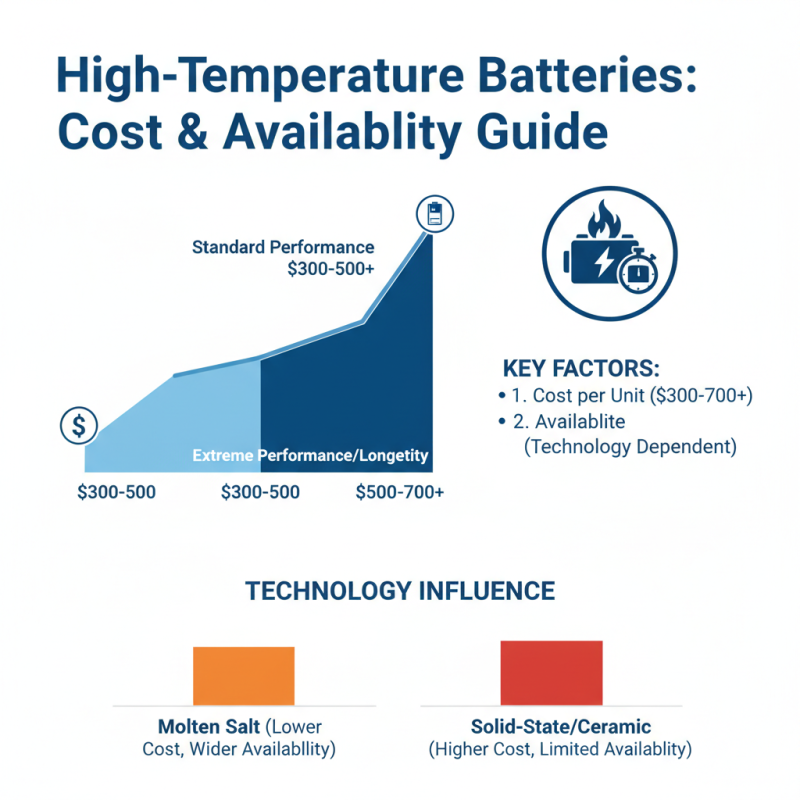
When selecting a high temperature battery, cost and availability are crucial factors. High temperature batteries often range from $300 to $700 per unit, depending on the technology used. This cost might be higher for batteries designed to last longer or offer better performance in extreme conditions.
Determining availability can be challenging. Many suppliers have limited stock, especially for specialized applications. Reports indicate that the global high temperature battery market is expected to grow by 6.3% annually. This growth can improve supply, but current delays are common. Manufacturers often face supply chain disruptions, making it difficult to find reliable sources.
Assessing your specific needs helps target your search. Often, high performance comes with high costs. Balancing price and quality can be tough. Some options might offer lower initial costs but lack the longevity needed for demanding applications. It's essential to consider lifecycle costs, not just upfront prices. Do thorough research before making a decision.

 +86-13928815851
 CONTACT NUMBER
 CONTACT NUMBER