How to Choose the Right 3.7 V Lipo Battery for Your Needs?
Choosing the right 3.7 V Lipo battery can seem daunting. Numerous options exist in the market today. Each choice impacts performance and safety. These batteries power everything from drones to smartphones. Understanding your specific needs is crucial.
Consider factors like capacity, discharge rate, and size. A higher capacity means longer battery life. However, it may also increase weight. Smaller batteries can be lighter but may drain faster. The discharge rate determines how quickly a battery can deliver energy. Selecting the wrong rate can lead to underperformance.
Reflect on how you will use the battery. Are you racing drones or powering remote controls? Different applications have different requirements. Remember, an unsuitable battery may cause burnout or damage. Take your time to explore your options. A little research goes a long way in finding the perfect fit.
Understanding the Basics of 3.7 V LiPo Batteries
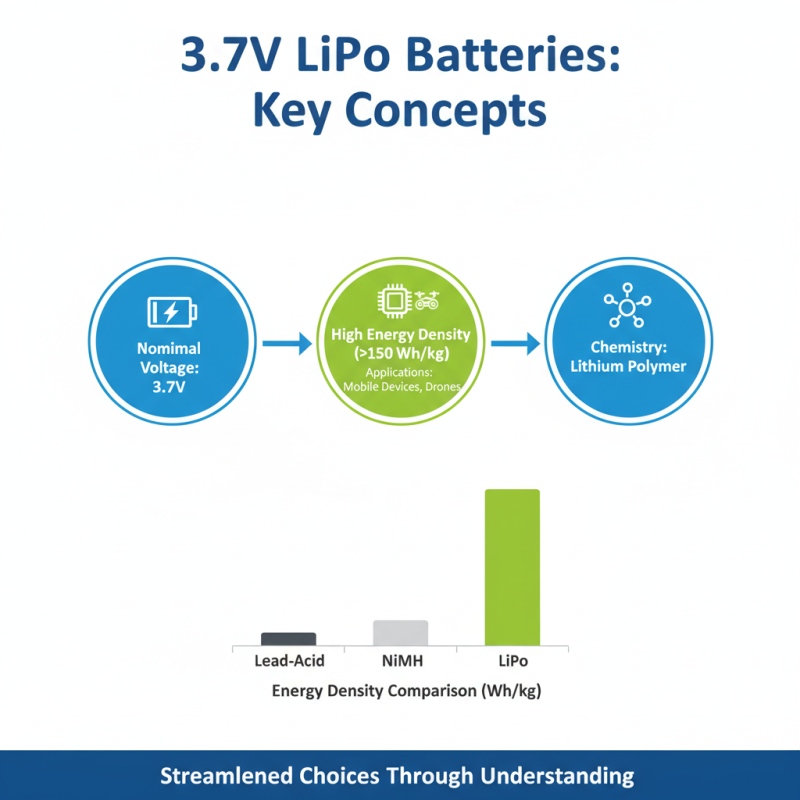
When selecting a 3.7 V LiPo battery, it's important to grasp some fundamental concepts. These batteries provide a nominal voltage of 3.7 volts and are widely used in various applications. Their energy density is notably high, often exceeding 150 Wh/kg, making them ideal for mobile devices and drones. Understanding their chemistry can streamline choices.
However, buyers should consider the capacity, measured in milliamp hours (mAh). A higher mAh rating means longer run times. Still, it can lead to increased weight and size. For example, a common choice may range from 1000 to 5000 mAh. The charging and discharging characteristics matter too; look out for the C-rate, which affects how quickly the battery delivers power. Misjudging this can lead to inadequate performance.
Additionally, safety features are critical. LiPo batteries can be volatile if mishandled. An industry report indicated that approximately 30% of LiPo failures are due to improper charging practices. Users must be mindful of their charging cycles and storage conditions. Neglecting these factors can significantly reduce lifespan and safety, highlighting the importance of informed decision-making.
Key Factors to Consider When Selecting a LiPo Battery
When selecting a 3.7V LiPo battery, consider its capacity. This value, measured in milliamp hours (mAh), reflects how long the battery can run your device. A higher capacity offers longer runtime, but also increases weight. Balance is key. Sometimes, a smaller capacity fits your needs perfectly.
Another important factor is the discharge rate, noted as C-rating. This rate tells you how quickly the battery can deliver power. For high-performance devices, a higher C-rating is necessary. However, too high a rating can lead to excess heat. Heat management can be tricky.
Size and weight also play a crucial role. Ensure the battery fits your device snugly. A battery that’s too big or heavy can affect performance. Take time to measure your space correctly. Consider the charging cycles, too. More cycles mean a better value and longevity. Evaluate your priorities carefully.
Comparing Capacity, Discharge Rate, and Voltage Requirements
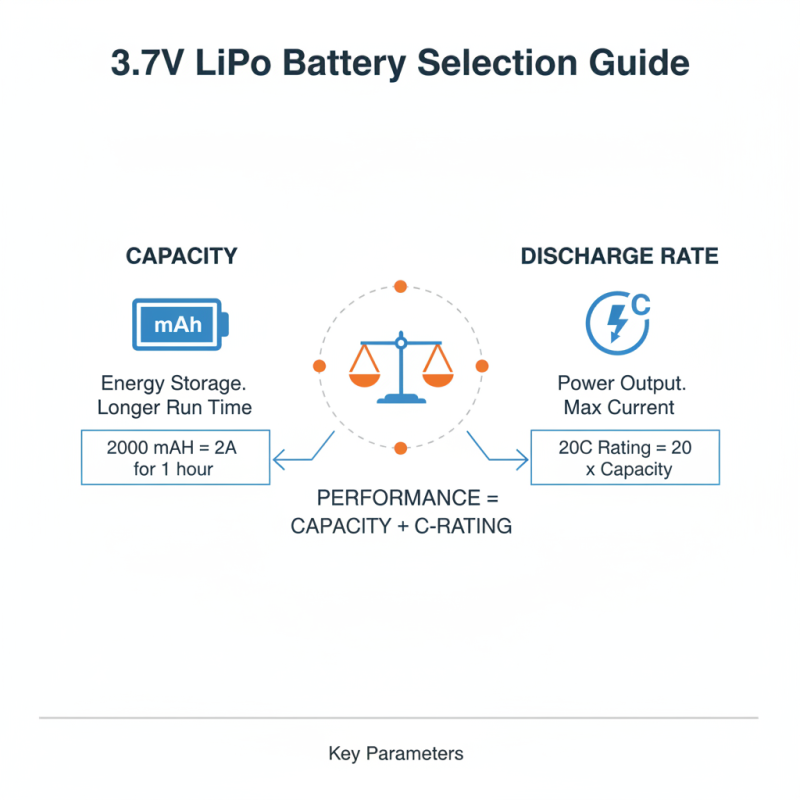
When selecting a 3.7 V LiPo battery, two critical parameters stand out: capacity and discharge rate. The capacity, measured in milliampere-hours (mAh), indicates how much energy a battery can store. For instance, a battery with a capacity of 2000 mAh can supply 2 amperes for one hour. This measurement is vital for applications requiring long run times. On the other hand, the discharge rate, denoted as C-rating, indicates how quickly a battery can discharge its energy without overheating. A battery rated at 20C can theoretically discharge 20 times its capacity.
**Tip:** Always check the requirements of your device. If your project demands high current, opt for a battery with a higher C-rating. This can help prevent an early shutdown.
Voltage requirements also play a pivotal role. While 3.7 V is standard for LiPo cells, the actual voltage can vary based on charge levels. Fully charged, a LiPo battery can reach 4.2 V, which is crucial to consider. Some devices may need a consistent voltage, while others can handle a slight drop during use. Also, it's important to note that operating a battery continuously at the edge of its voltage can lead to faster degradation.
**Tip:** Assess the voltage tolerance of your equipment before making your purchase. Keeping your battery within the optimal voltage range extends its lifespan.
Evaluating Battery Size and Weight for Your Specific Application
When choosing a 3.7 V LiPo battery, size and weight are crucial. The right dimensions ensure it fits well in your device. For instance, drones often require batteries that are lightweight yet powerful. A report by Research and Markets states that drone battery weight can significantly affect flight time. Reducing battery weight by just 10% can enhance performance by 15%. This trade-off between capacity and size is vital for applications.
Consider your specific application before finalizing a battery. A smaller battery may lack the necessary capacity for extended use. Conversely, a larger battery might be too heavy for portable devices. A study from Battery University suggests balancing weight and capacity. For example, smartphones typically use batteries weighing around 40 grams. Heavy batteries can diminish user experience and portability.
Not all applications require the highest capacity. Sometimes, a smaller, lighter battery suffices. Gathering data on your project requirements can help. Ensure you are not blindly following trends. Evaluate how each choice impacts performance and usability. This reflection is essential to make an informed decision.
Safety Considerations and Proper Handling of LiPo Batteries
When handling 3.7 V LiPo batteries, safety should be your top priority. These batteries can be volatile if not managed correctly. Always inspect the battery for any signs of damage before use. Any swelling or cracks can indicate a serious hazard. It's crucial to store them in a fireproof bag or container to minimize risks. Even minor bruises may compromise safety.
Charging these batteries requires attention. Use a suitable charger and never leave them unattended while charging. Overcharging can lead to overheating. If a battery feels excessively warm, disconnect it immediately. Avoid charging on flammable surfaces, and keep a fire extinguisher nearby. Always have a plan for disposal. Many areas have specific guidelines for battery disposal. Ignoring this can lead to environmental harm.
Remember, mishandling can have severe consequences. Don't ignore warning signs. Also, continually educate yourself about new safety practices. Share knowledge with others in your community to promote safe handling. A well-informed user is key to preventing accidents. Respect the power of these batteries, and they will serve your needs effectively.

 +86-13928815851
 CONTACT NUMBER
 CONTACT NUMBER