2025 How to Choose the Best Lipo Battery for Your Drone and RC Vehicles
When it comes to powering your drone or RC vehicle, choosing the right Lipo battery can significantly enhance performance and flight time. With numerous options available on the market, understanding the key factors that contribute to a high-quality Lipo battery is essential for both hobbyists and professionals alike. The right selection not only ensures that your device operates at its peak efficiency but also extends its longevity and reliability.
In this guide, we will explore the critical elements you need to consider when selecting a Lipo battery for your drone or RC vehicle. From capacity and discharge rates to size, weight, and connector types, each factor plays a crucial role in ensuring optimal performance. We will also discuss how to properly maintain and care for your Lipo battery, ensuring safety and longevity while maximizing your enjoyment of your favorite remote-controlled gadgets.
By the end of this discussion, you will be equipped with the knowledge necessary to make an informed decision about which Lipo battery best suits your needs, allowing you to enhance your experience and get the most out of your drone and RC vehicles.
Understanding Lipo Batteries: Basics and Terminology
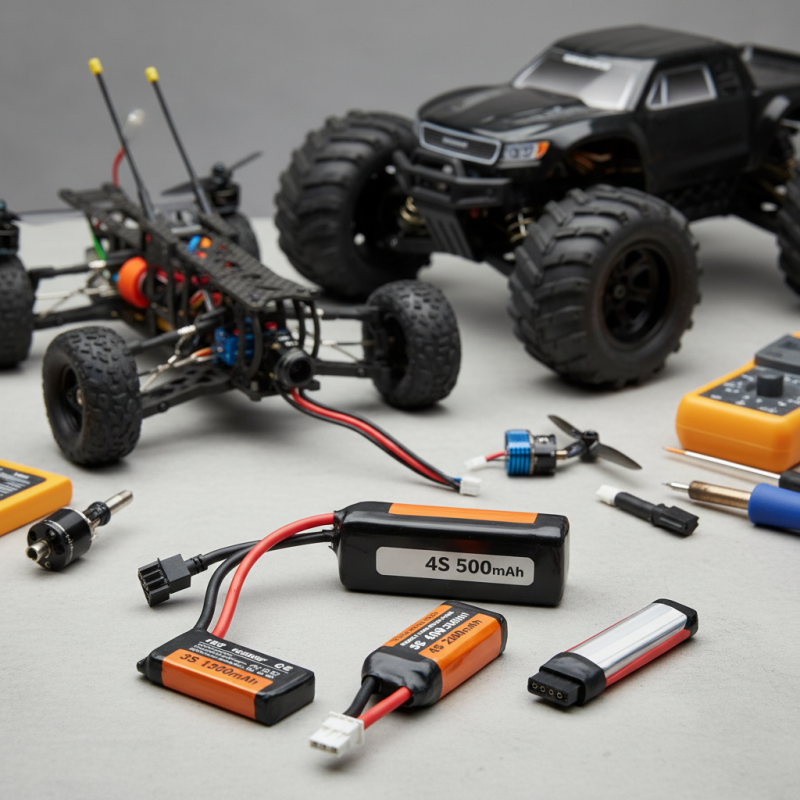
Lithium Polymer (LiPo) batteries are widely used in drones and remote-controlled (RC) vehicles due to their high energy density and lightweight properties. Understanding the basics of LiPo batteries is crucial for selecting the right one for your needs. These batteries are composed of cells in a soft pouch, which allows for various shapes and sizes, making them versatile for numerous applications. Each cell has a nominal voltage of 3.7 volts, and common configurations include 2S (two cells in series) and 3S (three cells in series).
Terminology associated with LiPo batteries is essential for understanding their performance. Key terms include "C-rating," which indicates how fast a battery can discharge relative to its capacity, and "mAh" (milliamp-hour), which measures the battery's energy capacity. A battery with a higher C-rating can deliver more power quickly, which is critical for high-performance drones and RC vehicles. Additionally, it is important to consider the battery’s weight and size, as these factors can significantly affect the overall performance and flight time of your device. Understanding these fundamentals will help you make informed decisions when selecting the best LiPo battery for your drone or RC vehicle.
Key Factors to Consider When Choosing Lipo Batteries
When selecting the best LiPo battery for your drone or RC vehicle, several key factors come into play.
First, consider the battery's voltage (measured in cells or "S"). A higher voltage often translates to better performance and longer flight times.
For example, a 3S battery (11.1V) typically provides more power than a 2S battery (7.4V).
However, it’s essential to ensure that your drone or RC vehicle is compatible with the chosen voltage to avoid damage.
Another crucial factor is the battery's capacity, expressed in milliampere-hours (mAh).
A higher capacity equals longer run times, but it also typically results in a heavier battery.
Strike a balance between capacity and weight to maintain your vehicle's performance.
Additionally, pay attention to the discharge rate, denoted as “C.” A higher C rating indicates that the battery can deliver more power to the motor,
which can be pivotal during demanding maneuvers. By carefully assessing these elements—voltage, capacity, and discharge rate—you can choose a
LiPo battery that optimally suits your drone or RC vehicle's needs.
Comparing Different Lipo Battery Types for Drones and RC Vehicles
When it comes to choosing the best LiPo battery for your drone or RC vehicle, understanding the various types available is crucial. LiPo batteries are categorized mainly by their cell configuration (like 2S, 3S, or 4S) and their chemistry, which influences weight, discharge rates, and overall performance. For instance, a 3S battery, which has three cells in series, typically provides a higher voltage and can enhance the flight time of a drone compared to a 2S battery. However, this increased power comes with added weight, which is an essential factor to consider depending on the design and requirements of your vehicle.
Another significant aspect to consider is the discharge rate, which is represented by the "C" rating on the battery. A higher C rating indicates the battery can deliver more current, crucial for vehicles requiring quick bursts of power, like racing drones or high-performance RC cars. Additionally, the physical size and weight of the battery must match your vehicle's specifications to ensure a proper fit and avoid any performance issues. Ultimately, selecting the right LiPo battery involves weighing these characteristics against your specific needs and intended use, ensuring that your drone or RC vehicle operates at its best.
Comparison of Different LiPo Battery Types for Drones and RC Vehicles
Safety Tips for Handling and Maintaining Lipo Batteries
When handling and maintaining LiPo batteries for drones and RC vehicles, safety should always be the top priority. Before charging your batteries, ensure that they are in good condition without any signs of swelling, punctures, or damage. Always charge your batteries on a fireproof surface and never leave them unattended during the charging process. Using a quality LiPo charger specifically designed for your battery type is crucial to avoid overcharging, which can lead to thermal runaway.
Proper storage of LiPo batteries is equally important for safety and longevity. Store them in a cool, dry place, ideally in a fireproof bag or container. It’s advisable to keep batteries between 3.7V and 3.85V per cell for optimal storage; discharged to this level reduces the risk of damage. Additionally, always check the battery voltage before each flight or run to ensure it’s within a safe range. By adhering to these safety tips and maintaining vigilant practices, you can enjoy a safer experience with your drones and RC vehicles.
2025 How to Choose the Best Lipo Battery for Your Drone and RC Vehicles - Safety Tips for Handling and Maintaining Lipo Batteries
| Battery Type |
Voltage (V) |
Capacity (mAh) |
C Rating |
Weight (g) |
Dimensions (mm) |
Recommended Use |
| 2S LiPo |
7.4 |
1000 |
25C |
140 |
70 x 35 x 20 |
Small Drones |
| 3S LiPo |
11.1 |
2200 |
30C |
250 |
100 x 34 x 20 |
Racing Drones |
| 4S LiPo |
14.8 |
5000 |
25C |
450 |
140 x 50 x 30 |
Quadcopters |
| 6S LiPo |
22.2 |
5000 |
35C |
800 |
160 x 50 x 40 |
Heavy Lift Drones |
Top Brands and Models to Consider for Optimal Performance
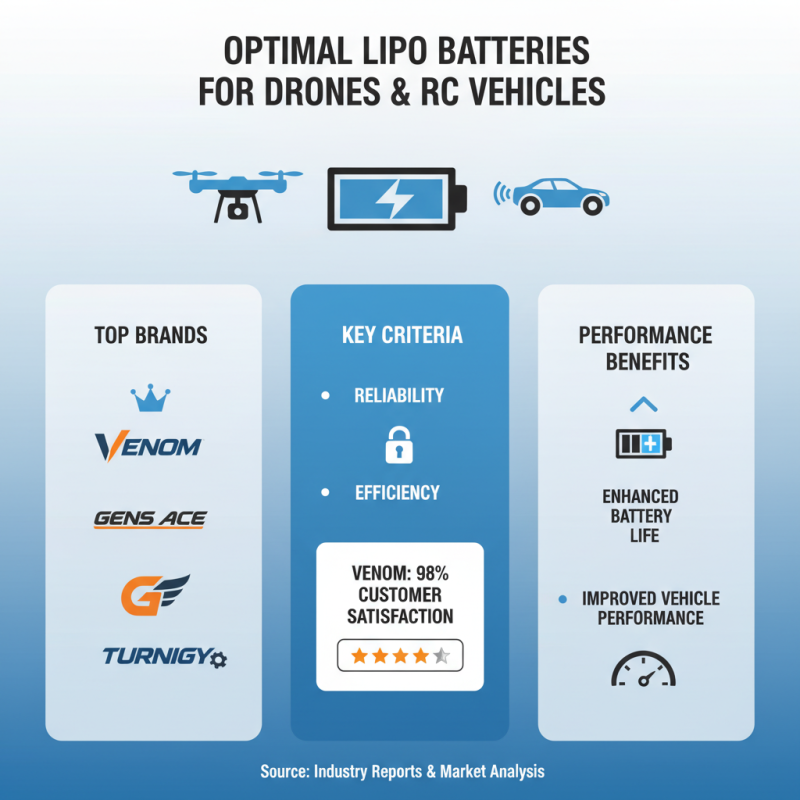
When it comes to choosing the best LiPo battery for your drone and RC vehicles, considering top brands and models is crucial for achieving optimal performance. Industry reports indicate that brands such as Venom, Gens Ace, and Turnigy consistently rank high in terms of reliability and efficiency. For instance, a recent market analysis highlighted that Venom batteries maintained a 98% customer satisfaction rate, thanks to their robust construction and advanced power management systems. These features not only enhance the battery life but also improve the overall performance of your vehicle.
In addition to brand reputation, specific models stand out in terms of performance and compatibility. Gens Ace's 5000mAh 3S 11.1V battery offers a perfect balance between power and weight, making it an ideal choice for both racing drones and RC cars. According to Battery University, optimal battery capacity directly influences flight times and overall handling, with well-rated models achieving up to 25% longer run times compared to lower-tier alternatives. For hobbyists looking to elevate their experience, aligning with top-rated brands and their standout models can make all the difference.

 +86-13928815851
 CONTACT NUMBER
 CONTACT NUMBER