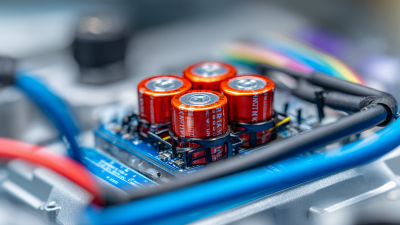
Exploring the Future of 2s Lipo Battery Technology and Its Impact on Performance
As technology continues to evolve, the realm of battery performance is witnessing remarkable advancements, particularly with the emergence of the
2s Lipo battery. These dual-cell lithium polymer batteries have gained significant traction in various applications, from remote-controlled vehicles to drones and beyond.
With their ability to deliver high power output while maintaining a lightweight profile, 2s Lipo batteries represent a pivotal shift in energy storage solutions.
This exploration seeks to delve into the future of 2s Lipo battery technology, highlighting the innovations that promise to enhance performance and efficiency.

In the face of growing demand for higher energy density and improved cycle life, manufacturers are tirelessly working to push the limits of 2s Lipo battery design.
This includes advancements in materials, thermal management, and charge-discharge rates, all of which contribute to delivering superior power for applications that require reliability and endurance.
Moreover, as the industry embraces sustainability, the evolution of 2s Lipo technology will also encompass environmentally conscious practices,
focusing on recycling and reducing the ecological footprint of battery production.
Ultimately, understanding the trajectory of 2s Lipo battery technology is crucial for both consumers and industries that rely heavily on these energy sources.
The anticipated developments will not only redefine performance metrics but also shape the future landscape of portable power solutions, reinforcing the significance of this technology in our increasingly electrified world.
The Evolution of 2s Lipo Battery Technology: Key Advancements
The evolution of 2s Lipo battery technology has witnessed significant advancements, driven by an ever-growing demand for efficient energy storage solutions. One key development is the shift towards solid-state and polymer batteries, which promise higher energy density and improved safety compared to traditional lithium-ion batteries. These innovations are crucial as industries increasingly rely on batteries, particularly in electric vehicles and renewable energy sectors. This surge in demand is not merely a trend; it signals a transformative phase that extends the capabilities and versatility of battery technologies.
Moreover, advancements in thermal management techniques are enhancing the performance and reliability of 2s Lipo batteries. Research into thermal degradation and runaway phenomena is critical in extending battery life and safety, which are paramount in high-performance applications. As manufacturers refine their processes and incorporate these findings, the potential for 2s Lipo batteries to meet the diverse needs of modern technology becomes more promising. This intersection of progress in materials and thermal dynamics positions 2s Lipo batteries to play a vital role in the future landscape of energy storage solutions.
Exploring the Future of 2s Lipo Battery Technology and Its Impact on Performance
| Key Advancements |
Impact on Performance |
Energy Density (Wh/kg) |
Charge Time (minutes) |
Lifespan (Cycles) |
| Increased Energy Density |
Longer flight times and more power |
150 |
60 |
300 |
| Improved Charging Protocols |
Faster turnaround for continuous use |
140 |
45 |
500 |
| Enhanced Thermal Stability |
Safer operation under heavy loads |
130 |
50 |
350 |
| Lightweight Materials |
Increased efficiency and maneuverability |
160 |
55 |
400 |
| Smart Battery Management Systems |
Optimized charging and discharging cycles |
145 |
50 |
450 |
Understanding the Chemistry Behind 2s Lipo Batteries and Their Performance
The chemistry behind 2s LiPo batteries plays a crucial role in determining their performance characteristics, particularly in high-demand applications like drones and electric vehicles. At the heart of these batteries is the lithium-ion mechanism, where lithium ions move between the anode and cathode during discharge and charge cycles. This movement is facilitated by a liquid electrolyte, which allows for efficient ion transport. The choice of electrode materials also significantly influences capacity and cycle life, with innovative approaches using materials like graphene and manganese-based compounds showing promise in enhancing performance.
Recent advancements in battery research, such as in situ transmission electron microscopy (TEM), have shed light on the electrochemical processes at play within these systems. By observing the Li-storage mechanisms at the nanoscale, researchers can better understand how interfacial reactions and structural changes affect battery efficiency and longevity. The ongoing exploration of all-solid-state lithium batteries further indicates a shift towards safer and more energy-dense solutions, paving the way for the next generation of energy storage technologies.
Exploring the Performance Metrics of 2s Lipo Batteries
Impact of 2s Lipo Batteries on Electric Vehicles and Drones
The future of 2s LiPo battery technology holds significant promise for the electric vehicle (EV) and drone industries. As the demand for these technologies increases, 2s LiPo batteries, with their high energy density and efficiency, are poised to enhance the performance and operational range of electric vehicles and drones. In particular, the ability of 2s LiPo batteries to offer lighter and more compact solutions could be crucial in the quest for longer-lasting batteries that are vital for both commercial and military applications.
The advancements in battery technology can also greatly influence the competitive landscape, especially in light of global dynamics between the US and China. China’s dominance in battery electric vehicle (BEV) market share presents a significant challenge, and innovations like 2s LiPo batteries could be fundamental in helping the US leapfrog ahead. Moreover, the environmental concerns surrounding lithium mining underscore the need for sustainable practices, making the exploration of next-generation battery technologies not only a strategic imperative but also a critical responsibility for the future of clean transportation and technological warfare.
Comparative Analysis: 2s Lipo vs. Other Battery Technologies
 The landscape of battery technology is rapidly evolving, with 2s LiPo batteries standing out for their performance in various applications such as drones, RC vehicles, and electric bikes. In a comparative analysis between 2s LiPo and other battery technologies, data from the Battery University indicates that 2s LiPo batteries offer a high energy density of around 150-200 Wh/kg, which significantly enhances flight times and overall efficiency compared to NiMH batteries, typically rated at just 60-120 Wh/kg. This higher energy density allows for lighter setups without compromising power, a crucial factor for performance-oriented applications.
When compared to other lithium-based technologies, the 2s LiPo battery demonstrates superior discharge rates, often reaching up to 50C, compared to lithium-ion batteries, which usually max out at around 20-30C. A report from the International Energy Agency (IEA) highlights that the rapid discharge capability of 2s LiPo batteries not only ensures better acceleration for vehicles but also enhances the safety features in drones, where reliable power delivery is essential. Thus, for enthusiasts and professionals alike, the consistent performance and high power output of 2s LiPo batteries position them as a leading choice in the battery market, particularly as applications continue to demand greater efficiency and reliability.
Future Trends and Innovations in 2s Lipo Battery Design and Applications
The realm of 2s LiPo battery technology is poised for significant advancements, reflecting broader trends within the battery industry. As research intensifies into solid-state and polymer batteries, innovative designs and materials are emerging that promise enhanced safety and energy density. These advancements will likely inspire a new generation of 2s LiPo batteries, integrating these cutting-edge elements to improve performance metrics such as charge times and longevity.
Moreover, the focus on sustainability and cost-effectiveness is driving innovations in battery applications. Companies and researchers are exploring alternative chemistries and manufacturing processes that could lead to 2s LiPo batteries with reduced environmental impact while maintaining competitive efficiency with existing lithium-ion technologies. As electric vehicles and renewable energy grids continue to generate demand, the evolution of 2s LiPo battery technology will play a crucial role in meeting performance expectations in these growing sectors.

 +86-13928815851
 CONTACT NUMBER
 CONTACT NUMBER