How to Safely Store and Maintain Lithium Batteries?
Lithium batteries are a common power source for many devices. They provide energy for everything from smartphones to electric vehicles. However, storing and maintaining these batteries safely is crucial. Improper handling can lead to safety risks and shortened life spans.
When storing lithium batteries, temperature control is vital. Keep them in a cool, dry place away from direct sunlight. Avoid extreme temperatures, as they can degrade battery performance. It is also essential to monitor the charge levels. Do not store batteries fully charged or completely drained.
Regular visual checks can help identify issues. Look for any swelling, leakage, or corrosion. Despite their popularity, people often overlook these signs. Ignoring them can result in hazardous situations. Being aware of proper storage practices is key to ensuring safety. We must respect their potential risks and take the necessary precautions for safe usage.
Best Practices for Storing Lithium Batteries Safely
When storing lithium batteries, consider the environment. Keep them in a cool, dry place. Extreme temperatures can harm the cells. A temperature range of 20°C to 25°C is ideal. Avoid direct sunlight and humidity, which can lead to leakage or corrosion. Always store batteries in their original packaging or in a protective case.
Check the battery charge levels regularly. Ideal storage level is around 40% to 60%. If left fully discharged or fully charged, the battery's lifespan can shorten. Avoid mixing used and new batteries. This can lead to unpredictable performance. Inspect for any signs of damage, such as swelling or cracking. If you find any issues, dispose of the battery properly.
Note that even if batteries are safely stored, they can age. Rechargeable batteries generally have a shelf life of up to five years. After this period, their reliability diminishes. Reflect on your storage practices. Are they regularly monitored? A small effort in maintaining these practices can prolong battery life significantly.
Battery Maintenance and Storage Best Practices
Ideal Temperature and Humidity Conditions for Battery Storage
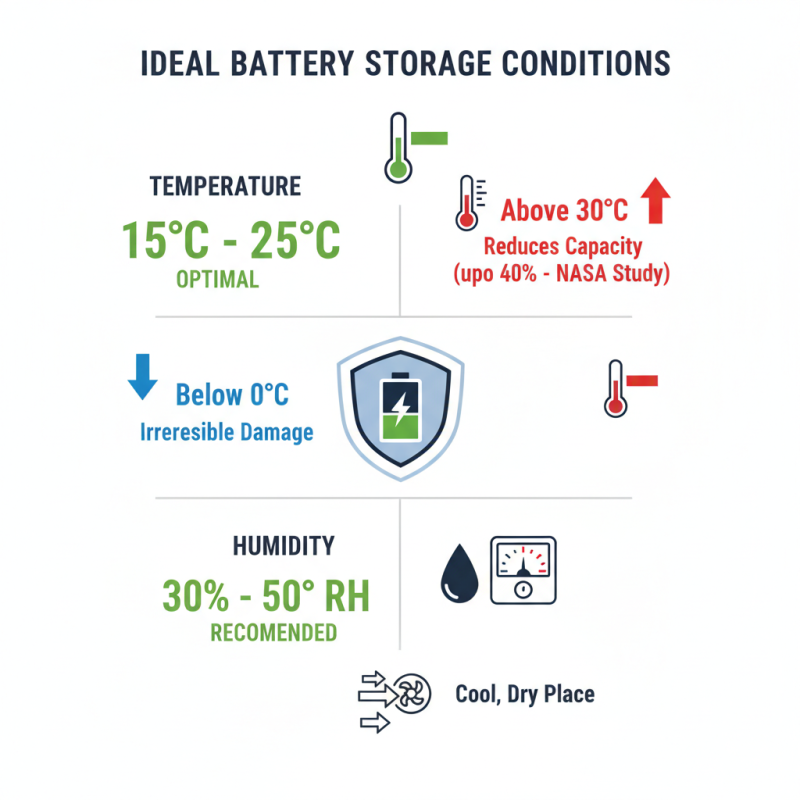
Lithium batteries require specific conditions for optimal storage. Keeping them in the right temperature range is crucial. Ideally, they should be stored at temperatures between 15°C to 25°C. Temperatures above 30°C can accelerate aging and reduce overall capacity. According to a study by NASA, high heat can decrease battery life by up to 40%. Conversely, temperatures below 0°C can lead to irreversible damage.
Humidity is another critical factor. An environment with 30% to 50% relative humidity is recommended. High humidity levels can cause corrosion and affect the battery’s performance. Research by the International Electrotechnical Commission indicates that excessive moisture can reduce battery life as well. Using a desiccant in storage can help mitigate this risk.
Inadequate storage can lead to safety issues. Batteries may swell or leak, posing a hazard. Although many users believe they can ignore these conditions, neglecting them often results in poor performance. Proper storage might seem tedious, yet it pays off in longevity and safety. Engaging in regular checks can help maintain optimal conditions.
How to Organize and Label Stored Lithium Batteries
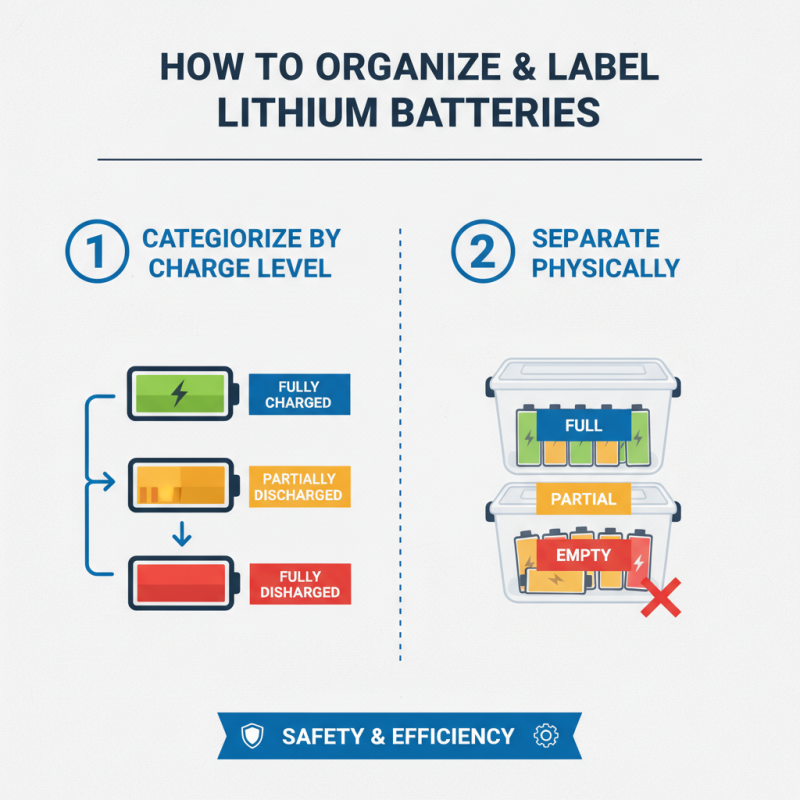
Organizing and labeling stored lithium batteries is essential for safety and efficiency. Start by categorizing batteries based on their charge levels. Fully charged batteries should be separated from those that are partially or fully discharged. This simple method helps avoid accidental connections and confusion when selecting batteries for use.
Use clear and visible labels on each battery storage container. Include important information such as the battery type, charge status, and expiration date. Stickers or permanent markers can help achieve this. It’s tempting to think you’ll remember details later, but it’s often a mistake. A quick glance at a label saves time and reduces risk.
Consider creating a small inventory list of your stored batteries. This list should include the same information found on the labels. Maintaining this list can be cumbersome, but it serves as a helpful reference. Regularly review your inventory and adjust as needed. Sometimes, we overlook the need for organization, but a little effort here can prevent bigger problems later.
Regular Maintenance Tips for Prolonging Lithium Battery Life
Lithium batteries require regular attention to ensure longevity. Keep them at room temperature. Extreme heat or cold can harm the battery's lifecycle. Check the charge level frequently. Ideally, keep the battery between 20% and 80% charged. This practice helps to avoid deep discharges, which can reduce battery life.
Inspect the battery for any signs of wear or damage. Look for swelling or leakage. If you notice these issues, consider disposing of the battery responsibly. It's a hard decision, but safety comes first. Clean the contacts regularly. Dust and dirt can negatively impact performance. A clean surface enhances connectivity and efficiency.
Storing lithium batteries properly is also crucial. Use a cool, dry place for storage. Avoid humid environments that can cause corrosion. Remember to store them with a charge. A charge level around 50% is ideal for long-term storage. Monitor their condition over time, as neglect can lead to irreversible damage. Periodic checks are necessary. It’s not just about usage; it’s about preserving the battery's life.
Safety Precautions When Handling Lithium Batteries
Handling lithium batteries requires strict safety precautions. According to the National Fire Protection Association, lithium batteries account for nearly 30% of fires caused by battery failures. Proper storage and management of these batteries can minimize risks, but not eliminate them entirely.
Always store lithium batteries in a cool, dry space. Temperatures above 60°C can lead to thermal runaway, a condition that can ignite fires. Keep batteries away from direct sunlight and heat sources. Use containers designed for battery storage, ideally made from fire-resistant materials. Also, avoid exposing terminals to metal objects. This can cause short circuits, leading to potentially dangerous situations.
When handling lithium batteries, be cautious. Wearing gloves can prevent accidental punctures and reduce the risk of chemical exposure. It’s essential to frequently inspect the batteries for damage or swelling. A report from the Battery Safety Summit indicates that about 15% of battery-related incidents arise from user neglect. Always read safety guidelines and gain awareness of the battery's condition before use.

 +86-13928815851
 CONTACT NUMBER
 CONTACT NUMBER