+86-13928815851
Leave Your Message
-
CONTACT NUMBER
-
 CONTACT NUMBER
 -
 CONTACT NUMBER
Choosing a High Temperature Battery is not simply a matter of selecting the highest temperature rating. Real performance depends on chemistry, load profile, storage time, and the surrounding equipment. A battery that survives 150°C in a laboratory may behave differently inside a vibrating downhole sensor or a sealed industrial monitor.
Dr. John B. Goodenough, a Nobel Prize-winning battery scientist, described the basic principle clearly: “A battery is a device that converts chemical energy directly into electrical energy.” That conversion becomes more demanding as heat rises. High temperatures can accelerate chemical reactions, increase self-discharge, and shorten service life. Some systems also face pressure, vibration, moisture, or limited cooling. Small details matter.
This guide presents seven practical tips for evaluating a High Temperature Battery. It considers operating temperature, chemistry, usable capacity, cycle life, safety controls, physical design, and supplier testing. Look beyond a single headline specification. Ask for test conditions, discharge curves, storage data, and failure limits. A 1,000-hour rating means little without knowing the current draw and temperature pattern.
Be realistic.
I have seen product comparisons focus heavily on capacity while ignoring connector heat and enclosure airflow. That approach can produce an expensive surprise. No battery is ideal in every environment. Even experienced engineers must revisit assumptions when field conditions change. Use manufacturer data, independent testing, and application-specific calculations before approval. This careful process supports safer decisions and helps identify the High Temperature Battery that can deliver dependable power when ordinary cells cannot.
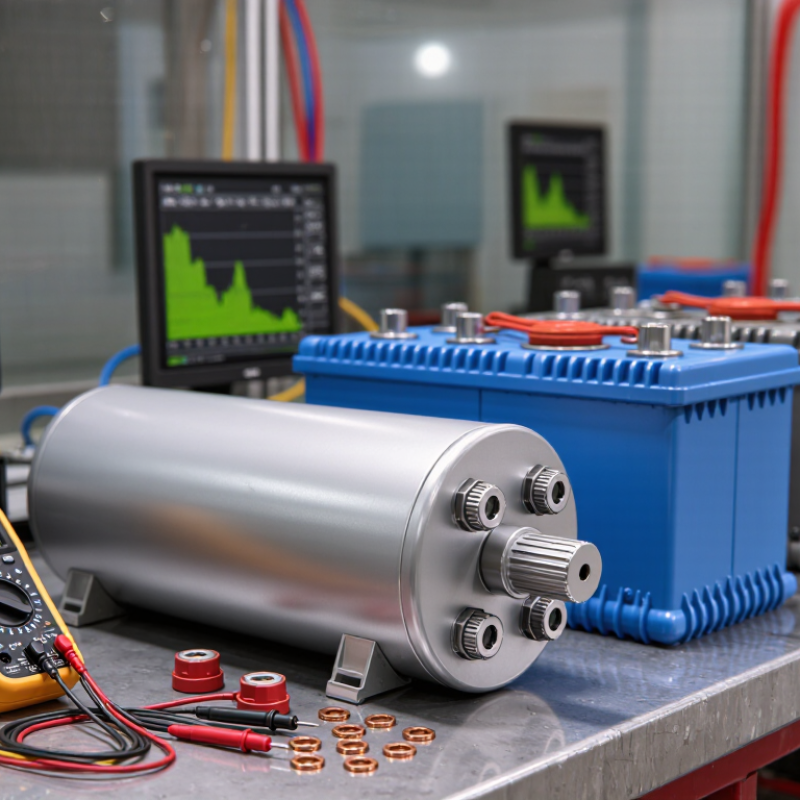
7 Tips for Choosing a High Temperature Battery
Define the real operating envelope before comparing battery cells. Record normal, peak, and storage temperatures separately. Include heat from nearby engines, sunlight, charging, and restricted airflow. A battery rated for 85°C may still fail if its terminals or control circuit reach higher temperatures. Do not guess. Measure the enclosure.
Temperature duration matters as much as temperature itself. A brief 100°C exposure differs from continuous operation at 80°C. NREL battery-aging literature discusses a common engineering estimate: many degradation reactions may accelerate roughly twofold for each 10°C rise. This is not a universal law. Chemistry, pressure, state of charge, and cycling profile can change the result. A neat specification can still be wrong.
Define voltage, capacity, pulse current, cycle life, storage life, and allowable capacity loss at the required temperature. For transport applications, IEA’s Global EV Outlook 2024 reported nearly 14 million electric cars sold worldwide in 2023, increasing demand for dependable thermal design. Use recognized tests, including IEC 62619 where applicable, and request temperature-specific performance curves rather than room-temperature brochures. Check thermal runaway behavior, venting direction, insulation, and sensor accuracy. Small details matter. Field qualification should reproduce the hottest installation day, not an ideal laboratory cycle. Then challenge the result with low charge, high load, vibration, and repeated thermal transitions. Temperature requirements should be written as measurable limits, with test methods and acceptance criteria.
| Tip | Requirement to Define | Typical Data and Reference Ranges | Selection Guidance | Verification Points |
|---|---|---|---|---|
| 1 | Continuous and peak operating temperature | Standard rechargeable lithium-ion cells are commonly specified around 0–45 °C for charging and 0–60 °C for discharging. Specialized high-temperature cells may support approximately 70–150 °C, depending on chemistry and construction. | Choose a battery whose rated continuous temperature is higher than the actual enclosure temperature. Account for heat generated by current, nearby engines, ovens, geothermal equipment, or outdoor exposure. | Check separate charge, discharge, storage, and short-duration peak-temperature ratings in the cell or battery datasheet. |
| 2 | Temperature profile and exposure duration | A battery exposed to 120 °C for 10 minutes has a different requirement from one operating continuously at 85 °C for 2,000 hours. Repeated thermal cycling can accelerate aging even when the maximum temperature is not exceeded. | Record minimum, normal, maximum, ramp rate, dwell time, daily cycles, and the number of thermal events. Use the worst credible profile rather than the average ambient temperature. | Request cycle-life data under the intended temperature profile, not only room temperature test results. |
| 3 | Required voltage and load current | Define nominal voltage, operating-voltage limits, continuous current, peak current, pulse duration, and duty cycle. At elevated temperature, leakage current and self-discharge generally increase, while usable capacity and power can change with the selected chemistry. | Size the battery for the actual electrical load, including motor starts, radio transmission pulses, heaters, valves, and inverter surges. Include wiring, connector, and protection-circuit voltage drops. | Compare discharge curves at the intended temperature and current. Confirm that the protection circuit and interconnects have matching voltage and current ratings. |
| 4 | Capacity, energy, and service-life target | Required energy can be estimated as Energy (Wh) = Average load (W) × operating time (h). High temperature typically increases aging reactions; capacity retention depends on chemistry, temperature, state of charge, current, and time. | Add margin for capacity fade, conversion losses, cold-start or hot-start behavior, standby consumption, and end-of-life capacity. For long service intervals, a lower operating state of charge can reduce thermal stress in many rechargeable lithium systems. | Use end-of-life capacity requirements, such as retaining at least 80% of initial capacity, and confirm test duration and conditions. |
| 5 | Battery chemistry and recharge strategy | Rechargeable lithium-ion systems require controlled charging and generally have narrower high-temperature charging limits than discharging limits. Lithium thionyl chloride cells can support very high temperatures in some designs but are normally primary, non-rechargeable cells. High-temperature sodium-sulfur systems operate at approximately 300–350 °C and require specialized stationary equipment. | Select chemistry according to whether the application needs rechargeability, high pulse power, long shelf life, compact size, or operation above conventional lithium-ion limits. Do not recharge a primary cell. | Confirm chemistry-specific charging limits, recommended charger profile, thermal runaway controls, and restrictions on field replacement or transportation. |
| 6 | Mechanical, environmental, and safety conditions | Consider vibration, shock, pressure, humidity, dust, salt spray, corrosive gases, altitude, immersion, and enclosure temperature. A high-temperature rating does not automatically indicate resistance to moisture, vibration, or hazardous environments. | Match the enclosure, seals, terminals, electrolyte system, thermal barriers, and mounting method to the installation. Keep the battery away from direct radiant heat where practical and provide thermal isolation or cooling when needed. | Review applicable transport, electrical, abuse, ingress-protection, and industry safety requirements for the final product and installation location. |
| 7 | Monitoring, validation, and safety margin | A battery management system may monitor cell voltage, current, temperature, and state of charge. Multi-cell rechargeable packs require balancing and protection against overcharge, over-discharge, overcurrent, and excessive temperature. | Define alarm and shutdown thresholds, sensor placement, data logging, maintenance intervals, and fail-safe behavior. Validate the complete battery, charger, load, enclosure, and thermal environment as one system. | Perform thermal testing at maximum load and ambient temperature, including abnormal conditions, repeated cycling, and end-of-life behavior. Keep documented margins below the manufacturer’s absolute limits. |