Essential Tips for Choosing the Right 3s Lipo Battery?
Choosing the right 3s Lipo battery can significantly influence the performance of your remote-controlled devices or drones. The market has seen a steady growth in demand for high-quality batteries. According to a recent report by TechInsights, the global lithium-ion battery market reached $44.2 billion in 2022 and is expected to grow by 6.6% annually until 2030. This increase highlights the importance of understanding battery specifications, especially when it comes to 3s Lipo batteries.
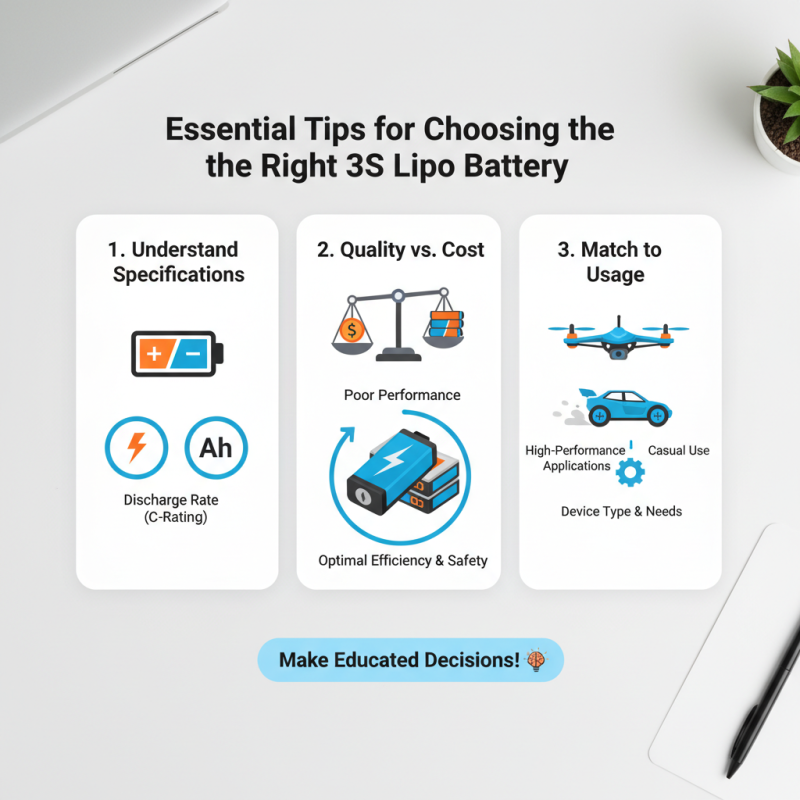
Industry expert Dr. Linda Moore stated, "Selecting the correct 3s Lipo battery is vital for ensuring optimal efficiency and safety in high-performance applications." This emphasizes the need for careful consideration when choosing a battery. Factors such as discharge rate and capacity can make a significant difference in battery life and reliability. Yet, many consumers overlook these details.
While some may rush to buy the cheapest option, this often leads to poor performance. Realizing the balance between cost and quality is essential. Optimal battery selection involves considering usage needs and industry standards. Each choice shapes overall device performance, making educated decisions imperative for enthusiasts and professionals alike.
Understanding 3s Lipo Batteries: Key Specifications and Terminology
When selecting a 3s LiPo battery, understanding key specifications and terminology is vital. The term "3s" refers to the battery's cell configuration. A 3s battery consists of three cells in series, resulting in a nominal voltage of 11.1 volts. This configuration is common in many RC applications. Each cell generally has a voltage of 3.7 volts, but can reach up to 4.2 volts when fully charged. This understanding helps in determining compatibility with your device.
Another important specification is the battery's capacity, measured in milliamp-hours (mAh). Higher capacity translates to longer run times. Data shows that a 2200 mAh battery can power an RC car for approximately 15 to 20 minutes, depending on usage. Discharge rates, noted as C ratings, indicate how quickly a battery can deliver power. A 30C rating means the battery can provide up to 30 times its capacity. For high-performance applications, selecting a battery with a suitable C rating is crucial.
The weight and size of a 3s LiPo battery also matter. Heavier batteries may provide more power but can affect maneuverability. A cell's dimensions need to fit your device's battery compartment. Improper sizing can lead to inefficiencies. It's essential to weigh these factors carefully before making a choice. Always verify specifications to ensure reliability in performance.
Evaluating Capacity: How mAh Affects Performance and Flight Time
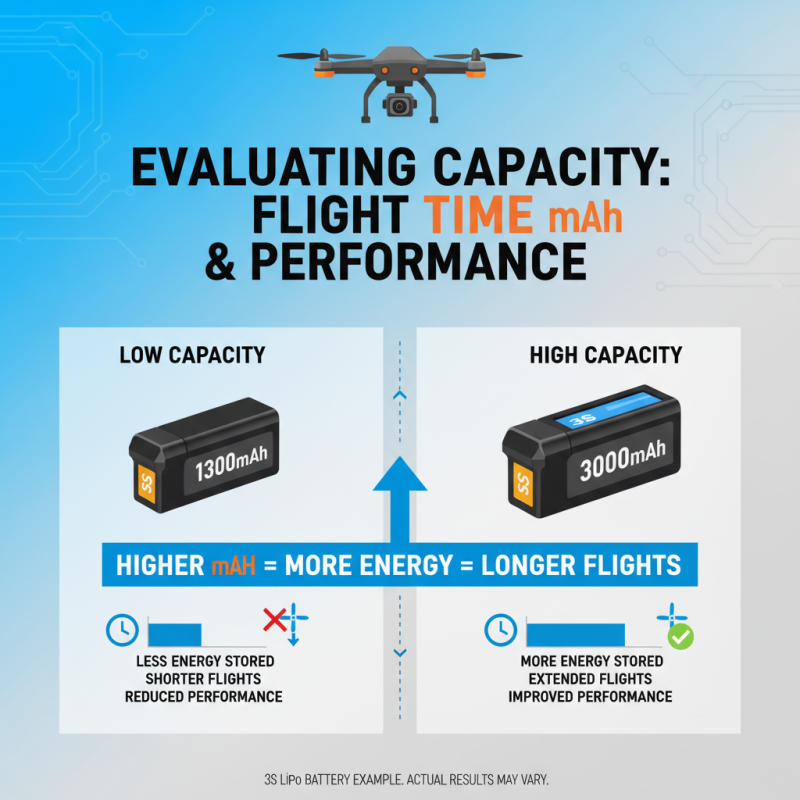
When evaluating a 3S LiPo battery, capacity is key. The capacity is measured in milliamp hours (mAh). Higher mAh ratings mean more energy is stored. This directly influences performance and flight time. A battery with 3000mAh can provide more prolonged flights compared to a 1300mAh one.
However, it is crucial to find balance. A high-capacity battery can add weight, affecting maneuverability. If your drone is heavy, it may not perform optimally. Understanding your needs is essential. Will you fly for extended periods, or do you prefer agility?
Look at your flying style. For racing, lower mAh might be fine. For long-range missions, prioritize more capacity. Don't just pick the highest mAh. Consider how it impacts your specific application. Think through your choices carefully. This ensures an ideal mix of power and performance.
Discharge Ratings: Importance of C-Rating in 3s Lipo Batteries
When selecting a 3s Lipo battery, understanding discharge ratings is crucial. The C-rating indicates how much current a battery can safely discharge. For example, a 2200mAh Lipo battery with a 20C rating can deliver 44A (20 x 2.2). This measurement aids in determining whether the battery can handle your application's power needs.
Higher C-ratings provide more burst power, beneficial for high-performance applications like drone racing or RC cars. However, batteries with inflated C-ratings can be misleading. Reports show that many manufacturers exaggerate these numbers, leading to potential safety hazards. Always verify the manufacturer’s claims against user reviews and independent tests.
Moreover, consider the balance between weight and capacity. A higher C-rating usually means more weight, which can impact performance. The right C-rating enhances efficiency while maintaining control. Ultimately, assessing how well a battery performs under load reflects its true value. Getting it wrong can result in diminished performance or damage to your equipment.
Discharge Ratings: Importance of C-Rating in 3s Lipo Batteries
This bar chart illustrates the discharge current associated with different C-Ratings in 3s Lipo batteries. Higher C-Ratings indicate a higher maximum continuous discharge current, which is crucial for applications requiring significant power bursts.
Selecting the Right Connector Type for Your 3s Lipo Setup
Selecting the right connector type for your 3s Lipo setup is crucial. Connectors impact both performance and safety. Many options exist, and understanding them can make a significant difference. Popular connectors include XT60, EC3, and Deans. Each has unique characteristics. XT60, for example, is known for its reliable connection and durability.
Consider the current rating of the connector. Higher ratings ensure minimal resistance. Check the application as well. If your setup involves high discharge rates, you'll need connectors that can handle that. Poor connections can lead to overheating and even fire hazards. Choosing a connector should not be a rushed decision.
Pay attention to the gauge of the wire used with the connectors. Thicker wires can carry more current. However, they also add weight. Additionally, ensure good soldering practices are followed for a reliable connection. Take the time to test your setup after installation. Over time, wear and tear can impact the effectiveness of your connectors. Regular inspections are essential to maintain safety and performance.
Essential Tips for Choosing the Right 3s Lipo Battery - Selecting the Right Connector Type for Your 3s Lipo Setup
| Connector Type |
Current Rating (Amps) |
Common Applications |
Pros |
Cons |
| Deans Connector (T-Plug) |
60A |
RC Cars, Drones |
Low resistance, secure connection |
Compatibility issues with other connectors |
| XT60 Connector |
60A |
Multirotors, FPV Racing |
Robust design, heat resistant |
Bulky size for some applications |
| EC3 Connector |
60A |
Planes, Helicopters |
User-friendly, solid connection |
Limited availability for some users |
| XT90 Connector |
90A |
Larger drones, high-power applications |
High current handling, durable |
Not ideal for small projects |
| JST Connector |
3A |
Microcontrollers, small devices |
Compact size, lightweight |
Low current rating |
Safety Considerations: Proper Handling and Storage of Lipo Batteries
Handling and storing LiPo batteries safely is crucial for their longevity and user safety. According to the National Fire Protection Association (NFPA), improper handling of lithium batteries is a leading cause of battery-related fires. It's essential to store these batteries in a cool, dry place, away from direct sunlight and heat sources. A fire-proof container can provide an extra layer of safety. When charging, always use a compatible charger to minimize risks.
To ensure safe storage, keep your LiPo batteries at about 3.7 volts per cell when not in use. This voltage level optimizes the battery's lifespan and reduces the potential for swelling or leakage. Regularly inspect batteries for physical damage or swelling. If you notice any irregularities, it’s best to properly dispose of them instead of risking a malfunction during use.
Another tip is to never leave charging batteries unattended. A recent report from the Battery Safety Institute indicated that over 30% of reported incidents involved unattended charging sessions. Using a LiPo sack can also protect against potential fires. These safety measures may seem tedious, but they are fundamental for maximizing the efficiency and safety of your LiPo battery.

 +86-13928815851
 CONTACT NUMBER
 CONTACT NUMBER