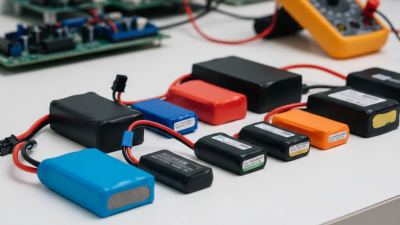
Essential Tips for Choosing the Right Lipo Battery?
When it comes to choosing a Lipo Battery, the decision can be daunting. With various types and specifications available, finding the right one is essential for optimal performance. A quality Lipo Battery can significantly enhance your electronic devices. Therefore, understanding their features and characteristics is crucial.
This guide offers essential tips to help you select the best Lipo Battery. Consider factors like capacity, discharge rate, and safety features. Each aspect influences not only performance but also longevity. It is tempting to choose the cheapest option, but this can lead to poor results or even safety risks.
Reflect on your specific needs before making a purchase. A powerful Lipo Battery might be great for racing drones, but less efficient for casual model flying. Knowledge and careful consideration can make a significant difference. Emphasizing quality over price is often wise. Make informed decisions based on reliable information to ensure safety and performance.

Understanding Lipo Battery Chemistry and Specifications
When selecting a lipo battery, understanding its chemistry and specifications is crucial. Lithium polymer batteries offer high energy density and lightweight characteristics. However, they also require a solid grasp of their chemistry. The relationship between voltage, capacity, and internal resistance is critical. High internal resistance can lead to reduced performance and overheating.
Consider the battery's voltage. It typically ranges from 3.2V to 4.2V per cell. A higher voltage often means more power, but it also increases the risk of damage if not handled correctly. Battery capacity, measured in milliamp hours (mAh), indicates how long it can run. A higher capacity provides longer run time but can also mean a larger size.
Safety should not be overlooked. Lipos can catch fire if overly discharged, punctured, or improperly charged. Awareness of how to monitor battery health is vital. Signs like puffing or odd smells indicate potential failure. Regularly check the battery's condition and discharge cycles. These practices might seem tedious but are essential for safety and longevity.
Evaluating Capacity and Voltage for Optimal Performance
When selecting the right LiPo battery, capacity and voltage are key factors. Capacity, measured in milliamp-hours (mAh), indicates how much energy the battery can store. A higher capacity means longer run times. However, a battery with too much capacity may add unnecessary weight. Choose a capacity that fits your project’s requirements.
Voltage is equally important. It directly affects the power output. Standard LiPo cells range from 3.7V to 22.2V. Ensure that the voltage matches your device. An incorrect voltage can damage electronic components. Always check the compatibility before making a purchase.
Here are some tips: Consider your device’s specifications. Know the power requirements well. Read user reviews on battery performance. Get multiple opinions for a balanced view. Doing research can save you from buying the wrong battery. Balancing capacity and voltage is crucial for optimal performance.
Assessing Discharge Rates for Your Specific Application
When selecting a lipo battery, assessing discharge rates is crucial. The discharge rate affects how much power your device receives. A higher C rating means more power can be delivered quickly. However, improper matching may lead to overheating or reduced performance.
Understanding your specific application helps in choosing the right discharge rate. If you're running a drone or a high-performance car, a high discharge rate is essential. For slower devices, a lower C rating would suffice. This mismatch can cause inefficiency. Consider your usage patterns and how quickly your device requires power.
Tips for selecting the right battery include researching various discharge rates. Look for detailed specifications and ask experienced users for insights. Evaluate the feedback on performance. Join communities to share experiences and learn from others. Testing different batteries may reveal unforeseen issues. Reflect on your needs and adapt as they change over time.
Prioritizing Safety Features and Quality Certifications
When selecting a lipo battery,
safety features should be at the forefront. Look for batteries that include built-in protection circuits.
These circuits help prevent overcharging and short circuits. A well-designed battery will mitigate risks
associated with overheating.
Quality certifications are crucial too. Batteries should meet recognized standards like
UL or CE.
These certifications indicate that the products have undergone rigorous testing.
They ensure the battery's safety and reliability. A lack of certification may signal potential dangers,
even if the battery appears to function well.
Always check the battery's specifications. Misinterpretation can lead to poor choices.
It’s important to understand the required capacity and voltage. These parameters directly influence performance.
Relying solely on manufacturer claims can lead to disappointment.
Gather information from multiple sources for a well-rounded view.
Comparing Brand Reliability and Customer Reviews in the Market
Choosing the right lipo battery requires careful consideration of brand reliability and customer reviews. Many brands claim to offer the best products, but not all live up to their promises. Exploring customer feedback can provide insights that specifications alone cannot. Look for battery reviews that highlight performance in real-world scenarios. This can include details about charge cycles, discharge rates, and overall longevity.
Brand reliability is a critical aspect. Established brands often have a track record that can give you confidence. However, don’t overlook newer brands that receive high praises from customers. A personal experience shared in a review can illuminate issues like battery swelling or overheating. Additionally, you may find reviews addressing customer service experiences, which is just as important as the product quality.
It’s essential to be aware of discrepancies. A battery that works perfectly for one user may underperform for another. Variability in manufacturing can also lead to mixed reviews. Pay attention to patterns in feedback rather than focusing on a few isolated experiences. Ultimately, a diverse range of reviews can guide you towards making a more informed choice.
Essential Tips for Choosing the Right Lipo Battery
| Feature |
Rating (1-5) |
Reliability |
Customer Reviews |
Price Range |
| Capacity (mAh) |
4 |
High |
Positive |
$25 - $50 |
| Weight (grams) |
3 |
Medium |
Mixed |
$20 - $40 |
| Charge Time (minutes) |
5 |
Very High |
Excellent |
$30 - $60 |
| Discharge Rate (C) |
4 |
High |
Very Positive |
$35 - $70 |
| Cycle Life (charges) |
4 |
Good |
Positive |
$40 - $80 |

 +86-13928815851
 CONTACT NUMBER
 CONTACT NUMBER