Top 10 Facts About Lithium Batteries You Should Know?
Lithium Batteries play a crucial role in our modern world. These power sources are used in smartphones, laptops, and electric vehicles. Their popularity has surged due to their lightweight nature and efficiency. However, many people do not know the key facts about them.
Understanding Lithium Batteries is essential for making informed choices. They have a complex chemistry that affects their performance and lifespan. While they are convenient, they also have environmental implications. Their production requires resources that can harm the planet. Some users often overlook safety concerns related to overheating and potential fires.
As technology advances, so does our reliance on Lithium Batteries. A deeper awareness of their qualities can lead to better usage and recycling practices. We need to reflect on our dependence on these batteries and consider sustainable alternatives. Knowing the top facts about Lithium Batteries will help us navigate their benefits and risks more effectively.
What Are Lithium Batteries and How Do They Work?
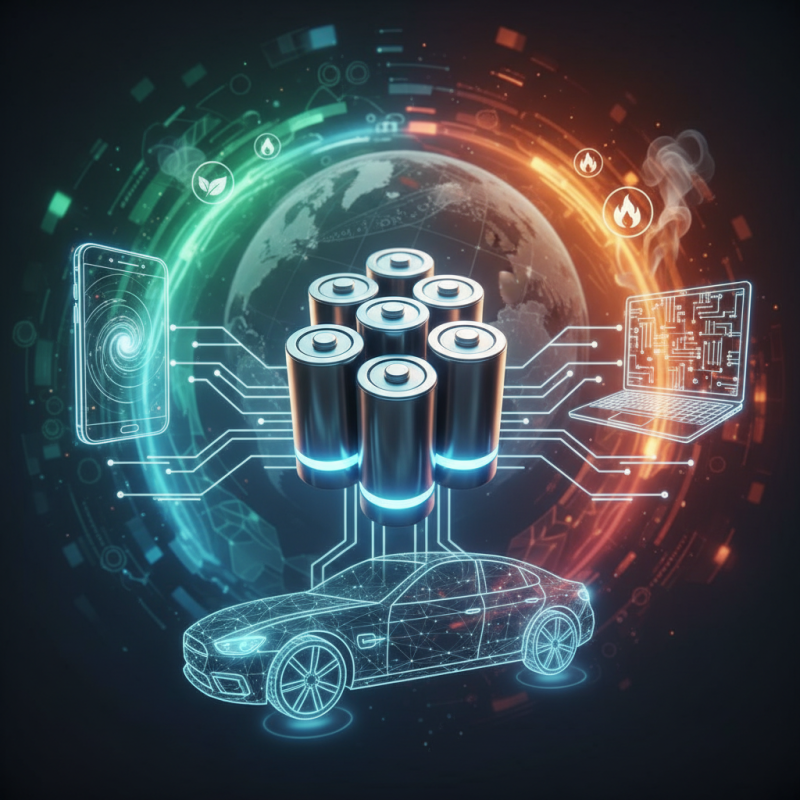
Lithium batteries are a key technology in the modern world. They power numerous devices like smartphones and laptops. But how do they actually work? At their core, lithium batteries use a chemical reaction. The movement of lithium ions between the anode and cathode generates electricity. This process is efficient and lightweight, making them popular for portable electronics.
When you charge a lithium battery, lithium ions move to the anode. When you use the battery, these ions travel back to the cathode. This cycling creates a reliable energy source. However, not all lithium batteries are created equal. They can degrade over time, losing capacity and life cycle. High temperatures can speed this degradation, leading to safety concerns.
Understanding lithium batteries means recognizing their limits. They can be unstable if damaged. Proper handling and care are essential. Even a small defect can lead to significant issues. As technology advances, researchers explore better alternatives. These new systems may overcome today’s lithium battery challenges. The quest for improved energy storage continues.
History and Development of Lithium Battery Technology
The journey of lithium battery technology started in the 1970s. Scientists sought better energy storage solutions. Traditional batteries were bulky and inefficient. In 1980, the first lithium battery was introduced. It offered higher energy density and lighter weight.
However, early models faced safety issues. Overheating and explosions were common. The technology needed refinement. Throughout the 1990s, researchers improved the design. They focused on stabilizing lithium compounds. This progress led to commercial viability.
By the early 2000s, lithium batteries became popular in portable electronics. Their compact size made them ideal for smartphones and laptops. Yet, challenges remained. Rapid charging cycles still posed risks. Scientists aimed to enhance longevity and safety. The quest for better solutions continues. There’s much to learn from past mistakes.
Advantages of Lithium Batteries Over Other Types
Lithium batteries have become a cornerstone of modern energy applications. Their lightweight nature and high energy density propel them ahead of traditional lead-acid and nickel-cadmium batteries. According to the U.S. Department of Energy, lithium-ion batteries can store up to 250 watt-hours per kilogram. This gives them a significant edge, especially in portable electronics and electric vehicles.
One major advantage is their longevity. Lithium batteries typically last 2-3 times longer than their counterparts. This reduces waste and the frequency of replacements. Notably, they are less prone to the “memory effect,” which can hinder the performance of older battery types. However, their production does come with environmental concerns. Mining lithium can lead to water shortages and ecological damage in extraction areas.
Additionally, lithium batteries charge quickly. Many models can reach 80% capacity in under 30 minutes. This is crucial for consumers who are always on the go. Yet, the safety of these batteries raises questions. Thermal runaway can occur if batteries are damaged, potentially causing fires. Thus, manufacturers must invest heavily in safety features. This area needs improvement to boost consumer confidence and safety overall.
Top 10 Facts About Lithium Batteries You Should Know
| Fact |
Details |
| High Energy Density |
Lithium batteries offer a higher energy density compared to other battery types, allowing for more energy storage in a smaller size. |
| Long Cycle Life |
They can typically last for more than 2000 charge cycles, significantly extending their useful life. |
| Low Self-Discharge Rate |
Lithium batteries have a low self-discharge rate, retaining charge for longer periods when not in use. |
| Temperature Tolerance |
They can perform efficiently in a wide range of temperatures, making them suitable for various environments. |
| Lightweight |
Lithium batteries are much lighter than lead-acid batteries, making them ideal for portable devices. |
| Fast Charging |
They feature technology that allows for faster charging compared to other battery types. |
| Eco-Friendly |
Lithium batteries are less toxic and have a lower environmental impact than other battery chemistries, such as nickel-cadmium. |
| Low Maintenance |
They require less maintenance compared to lead-acid batteries, which need regular watering. |
| Versatile Applications |
Lithium batteries are used in a wide variety of applications, from smartphones to electric vehicles and renewable energy storage. |
| Safety Features |
Modern lithium batteries include built-in safety features to prevent overheating and thermal runaway. |
Common Applications of Lithium Batteries in Daily Life
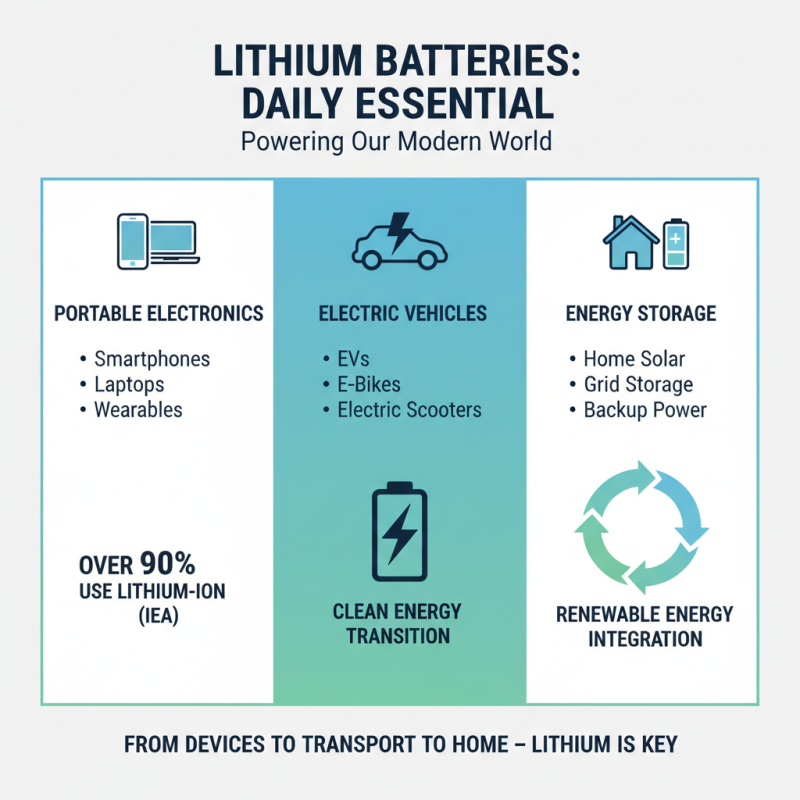
Lithium batteries are essential in our daily life. They power many devices we rely on. From smartphones to laptops, lithium batteries are everywhere. According to the International Energy Agency, over 90% of portable electronics use lithium-ion technology. This widespread adoption highlights their importance.
In electric vehicles, lithium batteries play a crucial role. A report from BloombergNEF states that by 2040, electric vehicles will account for 56% of new car sales. Their efficiency and energy density make them ideal for this application. Other applications include portable power tools and medical devices. The healthcare sector increasingly depends on lithium batteries for life-saving equipment.
However, the production and disposal of these batteries raise challenges. Mining lithium can harm the environment. Recycling is still in development. We should consider these factors as we rely on this technology. Striking a balance between innovation and sustainability is essential for future growth.
Safety Concerns and Environmental Impact of Lithium Batteries
Lithium batteries have transformed energy storage, but their safety and environmental impacts raise critical concerns. According to the United Nations, around 20% of lithium-ion batteries fail during use, which can cause fires and explosions. Proper handling and disposal are essential. Many users remain unaware of the risks involved, highlighting the need for increased awareness and education.
The extraction of lithium is another significant concern. Mining operations often deplete local water sources. In South America, around 2 million gallons of water are used per ton of lithium extracted. This can harm local ecosystems and impact agriculture. Furthermore, the waste generated could lead to soil contamination, which affects both plants and wildlife.
Recycling practices for lithium batteries are still underdeveloped. Data from the International Energy Agency reveals that only 5% of lithium batteries are recycled effectively. The rest are often discarded in landfills, where they can leach toxic substances. This situation underscores an urgent need for improved recycling methods. Addressing these environmental challenges is vital for sustainable development in the battery industry.

 +86-13928815851
 CONTACT NUMBER
 CONTACT NUMBER