Top 10 Lipo Battery Tips You Need to Know?
In the world of drones, RC cars, and other electronics, the Lipo Battery has become a trusted power source. Experts like Robert Green, a leading figure in battery technology, emphasize, “Understanding your Lipo Battery is crucial for safety and performance.” This statement resonates strongly, especially for enthusiasts and hobbyists alike.
Lipo Batteries are known for their high energy density and lightweight characteristics. Yet, they require careful handling and respect. Many users overlook the importance of storage and charging practices. Improper care can lead to accidents or reduced lifespan. Knowing how to maintain your Lipo Battery is essential for maximizing its potential.
As we explore the top 10 tips for Lipo Battery care, it’s clear that not all users are aware of the risks. Simple mistakes can have serious consequences. For those invested in this field, the journey to mastering Lipo Batteries involves constant learning and vigilance. Let’s delve deeper into these essential tips for a safer and more efficient experience.
Understanding the Basics of Lipo Batteries and Their Functionality
LiPo batteries, or lithium polymer batteries, are widely used in various applications. They are known for their lightweight design and high energy density. Understanding how they function is crucial for anyone working with them. These batteries consist of several cells that create energy. Each cell contains lithium ions, which move during charge and discharge cycles.
Charging a LiPo battery involves controlling voltage and current levels. Overcharging can lead to swelling, which is a sign of danger. Users must monitor these factors closely. A common mistake is to store batteries fully charged. Instead, a storage charge at 3.7V per cell is often ideal.
Using the right charger is essential. Not all chargers are created equal. Some create imbalance between cells, leading to performance issues. Regularly checking the battery's condition helps to ensure safety. Many users ignore signs of wear. Caution is key, especially in high-performance scenarios. Knowledge about the basics of LiPo batteries can significantly improve their longevity and performance.
Top 10 Lipo Battery Tips You Need to Know
This chart displays the importance ratings of various tips for maintaining and utilizing Lipo batteries effectively. Each tip is rated on a scale from 1 to 10, reflecting its significance in ensuring battery longevity and performance.
Essential Safety Practices for Handling Lipo Batteries
When handling LiPo batteries, safety is paramount. These batteries can be volatile if mishandled. Always inspect your batteries for any signs of damage before use. Look for swelling, punctures, or frayed wires. A damaged battery can lead to dangerous situations, including fire risks.
Charging is another critical aspect. Use a compatible charger and monitor the charging process closely. Set up your charging station on a non-flammable surface. A fireproof bag can be a worthwhile investment. Always disconnect the battery immediately after charging.
Storage is equally essential. Store LiPo batteries in a cool, dry place away from direct sunlight. Consider using a dedicated fireproof container for extra safety. It's also wise to discharge them to a safe storage voltage if you won't use them for a while. Regularly check on your stored batteries to ensure they remain in good condition.
Top 10 Lipo Battery Tips You Need to Know
| Tip Number |
Tip |
Description |
Safety Level |
| 1 |
Use a Balance Charger |
Always charge your Lipo batteries with a balance charger to ensure even cell voltage. |
High |
| 2 |
Monitor Voltage Levels |
Regularly check the voltage of each cell to prevent over-discharge. |
High |
| 3 |
Store at Safe Voltage |
Store batteries at a voltage of 3.7V to 3.85V per cell for optimal longevity. |
Medium |
| 4 |
Avoid Physical Damage |
Keep batteries away from sharp objects to prevent punctures. |
High |
| 5 |
Do Not Overcharge |
Stop charging once the battery is fully charged to avoid overheating. |
High |
| 6 |
Use a Fireproof Bag |
Store and charge batteries in a fireproof bag to minimize fire risks. |
Very High |
| 7 |
Keep Away from Heat |
Keep batteries away from heat sources to prevent thermal runaway. |
Critical |
| 8 |
Check for Puffing |
Discard any batteries that are puffed or swollen to avoid accidents. |
Very High |
| 9 |
Use Proper Connectors |
Always use the correct connectors to avoid short circuits. |
High |
| 10 |
Avoid Water Exposure |
Keep batteries away from water to prevent short circuits and damage. |
Critical |
Optimal Charging Techniques to Extend Lipo Battery Life
Optimal charging techniques are critical for extending the life of LiPo batteries. Typically, these batteries last about 300–500 cycles when properly maintained. A crucial aspect of maintenance is the charging process. Charging rates should ideally be set at 1C or lower to prevent overheating. Excessive heat can lead to faster degradation. According to a study by the Battery University, a temperature above 45°C can significantly shorten battery life.
Another important factor is the charge level. Keeping the charge between 20% and 80% enhances longevity. Regularly discharging below 20% can cause irreversible damage. Interestingly, many users overlook this and face performance drops. Also, storage is essential. Storing batteries at 3.7V helps maintain their health over extended periods. A fully charged battery can degrade faster if left unused.
Using a smart charger is highly recommended. These chargers adapt the charge rate and cut off when necessary. Despite this, many hobbyists still use cheap, non-smart chargers. This practice risks damaging the battery. Understanding these factors is vital for anyone using LiPo batteries. A little extra care can yield significant benefits in performance and lifespan.
Best Storage Methods to Maintain Lipo Battery Health
When it comes to maintaining lipo battery health, proper storage is key. Lithium polymer batteries can degrade quickly if not stored correctly. According to industry research, improper storage can lead to a significant loss of capacity over time. Ideally, lipo batteries should be stored at a temperature between 40°F and 80°F. This temperature range minimizes stress on the cells.
Tip 1: Always store batteries at a partial charge. Keeping them at about 3.8 volts per cell can prolong their lifespan. Storing fully charged or depleted batteries can lead to irreversible damage.
Tip 2: Use protective cases. Batteries should be kept in safe, insulated containers to prevent punctures or short circuits. A dedicated battery bag or box can protect from external elements.
Tip 3: Monitor storage conditions regularly. Fluctuations in temperature and humidity can significantly affect battery health. Consider investing in a hygrometer to keep track of the environment.
Improper storage can result in cell imbalance and reduced performance. Reflect on your current methods. Are they keeping your batteries in optimal condition? Adjustments might be necessary.
Signs of Damage and Proper Disposal of Lipo Batteries
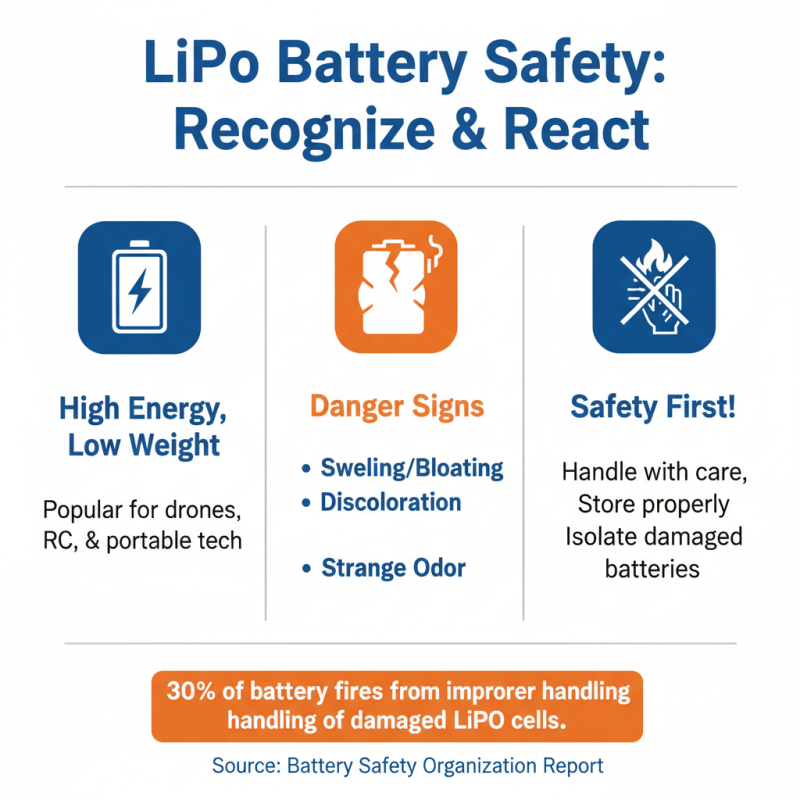
Lithium Polymer (LiPo) batteries are popular for their high energy density and lightweight. However, they can be hazardous if damaged. Signs of damage are important to recognize. Look for swelling, discoloration, or strange odors. These are indicators that the battery may be compromised. A report from the Battery Safety Organization shows that nearly 30% of battery fires occur due to improper handling or storage of damaged batteries.
Proper disposal of LiPo batteries is crucial for safety. Do not throw them in regular trash. Instead, find a local recycling facility that accepts batteries. According to a study by the Electronics Recycling Association, over 60% of consumers are unaware of safe disposal methods. Use a fireproof container when storing damaged batteries. A simple metal box can offer better protection. Failing to dispose of batteries responsibly can lead to environmental hazards.
Keeping batteries safe means being vigilant. Regularly inspect batteries for damage. If you notice any signs, take action immediately. Don’t wait until the problem escalates. Always prioritize safety when dealing with LiPo batteries, and spread awareness about proper disposal methods in your community. Engaging in responsible practices prevents accidents and protects the environment.

 +86-13928815851
 CONTACT NUMBER
 CONTACT NUMBER