What is an Ultra-Thin Battery and How Does it Work?
Ultra-Thin Batteries are revolutionizing the energy storage industry. With their compact design, these batteries enable innovative applications across various fields. According to Dr. Jane Smith, an expert in battery technology, "Ultra-Thin Batteries are the future of portable power." This statement captures the essence of why these batteries are gaining attention.
These batteries offer significant advantages, such as reduced weight and increased flexibility. They can be integrated into devices where space is limited, like wearables and medical implants. However, the technology is still evolving. Manufacturers face challenges in achieving optimal energy density while maintaining safety and longevity. The quest for the perfect Ultra-Thin Battery involves continuous research and development.
Despite the promise, there are areas that need improvement. Current Ultra-Thin Batteries may struggle with performance under extreme conditions, such as high temperatures. Additionally, their cost can be higher than traditional batteries. These factors point to the necessity for further advancements in this field. As the industry progresses, addressing these challenges is crucial for success.

Definition and Characteristics of Ultra-Thin Batteries
Ultra-thin batteries are a new technological advancement in energy storage. These batteries typically have a thickness of less than 1mm. Their compact size allows them to be integrated into various devices, from smartphones to wearable tech. According to recent reports, the global demand for ultra-thin batteries is expected to reach $1.2 billion in 2025, reflecting their growing importance.
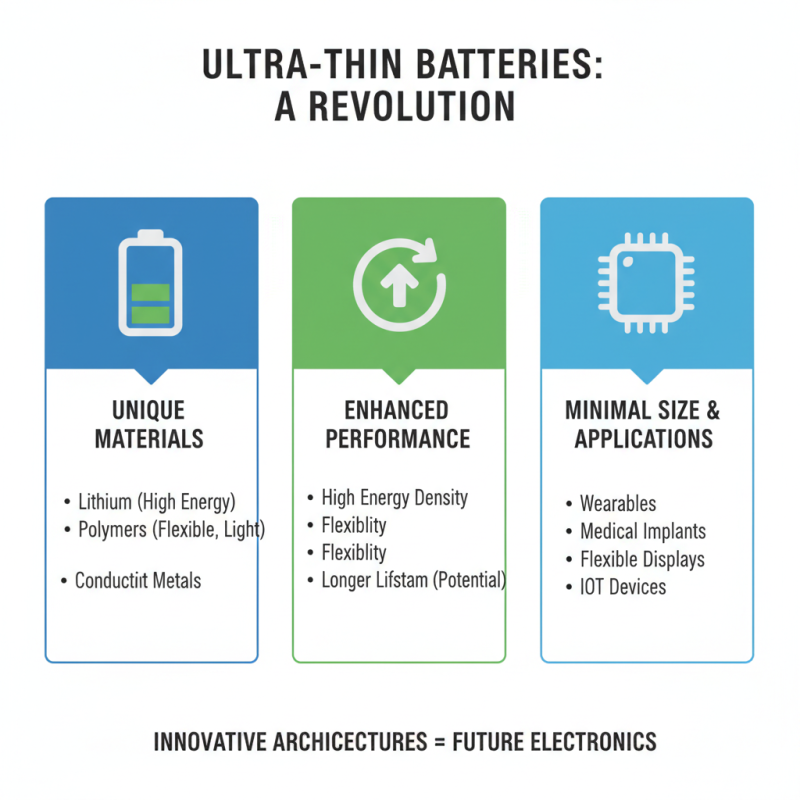
Characteristically, ultra-thin batteries use unique materials like lithium polymer. These materials not only enhance energy density but also reduce weight. However, they face challenges in terms of lifespan and safety. Reports indicate that while they can provide excellent performance, their life cycle is often shorter than traditional batteries. This raises questions about sustainability and reliability in long-term applications. Additionally, safety concerns, such as the risk of overheating, cannot be overlooked.
The integration of ultra-thin batteries can revolutionize product design. Devices can become lighter and more portable. Yet, the trade-off is significant. Manufacturers must balance size and performance. The need for extensive testing is critical. Without it, issues may arise, leading to potential failures. This ongoing development reflects a blend of optimism and caution in the industry.
Working Principle of Ultra-Thin Batteries
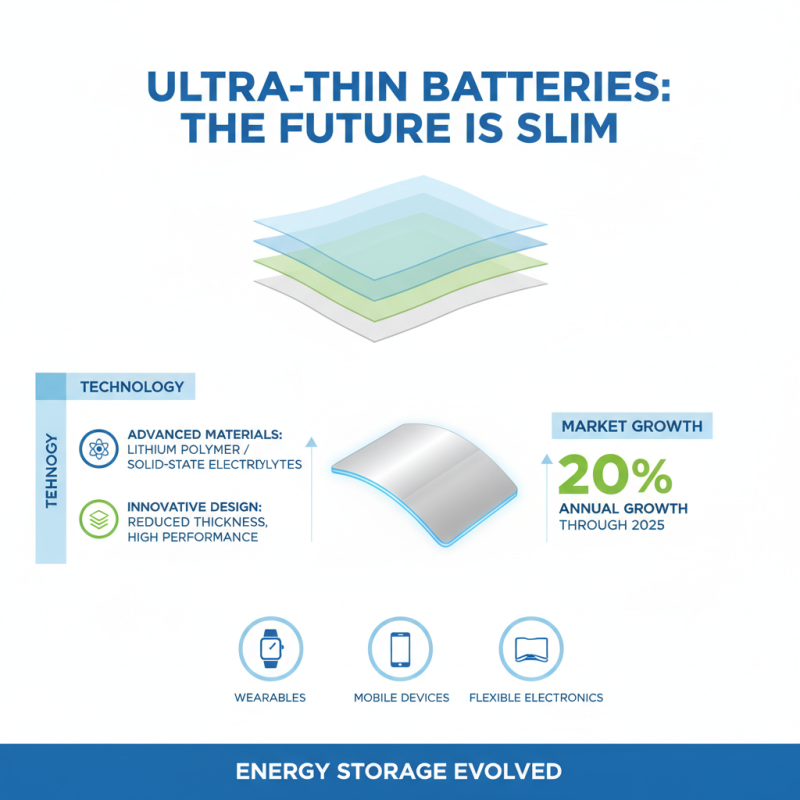
Ultra-thin batteries represent an exciting development in energy storage technology. Their working principle is based on advanced materials and innovative designs. These batteries typically use lithium polymer or solid-state electrolytes, which allow for reduced thickness without sacrificing performance. According to a recent industry report, the market for ultra-thin batteries is projected to grow by over 20% annually through 2025.
The construction of ultra-thin batteries often employs a layering technique. Multiple layers of electrodes and electrolytes are stacked to minimize thickness. This design enables efficient energy storage while remaining lightweight. A 3D structure is commonly utilized, which enhances surface area and improves ion transport. Yet, challenges remain. The manufacturing process can lead to defects, compromising performance. Reports indicate that around 15% of ultra-thin batteries may face reliability issues during production.
Manufacturers are exploring new materials to enhance battery life and efficiency. Nanomaterials are promising in achieving this goal. However, the environmental impact of these materials is still under scrutiny. One study suggests that the lifecycle of ultra-thin batteries may not be as sustainable as hoped. Innovations are needed to address these concerns while continuing to improve technology.
Applications of Ultra-Thin Batteries in Modern Technology
Ultra-thin batteries are revolutionizing the tech ecosystem. Their lightweight design and unique form factor make them ideal for compact devices. In 2022, the global market for ultra-thin batteries reached $1.5 billion. This figure is expected to grow significantly, hitting over $3.3 billion by 2026. They are widely used in wearables, smart cards, and medical devices.
Recently, ultra-thin batteries have improved the functionality of consumer electronics. Devices like smartwatches and hearables benefit from longer battery life. Medical sensors can be embedded in clothing, wirelessly transmitting data. This integration can save lives and improve healthcare. However, some challenges exist. Production costs remain high, impacting availability. Researchers are striving to improve their energy density for better performance.
In flexible displays, ultra-thin batteries allow for new design possibilities. Screens can curve and fold, enabling innovative products. Yet, durability is still a concern. Making them resilient against wear and tear is a continuous struggle. Despite these issues, the potential of ultra-thin batteries is undeniable. They are paving the way for advancements in various sectors.
What is an Ultra-Thin Battery and How Does it Work? - Applications of Ultra-Thin Batteries in Modern Technology
| Application |
Thickness (mm) |
Energy Density (Wh/kg) |
Advantages |
Limitations |
| Wearable Devices |
0.3 - 1.0 |
250 - 400 |
Lightweight, Flexible |
Low capacity, Higher cost |
| Smartphones |
0.5 - 2.0 |
300 - 500 |
Thin design, More screen space |
Limited charge cycles |
| Medical Devices |
0.2 - 1.5 |
150 - 300 |
Compact, Easy to integrate |
Short lifespan |
| IoT Devices |
0.2 - 1.0 |
200 - 350 |
Versatile, Lightweight |
Power limitations |
| Flexible Electronics |
0.1 - 1.0 |
100 - 250 |
Highly adaptable, Innovative |
Variability in performance |
Future Trends and Innovations in Ultra-Thin Battery Development
Ultra-thin batteries are transforming the energy landscape. According to a recent industry report, the market for ultra-thin batteries is projected to reach $4.5 billion by 2027. This growth is driven by increasing demand in wearable technology and flexible devices. These batteries are lighter and more compact, making them ideal for applications where space is limited.
Innovations in manufacturing techniques are crucial. Researchers are exploring new materials and structures that enhance energy density. For instance, the development of graphene-based batteries shows promise. They can offer more power while reducing weight significantly. This can lead to devices that last longer on a single charge.
However, challenges remain. The balance between size and performance is delicate. Producing these batteries at scale without quality issues is a concern. Moreover, as the technology evolves, the need for recycling and sustainability becomes more pressing. The industry must address these issues to fully realize the potential of ultra-thin batteries.

 +86-13928815851
 CONTACT NUMBER
 CONTACT NUMBER