Leave Your Message

Why Choose Ultra Thin Batteries for Global Buyers?

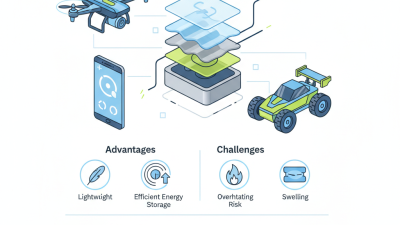
For global buyers, battery choice often begins with a simple question: how much power can fit into a smaller space? Ultra-Thin Batteries offer a practical answer for smart cards, wearable devices, medical sensors, and compact tracking equipment. Their slim profiles can improve product comfort, reduce enclosure size, and create more flexible design options. In a wrist-worn sensor, every millimeter matters. A thinner battery may help the device sit closer to the skin without adding unnecessary weight.

However, slim design does not automatically mean better performance. Buyers must examine capacity, operating voltage, discharge stability, cycle life, storage conditions, and connector requirements. A supplier may provide impressive laboratory figures, but real devices can behave differently under heat, cold, vibration, or continuous wireless transmission. Testing matters. So does documentation.

Experienced procurement teams usually request datasheets, safety reports, sample units, and production references before approving a purchase. They also review international shipping rules, labeling requirements, quality systems, and after-sales support. These details can prevent costly redesigns and delayed deliveries. Still, no battery fits every product. A very thin cell may sacrifice capacity, mechanical strength, or service life. That trade-off deserves honest discussion.

The strongest suppliers explain limitations clearly. They help buyers compare standard and customized solutions without promising unrealistic results. For global projects, reliability depends on more than a low unit price. It depends on consistent manufacturing, traceable materials, careful testing, and responsive technical communication. Ultra-Thin Batteries can support elegant, space-saving products, but only when their electrical and physical limits match the application. That judgment requires evidence, not assumptions.

Why Choose Ultra Thin Batteries for Global Buyers?

What Are Ultra-Thin Batteries?

Ultra-thin batteries are compact power sources designed for devices with very limited internal space. Most commercial models use lithium-based chemistry in a flat pouch structure. Some newer designs use thin-film or solid-state materials. Their thickness may measure only a few millimeters, while their length and width vary by application. This shape fits smart cards, medical patches, sensors, wearable devices, and compact tracking equipment. Inside, coated electrodes, separators, electrolyte, and protective layers work together to store and release energy. The outer pouch must remain sealed against moisture and physical damage.

That structure matters.

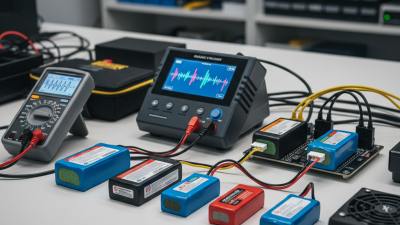
For global buyers, an ultra-thin battery should match the device’s voltage, current demand, charging method, and operating temperature. Engineers usually test samples under repeated charging, bending, vibration, and storage conditions. Capacity can drop when the battery becomes extremely thin.

Do not ignore that trade-off.

A thinner cell may provide less energy or shorter service life. This point is easy to underestimate. Buyers should request test data, material details, safety documentation, and applicable transport information before placing large orders. Production tolerances also deserve attention, because small thickness changes can affect assembly. Ultra-thin does not mean risk-free. Real performance depends on design, manufacturing quality, and controlled use.

How Ultra-Thin Batteries Work and Differ from Standard Batteries

Ultra-thin batteries work by compressing the cell’s active layers into a very small profile. Manufacturers coat or print the cathode, electrolyte, separator, and anode onto thin current collectors. Some designs use solid or polymer electrolytes instead of the liquid electrolyte found in many standard cells. IDTechEx’s Thin-Film Batteries 2024–2034 report describes these batteries as commonly serving low-power devices, with capacities often below 100 mAh. Their thin structure supports flexible sensors, smart labels, medical patches, and compact wearables.

The difference becomes clear beside a conventional coin cell. A CR2032 battery is about 3.2 millimeters thick and commonly provides around 220 mAh. Ultra-thin cells may measure below one millimeter, but their capacity is usually much lower. The trade-off is real. They can fit beneath a printed circuit or curved surface, while standard batteries usually deliver stronger pulse current and longer operating time. Field testing should measure leakage, voltage stability, bending stress, and performance across temperature changes. A 2024 market analysis from Yole Group identifies miniaturized batteries as important for connected sensors and medical electronics, yet application requirements still vary widely. Thin does not automatically mean better. A poorly matched cell may reduce device life, even when its size looks ideal.

Ultra-thin batteries use thin-film or printed electrode layers arranged in a compact, often flexible structure. Standard batteries generally use thicker wound or stacked electrode assemblies, which provide higher capacity but require more space. The chart compares representative thickness values for common battery formats.

Key Benefits for Global Product Designers and Buyers

Why Choose Ultra Thin Batteries for Global Buyers?

Key Benefits for Global Product Designers and Buyers

Ultra-thin batteries help product designers protect space without sacrificing useful power. In wearables, smart cards, medical monitors, and compact sensors, every millimeter matters. A thinner cell can create room for curved housings, stronger insulation, or a larger display. It may also reduce product weight. Small changes matter.

For global buyers, consistency is equally important. Reliable suppliers should provide capacity data, discharge curves, dimensions, cycle results, and safety documentation. These details support informed comparisons across regions and production batches. Designers can then match battery output with radios, displays, motors, and standby demands. Sample testing should include temperature changes, storage time, charging behavior, and physical stress. Real products rarely operate in perfect laboratories. That is easy to forget.

Ultra-thin formats can simplify international sourcing when specifications remain clear. Buyers should confirm tolerances, connector options, minimum order quantities, packaging, and shipping conditions early. They also need evidence that production controls are repeatable. A low profile does not guarantee longer runtime. That assumption needs review. Poor thermal planning or aggressive power demands may erase the benefit. In my experience, the best decision comes from testing the complete device, not the battery alone. Independent validation adds confidence when several markets and manufacturers are involved. Ask difficult questions before approval.

How to Evaluate Capacity, Safety, Size, and Lifespan

Why Choose Ultra Thin Batteries for Global Buyers?

When global buyers select ultra-thin batteries, capacity should match the device’s real workload. An attractive mAh figure can hide important details. Compare watt-hours, voltage, discharge rate, and usable capacity under operating conditions. Ask for test data at the intended load, not only laboratory results. A battery rated for 1,000 cycles may perform differently at high temperatures or rapid charging. Small differences matter.

Safety requires more than a protective circuit. Review overcharge, over-discharge, short-circuit, and thermal protection features. Request clear test reports and transport documents, including relevant lithium battery testing records. Check whether the cell design suits the enclosure and charging system. A thin battery pressed against a sharp edge may fail, even when its electrical design looks excellent. That risk is easy to miss.

Size should be verified with drawings, tolerances, connector positions, and flexible cable routes. Measure the actual sample. Do not rely on a catalogue image. Lifespan depends on temperature, charge habits, storage conditions, and daily energy demand. Ask how cycle life was tested. I have seen projects choose maximum capacity, then discover poor space for cooling. A perfect spreadsheet can still mislead. Real evaluation needs samples, repeated testing, and honest review of weak results.

Why Choose Ultra Thin Batteries for Global Buyers? - How to Evaluate Capacity, Safety, Size, and Lifespan

Evaluation Dimension Typical Technical Range How to Evaluate Importance for Global Buyers
Rated Capacity Approximately 10–500 mAh for many ultra-thin portable battery designs; capacity depends strongly on surface area and thickness. Compare the minimum rated capacity measured under the same discharge current, temperature, and cutoff voltage. For energy, use: Wh = nominal voltage × Ah. Example: 3.7 V × 0.10 Ah = 0.37 Wh. Prevents misleading comparisons based only on typical capacity or battery size. Confirm whether the stated capacity is nominal, typical, or minimum.
Energy Density Rechargeable lithium-ion polymer cells commonly provide approximately 150–250 Wh/kg at cell level, depending on design and materials. Compare watt-hours per kilogram and watt-hours per liter, including the protection circuit, tabs, pouch, and other required components where possible. Higher energy density can reduce product weight and thickness, but it must not replace safety, cycle-life, or thermal testing.
Physical Thickness Ultra-thin lithium pouch cells may be designed around approximately 0.4–3.0 mm, while the final product thickness is greater after protection, insulation, and connectors are added. Request a dimensional drawing showing cell thickness, length, width, tab position, cable exit, bend restrictions, and thickness tolerance. A cell that fits the prototype may not fit the finished product after protective components and mechanical clearance are included.
Nominal Voltage Most single-cell rechargeable lithium-ion polymer batteries have a nominal voltage of approximately 3.6–3.7 V and a full-charge voltage of about 4.2 V. Match the battery voltage range with the product electronics, charger, power-management IC, and protection circuit. Incorrect voltage matching can cause poor performance, charging faults, overheating, or permanent battery damage.
Discharge Capability Small ultra-thin cells are often optimized for low- to moderate-power electronics; the allowable continuous current must be confirmed for each cell design. Check continuous discharge current, pulse current, voltage sag, internal resistance, and temperature rise at the actual load profile. A battery with high capacity may still be unsuitable for products that require short bursts of high current.
Safety Protection A rechargeable lithium battery normally requires protection against overcharge, over-discharge, over-current, and short circuit. Some designs also include temperature monitoring. Verify the protection circuit, cutoff thresholds, thermal protection, separator design, pouch integrity, and abuse-test results. Ultra-thin construction leaves less room for mechanical protection, so cell handling, enclosure design, and assembly quality are critical.
Operating Temperature For many rechargeable lithium-ion cells, discharge is commonly specified around −20°C to 60°C, while charging is commonly limited to approximately 0°C to 45°C. Exact limits vary by cell. Request temperature specifications for charging, discharging, storage, and transport, plus test results at the intended operating extremes. Temperature limits are especially important for wearables, automotive accessories, outdoor devices, and products shipped through different climates.
Cycle Life Many standard rechargeable lithium-ion polymer cells provide approximately 300–800 full equivalent cycles before capacity falls to around 80%, depending on charging rate, depth of discharge, temperature, and storage conditions. Check the test definition: charge rate, discharge rate, temperature, depth of discharge, rest time, and end-of-life capacity threshold. A quoted cycle number is meaningful only when the test conditions match the intended application.
Calendar Life Capacity gradually decreases even when the battery is not used. High temperature and long periods at full charge generally accelerate aging. Request storage-life data at different temperatures and state-of-charge levels, and confirm the recommended storage voltage and humidity conditions. Important for inventory planning, warranty periods, medical devices, security products, and seasonal equipment.
Mechanical Reliability Pouch cells are lightweight and flexible, but they generally require protection from puncture, crushing, sharp edges, excessive bending, and swelling. Review bend radius, compression resistance, vibration testing, tab strength, pouch sealing, and enclosure clearance. Mechanical stress can reduce safety and service life even when the electrical specifications are satisfactory.
Compliance and Shipping Lithium batteries transported internationally generally require applicable transport testing, including UN 38.3 test compliance. Product safety requirements may also include IEC 62133-2, depending on the application and destination. Request current test reports, Safety Data Sheet documentation, transport classification, labeling requirements, and destination-market compliance records. Early compliance checks help reduce customs delays, shipping restrictions, redesign costs, and market-entry risks.
Best-Fit Application Suitable applications may include smart cards, wearable electronics, compact sensors, portable medical devices, tracking products, and other space-constrained equipment. Evaluate the complete power profile, available installation space, expected daily energy consumption, recharge frequency, ambient temperature, and required service life. The best ultra-thin battery is the one that balances capacity, safety, dimensions, current output, reliability, compliance, and total cost for the specific product.

Note: The ranges shown are representative industry ranges for ultra-thin lithium battery designs, not guaranteed values for every cell. Final specifications should be confirmed through the applicable technical datasheet, qualification report, and regulatory documentation.

Global Sourcing, Certification, and Application Considerations

Why Choose Ultra Thin Batteries for Global Buyers?

Global sourcing demands more than a low unit price. Ultra thin batteries can fit smart cards, wearable sensors, medical patches, and compact tracking devices. Their reduced profile may free valuable space for antennas, displays, or protective layers. In practice, I have seen a two-millimeter difference simplify an entire product layout.

Ask suppliers for cell drawings, electrical curves, production tolerances, and recent test reports. Certification requirements vary by chemistry, destination, and end use. Common checks may include IEC 62133 testing, UN 38.3 transport evidence, SDS documentation, and market-specific substance requirements. Do not accept a certificate without checking its scope, laboratory details, and matching model number. Traceability matters.

Application testing should cover pulse loads, continuous current, storage temperature, humidity, vibration, and shelf life. A battery that works in a sample device may fail after adhesive assembly. Measure voltage drop during wireless transmission, not only during standby. Confirm tabs, connectors, insulation, and sealing before mass production. Samples should come from normal production, when possible.

Thin is not automatically better. Lower thickness can reduce capacity or increase sensitivity to pressure. That trade-off is easy to underestimate. Global buyers should compare total landed cost, including tooling, inspection, shipping limits, and rejected batches. Requirements also change. Recheck them before shipment.