Leave Your Message

100mAh LiPo Battery Buying Tips for Global Buyers?

Buying a small LiPo pack can look simple until voltage, capacity, connectors, and safety records collide. A product labeled “100mAh” may still differ greatly in dimensions, discharge capability, and usable energy. Some listings also use the phrase “100mamph Lipo Battery,” a common spelling error that buyers should recognize during research.

For global buyers, this guide focuses on practical checks before payment. Confirm the nominal voltage, usually 3.7V for a single-cell LiPo pack, and verify its fully charged voltage. Check the continuous discharge rating, not only an impressive peak figure. Measure the battery pocket carefully. A connector that looks similar may have reversed polarity or a different pitch. Small details matter.

Battery expert Isidor Buchmann, founder of Cadex Electronics, wrote, “A battery is like a human being. It needs food, rest and exercise.” His comparison remains useful because storage, charging, and usage habits influence battery life. Buyers should request clear datasheets, recent production information, and realistic test evidence. Look for capacity results, internal resistance readings, and transport documentation from the supplier.

Do not trust every photograph.

A swollen pouch, crushed edge, or loose wire is a serious warning. I have seen compact batteries perform well on paper but disappoint under a modest load. That gap deserves honest attention. This buying guide will compare supplier reliability, technical specifications, packaging quality, and after-sales support, helping international purchasers choose a safer and more suitable 100mAh LiPo battery.
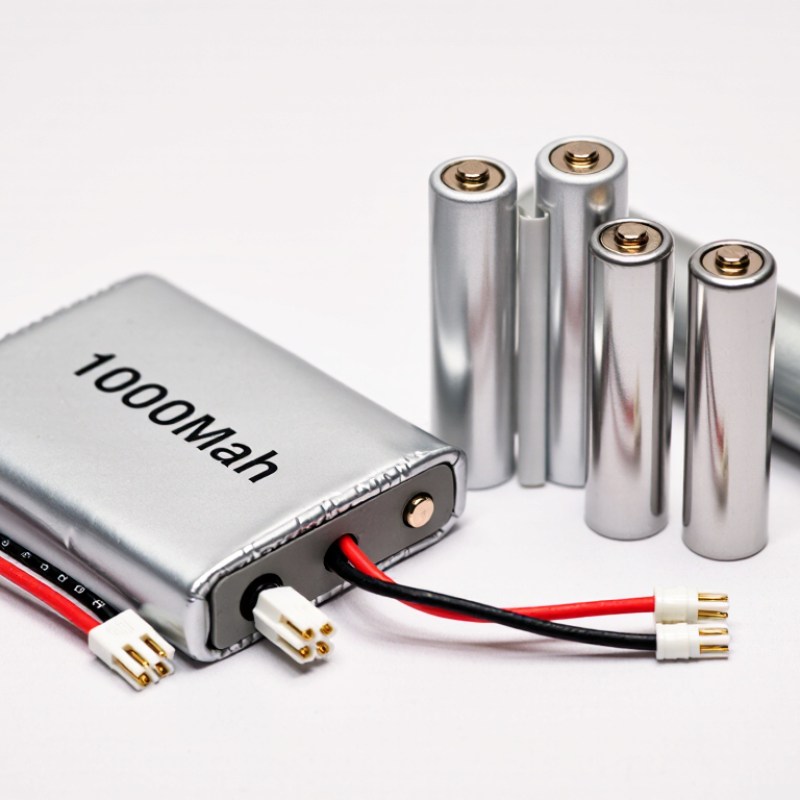
100mAh LiPo Battery Buying Tips for Global Buyers?

Understanding 100mAh LiPo Battery Specifications and Terminology

A 100mAh LiPo battery is small, but its specifications require careful reading. The 100mAh rating describes capacity under defined test conditions. Real capacity may decrease with high current, cold temperatures, or battery age. Nominal voltage is usually 3.7V, while full-charge voltage is commonly 4.2V. Never confuse these values.

C-rating indicates how quickly the battery can deliver current. A 20C rating suggests a theoretical maximum of 2A for a 100mAh cell. However, heat, wiring, and continuous use can reduce that figure. I prefer leaving a safety margin instead of using the advertised limit. Internal resistance also matters. Lower resistance usually means less voltage drop during demanding operation. Check the connector, wire length, polarity, dimensions, and weight before ordering. A perfect electrical match can still fail mechanically.

Look beyond capacity. Ask for cycle-life data, charging limits, storage voltage, and protection information. Some cells include protective circuits, while others require external control hardware. Confirm whether the capacity tolerance is stated, because 100mAh may not mean exactly 100mAh. It is also wise to request test reports and transport documentation from the supplier. Labels should clearly show voltage, capacity, and charging guidance. I once focused too heavily on size and overlooked the connector position. That mistake cost time. Small details matter. Temperature ratings deserve attention, too. Reliable selection comes from comparing the datasheet with your actual load, enclosure, charger, and operating environment.
Matching Battery Voltage, Capacity, and Discharge Requirements

100mAh LiPo Battery Buying Tips for Global Buyers

Matching Battery Voltage, Capacity, and Discharge Requirements

A 100mAh LiPo battery is tiny, but choosing one requires more than reading the capacity label. Start with voltage. A common single-cell pack is rated at 3.7V and reaches 4.2V when fully charged. Your device must accept both values, not only the nominal figure. Check the controller’s operating range and low-voltage cutoff. A mismatch can cause resets, overheating, or permanent cell damage. Measure the battery compartment too. A few extra millimeters can crush the pouch.

Capacity affects runtime, while discharge capability affects performance. A 100mAh cell stores about 0.37Wh at nominal voltage. Actual runtime will be lower after conversion losses, wiring resistance, and aging. For current demand, convert 100mAh to 0.1Ah. A 25C rating suggests 2.5A theoretically, but labels can be optimistic. Ask for continuous current data, not only a short burst figure. Compare that rating with the device’s startup surge. Small motors often need more current initially.

When buying across borders, request a datasheet, cell dimensions, connector polarity, charge voltage, and test conditions. Confirm whether capacity was measured under your real load. In my bench checks, two cells with identical labels delivered noticeably different runtimes. That result was inconvenient, but useful. Test a sample at the intended current before placing a large order. Use a compatible charger with overcharge and temperature safeguards. Do not rely on appearance alone. A neat pouch proves little.

100mAh LiPo Battery Buying Tips: Matching Voltage, Capacity, and Discharge Requirements

A standard single-cell LiPo battery is typically rated at 3.7V nominal and 4.2V when fully charged. For a 100mAh battery, the continuous current is calculated as capacity × C-rating: 1C = 0.1A, 10C = 1.0A, 20C = 2.0A, and 25C = 2.5A. Always verify the battery’s specified voltage range, capacity, connector, and continuous discharge rating before purchase. The safe cutoff voltage depends on the battery and device design; approximately 3.0V per cell is a common reference.

Choosing the Right Size, Connector, and Protection Features

A 100mAh LiPo battery stores about 0.37Wh at a nominal 3.7V. That sounds tiny, but size still matters. Measure length, width, and thickness, including wires and the connector. Leave clearance for swelling and movement inside the enclosure. A 2mm error can prevent installation. Check the discharge rating against the device’s peak current. For example, a 2A load requires roughly 20C from a 100mAh cell. Continuous and burst ratings are not interchangeable.

Connector choice deserves equal attention. Confirm the pitch, pin order, polarity, cable length, and wire gauge before ordering samples. A connector can fit physically while reversing polarity electrically. That mistake can damage a circuit immediately. Select protection covering overcharge, over-discharge, overcurrent, and short-circuit conditions. IEC 62133-2:2017 provides widely used safety requirements for rechargeable lithium cells and batteries. IATA’s 2025 Dangerous Goods Regulations identify 20Wh per cell and 100Wh per battery as key air-transport thresholds, but packaging and route rules still vary. Request UN 38.3 test evidence and a current specification sheet from the supplier.

Tips: Compare the measured cell size, not only the catalog drawing. Ask for connector photos and polarity diagrams. Test one sample under the real load. My first assumption might be wrong if the device has a hidden startup surge. Recheck temperature after charging and discharging. A protection board adds safety, but it also consumes space and may limit peak current.

Checking Quality, Certification, and Supplier Reliability

A 100mAh LiPo cell looks small, but quality differences can affect runtime, swelling, and device safety. Its nominal energy is about 0.37Wh at 3.7V. Request the rated voltage, measured capacity, internal resistance, cycle-life test method, and discharge curve. Do not rely on capacity printed on the pouch alone. IATA’s 2024 Dangerous Goods Regulations place lithium-ion batteries under a 100Wh reference threshold, but transport requirements still depend on packaging, equipment, and destination.

Certification needs careful checking. Ask for a current UN 38.3 test summary, not merely a certificate number. For rechargeable lithium cells, IEC 62133-2 testing covers conditions such as overcharge, vibration, and external short circuit. RoHS and REACH documentation may also matter for market access. The 2024 Global Battery Alliance Battery Passport guidance stresses traceability and responsible supply-chain data, which supports batch-level documentation. Yet paperwork can be incomplete.

Supplier reliability is easier to judge through evidence. Request samples from three production lots, then compare capacity, voltage, dimensions, and resistance. Review factory audit records, calibration dates, complaint rates, and corrective-action reports. A supplier should identify the cell maker, production date, separator specification, and storage limits. Small orders deserve the same discipline. I once treated matching dimensions as proof of interchangeability; it was not. A slightly different protection setting caused unstable testing. Leave room for independent validation, because a perfect datasheet cannot replace measured results.

Planning International Shipping, Storage, and Safe Battery Use

100mAh LiPo Battery Buying Tips for Global Buyers

International shipping begins before checkout. Confirm the battery’s cell count, voltage, connector, dimensions, and declared capacity. A 100mAh label does not guarantee identical performance between suppliers. Request a current safety data sheet and UN 38.3 test documentation from the seller. Carriers and customs offices may require different forms. Check the destination rules before payment, not after dispatch. Protect terminals against short circuits with separate bags or insulating covers. Use strong outer packaging that prevents movement and crushing.

Storage conditions matter during long delivery periods. Keep the cell near its recommended storage voltage, usually about 3.7 to 3.85 volts per cell. Store it in a cool, dry place away from sunlight, metal objects, and heat sources. Avoid leaving it inside a sealed vehicle or warm warehouse. Inspect the pouch for swelling, punctures, leaks, or unusual odor when it arrives. Do not use a damaged cell. That seems obvious, yet rushed projects often ignore it.

Safe use requires a charger designed for lithium-polymer cells. Set the correct cell count and charging current before connecting the battery. Charge on a nonflammable surface, remain nearby, and disconnect promptly when charging ends. Never bend, crush, or puncture the pouch. Match the battery’s discharge rating with the device’s actual demand. Small batteries can still become dangerously hot. My planning would include a replacement cell and extra delivery time. International shipments are rarely as predictable as product pages suggest.

100mAh LiPo Battery Buying Tips for Global Buyers: Planning International Shipping, Storage, and Safe Battery Use
Buying or Planning Dimension Typical Technical Data Practical Guidance for Global Buyers Verification or Safety Note
Rated capacity and energy 100mAh = 0.1Ah
Approximately 0.37Wh at a nominal 3.7V
Check that the stated capacity is measured under a clearly defined test condition. Estimate energy using: Wh = Ah × nominal voltage. Actual usable capacity changes with discharge rate, temperature, cutoff voltage, battery age, and load.
Cell voltage Nominal voltage: about 3.7V
Fully charged voltage: 4.2V
Confirm that the device is designed for a single-cell LiPo battery and that its charger uses a suitable constant-current/constant-voltage profile. Never connect a 3.7V LiPo directly to equipment designed for a different voltage range.
Charge current 1C for a 100mAh cell equals 100mA Unless the battery specification states otherwise, use the manufacturer-specified charge rate. A conservative planning value is often 0.5C, or approximately 50mA for a 100mAh cell. Do not infer the maximum charge current from capacity alone. The cell specification and charger design control the safe limit.
Discharge capability A 10C rating would theoretically correspond to 1A continuous current for a 100mAh cell. Compare the device's continuous and peak current demand with the battery's specified continuous and peak discharge ratings. Allow design margin for startup current. C-ratings are not always measured consistently. Request the test method and continuous/peak duration when high current is required.
Physical fit and electrical interface Key dimensions include length, width, thickness, lead length, connector type, polarity, and mass. Confirm the complete drawing before ordering. Check connector polarity, wire gauge, strain relief, mounting space, and protection-board clearance. A matching connector shape does not guarantee matching polarity or electrical compatibility.
Protection requirements Protection may include overcharge, over-discharge, overcurrent, and short-circuit control. Determine whether protection is built into the battery, the device, or the charger. For single-cell applications, ensure the complete system provides appropriate cutoff protection. A protection circuit does not make a damaged, swollen, punctured, or overheated cell safe to use.
Air-shipping classification Lithium-ion polymer batteries are generally handled as lithium-ion batteries for transport purposes. Common classifications include UN 3480 when shipped alone and UN 3481 when packed with or contained in equipment. Before booking transport, provide the battery type, watt-hour rating, quantity, packaging method, and shipment route to the carrier or dangerous-goods specialist. IATA, ICAO, national authorities, and individual carriers may impose different documentation, packaging, labeling, and acceptance requirements.
State of charge for air transport Many air-transport rules limit standalone lithium-ion batteries to a state of charge not exceeding 30% of rated capacity. Plan shipment preparation around the current rules for the exact origin, destination, carrier, and battery configuration. Record the applied state-of-charge procedure. This requirement is route- and configuration-dependent. Confirm the current rule before every international shipment.
Packaging for international shipping Batteries should be protected against short circuits, movement, crushing, and accidental activation. Use non-conductive inner packaging, separate terminals from conductive materials, prevent battery movement, and use strong outer packaging appropriate to the transport method. Do not ship loose cells with exposed terminals, damaged insulation, or visible swelling.
Documents and shipment information Useful information includes chemistry, nominal voltage, rated capacity, watt-hours, cell or battery quantity, UN number, test documentation, and packing method. Keep the battery specification sheet, applicable UN 38.3 test summary, commercial invoice details, packing instructions, and emergency contact information available. Carriers may reject incomplete or inconsistent declarations even when the battery is small.
Storage charge level Recommended storage voltage is commonly about 3.75–3.85V per cell, subject to the cell maker's instructions. For storage longer than a short operating period, leave the cell near its recommended storage state rather than fully charged. Check voltage periodically. Long-term storage at 4.2V accelerates aging; storage at an excessively low voltage can cause permanent damage.
Storage environment Keep batteries in a cool, dry, non-conductive location away from direct sunlight and heat sources. Store cells individually or with terminals protected. Avoid metal containers that could allow terminals to contact one another unless the packaging is designed for battery storage. Follow the cell specification for temperature limits. Avoid freezing, condensation, and prolonged high-temperature exposure.
Charging conditions Charge only with a compatible LiPo charger using the correct single-cell voltage profile. Charge on a non-flammable surface, keep the battery observable, and disconnect it after charging. Do not charge a visibly damaged or swollen cell. Do not use an unsuitable USB adapter or an unregulated power source as a substitute for a LiPo charger.
Temperature during use and charging Charging near room temperature is generally preferred; exact operating limits depend on the cell specification. Stop charging or use if the battery becomes unusually hot, rapidly loses voltage, swells, leaks, emits odor, or changes shape. Never charge a frozen battery. Allow a cold battery to return to a suitable temperature before charging.
Inspection and service life Physical swelling, punctures, torn insulation, damaged leads, corrosion, and abnormal heat are rejection indicators. Inspect before installation and after transport. Replace the cell if damage or abnormal behavior is found; do not attempt to repair the pouch. Capacity naturally declines with cycling, calendar age, high temperature, high charge voltage, and high current use.
End-of-life disposal LiPo batteries should be treated as rechargeable lithium batteries, not ordinary household waste. Isolate damaged cells, protect exposed terminals, and use an approved battery-recycling or hazardous-waste collection channel. Never incinerate, crush, puncture, disassemble, or place a LiPo battery in general recycling bins.