2026 Best 3.7 V Lipo Battery Types for Global Buyers
The 2026 market for compact rechargeable power continues to expand across drones, wearables, robotics, medical devices, and portable electronics. The International Energy Agency reported that global battery demand reached approximately 750 GWh in 2023, with electric mobility driving most growth. That scale matters. It also raises expectations for safer, lighter, and more traceable cells.
A 3.7 V Lipo Battery usually describes a single-cell lithium-polymer battery with a nominal voltage near 3.7 V. Its fully charged voltage is commonly 4.2 V, while practical cutoff levels depend on the cell design and protection circuit. Buyers should examine capacity, discharge rate, dimensions, connector quality, cycle life, and documented testing. A thin 603450 pouch cell may fit a handheld device, while a high-C-rate pack may better support a small drone’s sudden power demand.
This guide compares leading 3.7 V Lipo Battery types for global buyers in 2026. It considers supplier consistency, customization, transport documentation, quality control, and application fit. IEC 61960-3 and UL 2054 provide useful reference points for battery performance and safety evaluation. Industry pricing data from BloombergNEF also shows continued pressure toward lower battery costs, although cell-level prices vary widely by chemistry, order volume, and certification needs.
Real purchasing is less tidy. Labels can be incomplete. Capacity claims may be optimistic. A low-cost sample can pass a brief test and fail after repeated charging. That weakness deserves attention. Reliable decisions require verified datasheets, batch testing, protection design, and supplier evidence rather than attractive numbers alone.
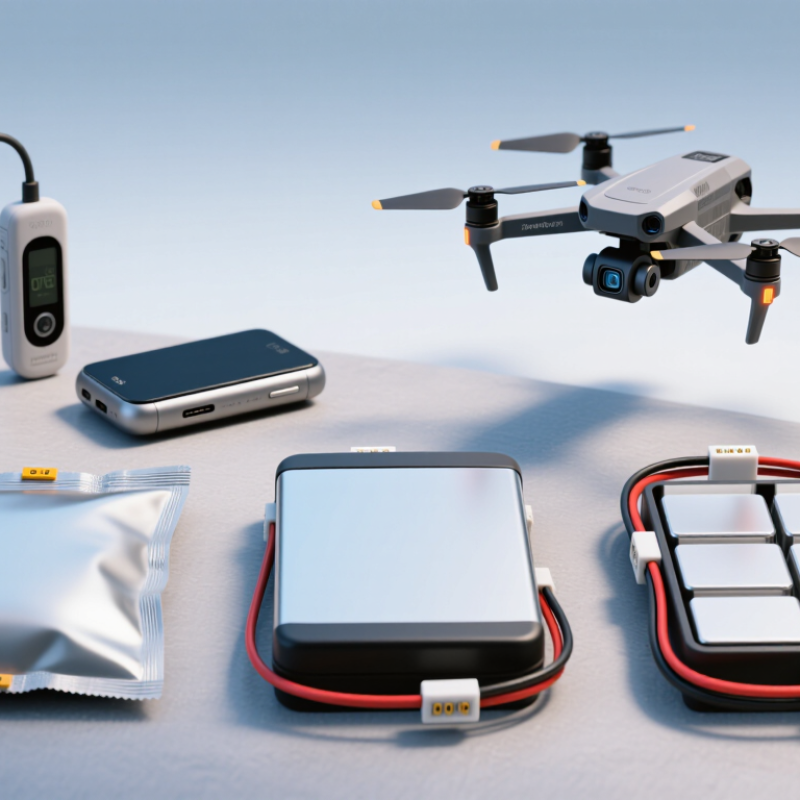
What a 3.7 V LiPo Battery Is and How It Works
A 3.7 V LiPo battery is a rechargeable lithium-polymer cell with a nominal voltage of 3.7 volts. Its voltage is not constant. A fully charged cell usually reaches 4.2 V, while the safe lower limit depends on its design and protection system. Treating 3.7 V as a fixed output is a common mistake.
Inside the pouch, lithium ions move between the cathode and anode through a separator during charging and use. Electrons travel through the external circuit, creating power for equipment. The polymer electrolyte supports a thin, flexible structure, which helps manufacturers build compact battery packs. However, the soft pouch can swell after damage, overcharging, deep discharge, or long-term heat exposure. It needs careful handling.
Global buyers may select single-cell 1S packs, series-connected multi-cell packs, high-rate versions, or higher-capacity energy cells. A high-discharge battery can deliver strong current, but it may sacrifice runtime. Capacity alone does not prove quality. Check the datasheet, cycle-life test method, connector, dimensions, protection features, and production traceability. Verify transport documentation and required safety testing for the destination market, including UN 38.3 where applicable. In practice, labels can be incomplete or overly optimistic. That assumption deserves a second look. Charge with a compatible lithium battery charger, inspect for swelling, and never use a punctured pouch.
Key 3.7 V LiPo Battery Types and Their Structural Differences
2026 Best 3.7 V LiPo Battery Types for Global Buyers
Key 3.7 V LiPo Battery Types and Their Structural Differences
A 3.7 V LiPo battery normally uses a flexible pouch cell. Its aluminum-laminated case is light and space-efficient. The internal electrodes may be stacked or wound. Stacked cells often provide a flatter shape and more consistent thickness. Wound cells can support efficient production and practical energy density.
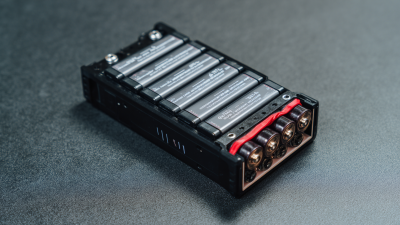
Single-cell designs deliver about 3.7 V nominally. Multi-cell packs connect cells in series, raising voltage while increasing balance requirements. Parallel connections increase capacity and current capability. A protection circuit can monitor overcharge, over-discharge, and abnormal current. It does not correct poor cell matching.
Structure affects real-world performance. A pouch cell may fit a slim handheld device, but it needs firm mechanical support. Repeated swelling can press against its enclosure. Hard-cased LiPo formats offer better impact resistance, although they usually sacrifice some design flexibility. Tabs, separators, insulation layers, and connector placement also influence safety and assembly quality.
In technical purchasing, I compare thickness at several points, not just the listed dimensions. I also check discharge ratings under the intended temperature and load. A high capacity label can be misleading when testing conditions remain unclear. That deserves a second look. Samples should undergo charge, discharge, temperature, and cycle checks before volume orders. Small differences in welding quality or sealing can create large reliability problems.
2026 Best 3.7 V LiPo Battery Types for Global Buyers
Key 3.7 V LiPo battery types and their structural differences. Each LiPo cell has a nominal voltage of approximately 3.7 V and a typical full-charge voltage of 4.2 V.
Structural comparison
| LiPo configuration |
Cell structure |
Typical electrical arrangement |
Main structural characteristic |
| Single-cell pouch |
One stacked or wound electrode assembly in an aluminum-laminate pouch |
1S, about 3.7 V nominal |
Lightweight and compact; requires protection circuitry for safe charging and discharge |
| 2S series pouch pack |
Two matched pouch cells connected in series |
2S, about 7.4 V nominal |
Higher voltage with cell balancing and additional interconnects |
| 3S series pouch pack |
Three pouch cells connected in series |
3S, about 11.1 V nominal |
Suitable for higher-voltage systems; requires balancing across three cells |
| 4S series pouch pack |
Four pouch cells connected in series |
4S, about 14.8 V nominal |
Highest voltage in this comparison; needs a suitable multi-cell charger and battery-management system |
Nominal pack voltage is calculated from approximately 3.7 V per lithium-polymer cell. Actual voltage changes with state of charge, current demand, temperature, and load conditions.
How to Compare Capacity, Discharge Rate, Size, and Weight
For global buyers, the best 3.7 V LiPo battery type depends on the device’s load profile. Soft-pouch cells usually provide excellent packaging flexibility and low weight. High-energy cells suit cameras, sensors, and backup equipment. High-discharge cells fit drones, robotics, and power tools. The 2024 BloombergNEF Battery Price Survey reported an average lithium-ion pack price of $115 per kWh. LiPo packs are not identical, but this figure shows why energy efficiency matters during procurement.
Compare capacity in ampere-hours, not marketing claims alone. A 2,200 mAh cell at 3.7 V stores about 8.14 Wh. A 25C rating suggests 55 A theoretically, but heat, wiring, and safety margins reduce practical output. Measure continuous discharge, not only burst discharge. The IEA’s Global EV Outlook 2024 reported more than 750 GWh of lithium-ion battery demand in 2023, highlighting the need for consistent cell testing and traceable specifications.
Size and weight can change real performance. A 70-gram pack may improve flight time, yet a thicker pouch can resist swelling better. Check dimensions under protection, connector position, insulation, and temperature limits. I have seen buyers compare identical capacity labels while ignoring a 12-gram weight difference. That mistake matters in compact equipment. Capacity also falls in cold conditions. Laboratory results are not field results. Suppliers should provide tested discharge curves, cycle data, transport documentation, and independent safety reports.
Choosing the Right 3.7 V LiPo Battery for Global Applications
Choosing the right 3.7 V LiPo battery starts with the application, not the advertised capacity. A 3.7 V rating usually describes nominal voltage, while a fully charged cell reaches about 4.2 V. That difference matters for circuit design, charging, and safety. Small pouch cells suit wearable devices, sensors, and compact instruments. Larger cells provide more runtime but need stronger housings and better thermal control.
Check capacity, discharge rate, dimensions, connector type, and protection features together. A high-capacity cell may perform poorly if the device needs sudden current peaks. For motorized equipment, verify continuous and peak discharge ratings separately. For medical, industrial, or outdoor products, consider temperature range, cycle life, and insulation quality. I have seen sourcing teams measure only the pouch size, then discover that the connector adds several millimeters.
Global buyers should request test reports, production dates, safety data, and traceable lot information. Confirm whether the battery includes a protection circuit, because some applications require external protection. Packaging must prevent short circuits and physical damage during transport. Local shipping rules can differ, so review current carrier and destination requirements before ordering. Do not rely on a capacity label alone. Independent sampling tests are useful, although they increase procurement time and cost. That trade-off is often worth accepting. A battery that fits perfectly on paper may still swell, heat up, or lose capacity under real operating conditions. Evaluate samples at expected load, temperature, and charging frequency before approving volume production.

 +86-13928815851
 CONTACT NUMBER
 CONTACT NUMBER