Best 2s Lipo Battery Guide for Optimal Performance and Safety
When it comes to powering your devices, the 2s Lipo battery stands out for its performance and efficiency. This type of battery is popular among hobbyists and professionals alike. Many users rely on its capability to deliver high voltage and ample capacity, making it suitable for various applications, from drones to RC cars. But how do you choose the best one?
Understanding your needs is crucial. Not all 2s Lipo batteries are created equal. Some may offer faster discharge rates, while others excel in longevity. This diversity can leave potential buyers overwhelmed. Users often face challenges in balancing performance with safety. The risks of overcharging and overheating cannot be ignored.
In this guide, we aim to provide clear insights and practical tips for selecting a 2s Lipo battery that meets your expectations. Emphasizing quality and reliable brands can help prevent mishaps. Our goal is to ensure you enjoy an optimal balance of performance and safety, enhancing your overall experience. Keep reading to discover essential factors in your decision-making process.
Understanding 2S LiPo Batteries: Basics and Terminology
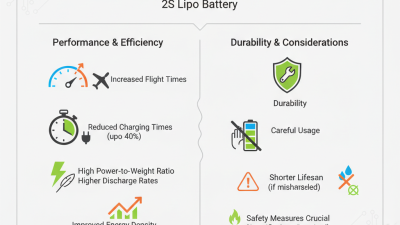
Understanding 2S LiPo batteries is essential for both new and experienced users. "2S" denotes two cells connected in series, effectively doubling the voltage to 7.4V. This configuration is common in many RC applications. When choosing a 2S battery, it’s important to understand terms like C-rate, capacity, and discharge rates. A battery rated at 25C can provide 25 times the capacity in amps during a discharge.
Safety is paramount. LiPo batteries can be volatile if mismanaged. A report from the International Journal of Energy Technology has shown that improper charging accounts for 60% of LiPo battery incidents. Users should always utilize an appropriate charger and monitor the battery during operation. Overcharging or deep discharging can lead to fire hazards.
Ultimately, keeping your 2S LiPo battery in optimal condition requires attention. Regularly checking for physical damage, swelling or temperature anomalies is crucial. Engaging with communities or forums can also enhance your knowledge and practices. Reflecting on past experiences can make a substantial difference in ensuring safety and performance.
Choosing the Right 2S LiPo Battery for Your Needs
Choosing the right 2S LiPo battery is crucial for maximizing performance and ensuring safety. Understanding your needs can help you pick a suitable battery. The key specifications to consider include capacity, discharge rate, and weight. For instance, a battery with a higher C-rating provides better performance in high-demand activities. According to a study by the International Journal of Energy Research, batteries with a C-rating between 30C to 60C are popular among hobbyists for racing drones and RC cars.
Capacity is another vital aspect. A typical 2S LiPo battery has capacities ranging from 1000mAh to 5000mAh. The capacity determines how long your device will run. It also influences the overall weight and balance of your setup. In some cases, users may opt for a lighter battery to enhance maneuverability but may sacrifice runtime. It's essential to evaluate the trade-offs based on your specific application.
Safety is paramount when working with LiPo batteries. Reports indicate that improper charging or damaged cells can lead to dangerous situations. The National Fire Protection Association (NFPA) highlights the need for proper storage and handling to prevent fires and accidents. Regularly inspect your battery for swelling or damage. Adhering to safe practices can make a significant difference in your battery experience.
2S LiPo Battery Performance Comparison
This chart compares the discharge rates and capacity of various 2S LiPo batteries suitable for drones and RC vehicles, helping you choose the right battery for optimal performance and safety.
Optimal Charging Practices for 2S LiPo Batteries
When it comes to charging 2S LiPo batteries, attention to detail is crucial for optimal performance and safety. The battery requires a specific charging voltage of 7.4V, which means each cell should be charged to 3.7V. Charging at the correct voltage significantly reduces the risk of failures, overheating, or potential fires. In fact, according to a report from the International Safety Data Centre, mishandling LiPo batteries accounts for over 30% of related incidents.
Tip: Always use a dedicated LiPo charger that balances the cells correctly. This prevents overcharging and prolongs battery life. A quality charger can detect imbalances and protect against hazards.
Charging rate is another vital factor. A rate of 1C is a common recommendation, meaning you can charge a 2000mAh battery at 2A. Charging faster than this can lead to thermal runaway. Many enthusiasts overlook this aspect, resulting in diminished battery lifespan or catastrophic failure.
Tip: Monitor the battery temperature during charging. A safe range is typically below 45°C. If you notice significant heat, disconnect immediately. This might indicate a problem.
Following these guidelines may seem tedious, but they are crucial for safe practices. Even a small oversight, like inadequate monitoring during charging, can lead to serious repercussions. Be proactive; double-check your equipment before starting the charge.
Safety Guidelines for Using 2S LiPo Batteries
When using 2S LiPo batteries, safety should always come first. Ensure your charging environment is adequate. Use a fireproof bag to charge batteries safely. Never leave them unattended during the charging process. Overheating can cause a fire, damaging not only the battery but also your surroundings.
Inspect your batteries regularly for any signs of damage. Look for swelling, punctures, or leaks. If you notice any issues, dispose of the battery properly. Always use a compatible charger designed for LiPo batteries. Mismatched voltages can lead to overcharging, risking battery rupture.
Create a routine for safe storage as well. Keep batteries in a cool, dry place away from flammable materials. A battery management system can help monitor their condition during use. Too often, users overlook simple precautions that could prevent accidents. Take a moment to reflect on your procedures. Small changes can lead to significant improvements in safety.
Best 2s Lipo Battery Guide for Optimal Performance and Safety
| Battery Type |
Capacity (mAh) |
Discharge Rate (C) |
Weight (g) |
Dimensions (mm) |
Recommended Application |
| 2S Lipo |
1000 |
25 |
120 |
70 x 35 x 25 |
RC Cars |
| 2S Lipo |
2200 |
50 |
190 |
100 x 30 x 40 |
Drones |
| 2S Lipo |
1300 |
30 |
150 |
80 x 40 x 30 |
FPV Racing |
| 2S Lipo |
5000 |
20 |
450 |
150 x 50 x 30 |
RC Planes |
Maintenance Tips for Longevity and Performance of LiPo Batteries
Proper maintenance of LiPo batteries can significantly enhance their longevity and performance. According to data from the International Energy Agency, optimal usage practices can extend the life of these batteries by up to 50%. This emphasizes the importance of regular monitoring, storage conditions, and discharge cycles.
One critical aspect is the storage voltage. Keeping LiPo batteries at a storage voltage between 3.7V to 3.85V per cell is essential. Storing them fully charged or overly discharged can cause permanent damage. Users often overlook this detail, leading to reduced capacity over time. Additionally, temperature plays a crucial role. Maintaining the batteries within a temperature range of 20°C to 25°C during storage is ideal. Extreme temperatures can lead to swelling or capacity loss, which are often irreversible.
It’s also vital to avoid over-discharge. Discharging below the recommended voltage can cause cell imbalance, reducing performance. Regularly checking individual cell voltages can help in identifying issues early. The discrepancy in cell voltages can indicate potential problems, which require immediate attention. Keeping track of cycle counts is another valuable practice. Research suggests that LiPo batteries typically manage around 300 to 500 charge cycles before significant capacity loss occurs. Users should note this to gauge when a replacement might be necessary.

 +86-13928815851
 CONTACT NUMBER
 CONTACT NUMBER