Why Choose a 3.7 V LiPo Battery for Your Product?
Choosing the right battery can shape a product’s size, runtime, safety, and customer experience. For many portable devices, a 3.7 V Lipo Battery offers a practical balance between energy density and compact design. Its nominal voltage suits electronics such as sensors, handheld instruments, wireless accessories, and small robotics. It is a common engineering choice.
The 3.7 V rating describes the battery’s nominal voltage, not its complete operating range. A fully charged single-cell lithium polymer battery typically reaches about 4.2 V. Its voltage then declines during use and requires suitable protection. Designers should confirm the device’s voltage limits, charging method, connector polarity, and expected load. A battery that fits physically may still perform poorly under sudden current demand. Check the discharge rating carefully.
Real-world selection also depends on heat, enclosure space, charging frequency, and available safety controls. A pouch cell may fit neatly inside a slim enclosure, yet sharp edges can damage it. That detail is easy to miss. Reliable products normally use a compatible charger, battery management features, and controlled testing. Testing should include charging, continuous discharge, peak loads, temperature changes, and accidental misuse conditions. Industry guidance and qualified laboratories can strengthen these decisions.
However, a 3.7 V Lipo Battery is not automatically the best option. Capacity markings can vary with test conditions, aging, and discharge rates. Marketing numbers may look impressive. Engineers should compare verified datasheets, samples, and supplier quality records before committing to production. The most honest design review includes uncomfortable questions: Will performance decline after months of use? Can users charge it safely? Does the enclosure protect the cell? These answers help turn a convenient battery choice into a dependable product.
What Is a 3.7 V LiPo Battery?
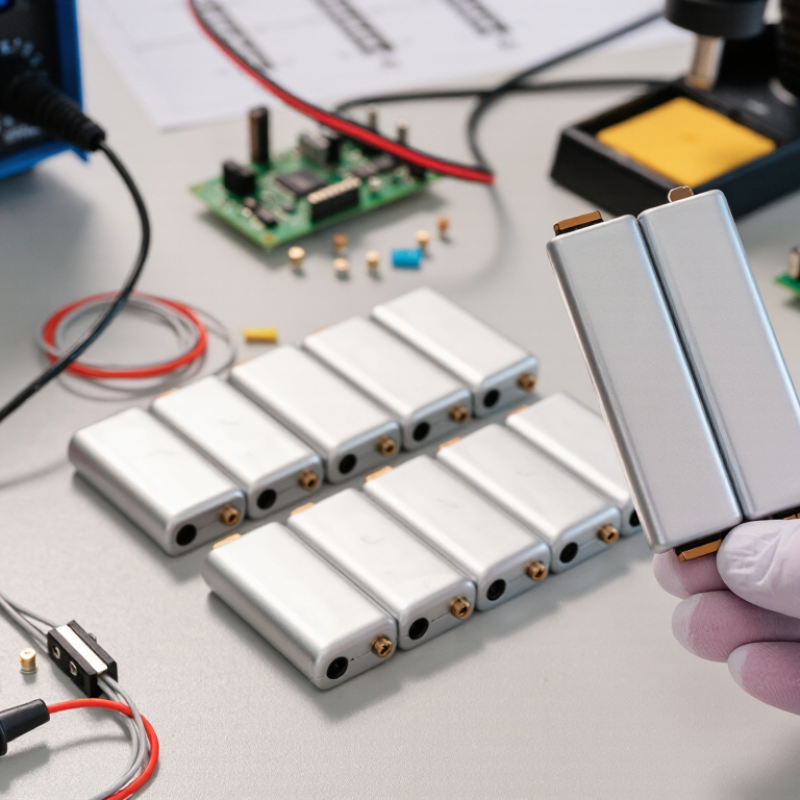
A 3.7 V LiPo battery is a rechargeable lithium-polymer cell with a nominal voltage of 3.7 volts. “Nominal” describes its average operating level, not its exact voltage. A fully charged cell usually reaches about 4.2 volts, while its voltage gradually falls during use. The safe lower limit depends on the cell design and protection system.
Its flat, pouch-shaped structure gives product designers more freedom than traditional rigid cells. A small sensor, handheld device, or compact controller can use a battery shaped around limited internal space. Capacity is measured in milliamp-hours, or mAh. For example, a 1,000 mAh cell may theoretically deliver 1 amp for one hour, but real performance changes with temperature, load, age, and wiring losses.
In practical testing, high current can make the battery voltage drop faster than expected. That detail is easy to miss. A suitable charging circuit must control voltage and current carefully. Protection against overcharging, excessive discharge, short circuits, and overheating is also important. The battery should remain firmly supported because punctures, swelling, or crushed edges can create serious hazards. I have found that capacity labels are useful estimates, not promises. Testing the complete product under its heaviest normal load often reveals more than the specification sheet. Surface temperature, charging time, and voltage stability deserve attention too.
Why Choose a 3.7 V LiPo Battery for Your Product?
Typical voltage points of a single-cell 3.7 V lithium-polymer battery
A 3.7 V LiPo battery has a nominal voltage of 3.7 V, reaches approximately 4.2 V when fully charged, and is commonly stored near 3.8 V. Its compact, lightweight pouch design and rechargeable lithium-ion chemistry make it suitable for portable electronics, wearables, robotics, and other space-constrained products. Actual voltage limits depend on the battery specification and protection system.
How 3.7 V LiPo Batteries Store and Deliver Energy
Why Choose a 3.7 V LiPo Battery for Your Product?
A 3.7 V LiPo battery stores energy through lithium ions moving between two electrodes. During charging, ions travel toward the negative electrode through the electrolyte. Electrons move through the external circuit instead. This separation creates stored chemical energy. The separator keeps the electrodes apart while allowing ions to pass. It is a thin layer, but it matters greatly.
A 3.7 V rating is nominal, not constant. A fully charged cell usually reaches about 4.2 V, while its voltage falls during use. That changing voltage affects motors, sensors, and wireless circuits. Engineers often measure capacity in milliamp-hours, then estimate energy with voltage and capacity together. In practice, temperature, discharge rate, cell age, and wiring losses reduce the usable result. The label is only a starting point.
Power delivery depends on internal resistance and the required current. A battery protection circuit can help manage overcharge, over-discharge, and excessive current. Product testing should check real load patterns, not only laboratory capacity. A small device may run for days, then fail quickly during radio transmission. That surprise is common. It shows why battery selection needs measured data. A 3.7 V LiPo cell offers useful energy density and a flexible shape, but it is not perfect. Designers should leave safety margins and review the charging system carefully.
Key Benefits for Portable Product Design
Why Choose a 3.7 V LiPo Battery for Your Product?
A 3.7 V LiPo battery offers a practical balance between voltage, weight, and usable capacity. Its flat pouch shape fits slim devices, handheld tools, wearables, and portable sensors. One cell reaches about 4.2 V when fully charged, then gradually declines during use. That behavior supports efficient power management, but it needs careful protection circuitry. The International Energy Agency reported that lithium-ion battery prices fell by 14% in 2023. This trend reflects wider manufacturing improvements, although portable products still require project-specific testing.
For product designers, LiPo cells can deliver high energy density without a rigid metal case. A 1,000 mAh cell stores roughly 3.7 Wh under nominal conditions. Real output will be lower after conversion losses, temperature changes, and aging. That detail is easy to overlook. I have seen compact prototypes fail because designers measured capacity at room temperature only. Cycle life, charging time, swelling risk, and connector reliability deserve equal attention. IEC 62133-2 provides widely recognized safety requirements for rechargeable lithium cells and batteries. It does not replace validation inside the finished product.
Tips: Match the battery’s continuous current rating with peak loads, not average consumption. Leave physical space for expansion. Test charging below 0°C only when the cell and control system support it. Record capacity after repeated cycles, because early results can look unusually optimistic. A smaller battery may improve comfort, but it can also increase charging frequency. That trade-off should be measured with real users.
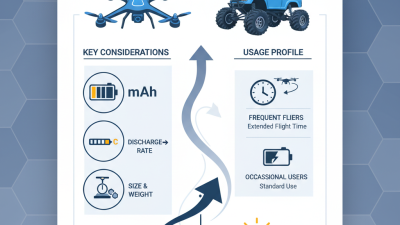
How to Match Battery Capacity, Size, and Discharge Needs
A 3.7 V LiPo cell is rated at nominal voltage, not full-charge voltage. Its charging voltage commonly reaches 4.2 V. Match the battery to the product’s regulated input range. For capacity, multiply voltage by ampere-hours. A 2,000 mAh cell provides about 7.4 Wh nominally. The International Energy Agency reported an average lithium-ion pack price of 139 USD per kWh in 2023, but lower cost does not guarantee suitable performance. Cell dimensions, protection space, and operating temperature still control the design.
Estimate runtime from actual load, not marketing capacity. A device drawing 400 mA at 3.7 V uses roughly 1.48 W. A 7.4 Wh battery may theoretically run it for five hours. Real operation will be shorter. Conversion losses, aging, cold conditions, and high discharge rates reduce usable energy. IEC 61960-3 defines controlled methods for measuring rated capacity, including specified temperature and discharge conditions. Use comparable test data when reviewing supplier specifications.
Discharge capability needs equal attention. A 2 Ah battery rated for 5C can theoretically deliver 10 A, but continuous and pulse ratings may differ. Motor startup can expose this mistake quickly. My early prototypes often passed bench tests, then reset during peak loads. That was a layout and resistance problem, not simply low capacity. Measure voltage sag with the final wiring, connector, and protection circuit installed. Leave room for swelling and thermal separation. A perfect fit on paper can still be a poor product fit.
Safety, Charging, and Integration Considerations
Why Choose a 3.7 V LiPo Battery for Your Product?
Safety, Charging, and Integration Considerations
A 3.7 V LiPo battery offers a useful balance between energy density, weight, and compact design. Its nominal voltage is 3.7 V, but a fully charged cell reaches about 4.2 V. Your circuit must tolerate this range. Never design around the nominal value alone.
Charging requires a dedicated constant-current and constant-voltage profile. The charger should stop at the correct voltage and limit current for the cell’s capacity. Add overcharge, over-discharge, short-circuit, and overcurrent protection. A temperature sensor can interrupt charging when the cell becomes unusually warm. Keep it cool. Heat is an early warning.
Mechanical integration needs equal attention. Leave room for the pouch, protective circuit, wires, and slight expansion. Do not press the cell against sharp edges or bend it near the connector. In my experience, prototypes often pass electrical tests but fail after repeated drops or cable movement. That gap deserves review. A secure enclosure, strain relief, and controlled charging path improve reliability. Designers should also verify capacity at the actual load, not only the supplier’s laboratory rating. High current, cold conditions, and aging can reduce runtime. Small details matter.

 +86-13928815851
 CONTACT NUMBER
 CONTACT NUMBER