Best 100mAh LiPo Battery for Your Device?
Choosing the best 100mAh LiPo battery for your device is not just a matter of matching capacity. A tiny battery can power a compact sensor, wearable, or miniature electronics project, yet the wrong voltage or connector may make it unusable. Fit matters. So does runtime.
A search for a 100mamph Lipo Battery should lead to careful checks, not assumptions. Confirm the device’s required voltage, battery dimensions, connector type, and discharge needs against its documentation. Capacity indicates stored energy, but actual runtime also depends on the device’s power draw, operating conditions, and battery age. A 100mAh cell may suit one design and fall short in another. That part is easy to overlook.
This guide explains how to compare suitable options using practical details, including charging requirements, protection features, and manufacturer specifications. Look for clear product data and a reputable supplier; vague listings make meaningful comparisons difficult. Never assume that two batteries are interchangeable because their capacity appears identical. Use a charger designed for the battery chemistry, and follow the device and battery makers’ instructions. If specifications conflict, pause and verify them before buying or connecting a cell. Small component. Real consequences. The right choice is the one that fits the device’s documented electrical and physical requirements, not simply the one with the most appealing listing.
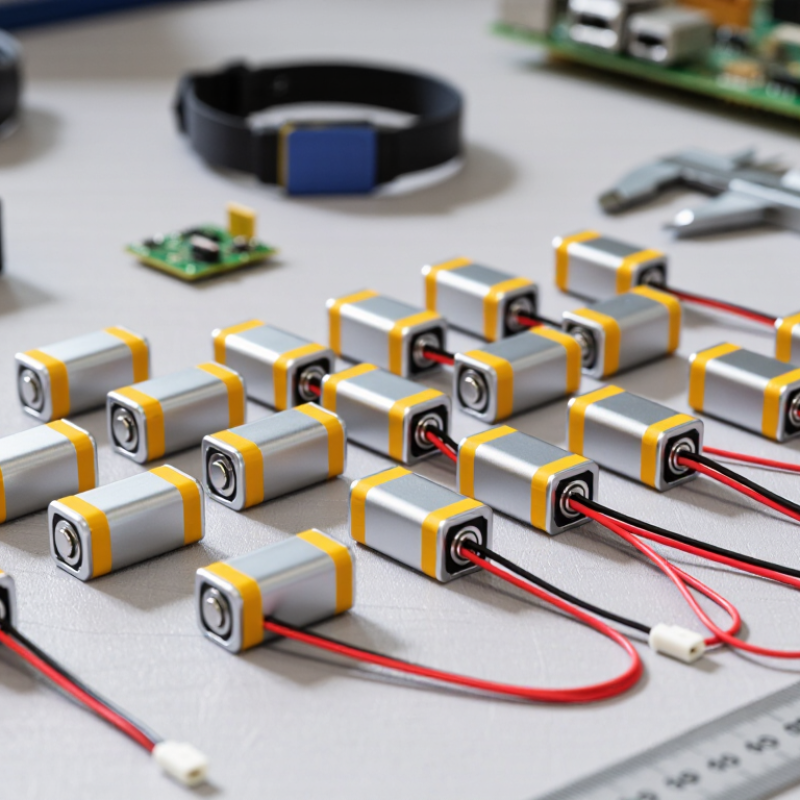
Understanding 100mAh LiPo Battery Specifications
A 100mAh rating describes stored charge, not the battery’s voltage or maximum output. Many small LiPo cells have a nominal voltage near 3.7V, giving about 0.37Wh of nominal energy. Actual voltage changes during discharge. Small, but not simple. Check the cell’s specified charge voltage, discharge limit, dimensions, connector, and protection circuit before choosing it. A matching capacity alone does not guarantee compatibility.
Current draw gives a useful first estimate. At 1C, a 100mAh cell supplies 100mA; at 0.5C, it supplies 50mA. A device averaging 50mA might run for roughly two hours in ideal conditions, but conversion losses, temperature, and battery aging shorten that time. That estimate is tidy, maybe too tidy. IEC 61960-3:2017 describes controlled capacity and discharge testing for portable lithium cells, underscoring why test conditions matter when comparing ratings. For a real device, measure its peak and average current, then compare them with the cell’s datasheet limits. Leave a safety margin, and do not assume a tiny battery can handle a brief motor or radio-current spike. Real life differs.
Best 100mAh LiPo Battery for Your Device? — Understanding 100mAh LiPo Battery Specifications
A 100mAh battery has a rated capacity of 0.1Ah. The chart shows ideal runtime estimates calculated by dividing capacity by current draw; actual runtime may be shorter due to battery condition, load, temperature, and the device’s voltage cutoff. A typical single-cell LiPo has a nominal voltage of 3.7V and a fully charged voltage of 4.2V, giving approximately 0.37Wh of nominal energy.
Checking Your Device’s Voltage and Connector Requirements
Before choosing a 100mAh LiPo battery, check the device’s voltage—not just its capacity. A typical single-cell LiPo is rated at 3.7V nominal and reaches about 4.2V when fully charged, as described in Battery University’s technical guide, BU-303. These figures are common, not universal. A 100mAh label tells you how much charge the cell stores; it does not confirm voltage compatibility.
Check the device manual or measure the original battery’s label before ordering. The required voltage must match the device’s input range, including the fully charged voltage. A connector can look right and still have reversed polarity, a different pitch, or incompatible wiring. Check the pin order and dimensions against the device documentation. Small details matter.
IEC 62133-2:2017 sets safety requirements for portable sealed lithium cells and batteries, but it does not replace the device maker’s electrical specifications. Never rely on wire colors alone; they are not a dependable polarity standard.
A quick visual check can be misleading, and I would treat that uncertainty seriously. If the voltage range or connector pinout is unclear, pause and confirm it before connecting the battery.
Choosing a Compatible 100mAh LiPo Battery
A 100mAh LiPo may look like a simple replacement, but capacity alone does not establish compatibility. A common single-cell LiPo is rated 3.7V nominal and 4.2V fully charged. Verify the device’s voltage limits and the battery specification before connecting it. Measure the battery pocket, including space for wires and the connector. A few millimeters can matter. Check connector shape and polarity, too; matching plugs do not always mean matching wire order. Measure twice.
Consider current requirements as well as size. A battery must supply the device’s peak current without exceeding its rated discharge limit. Check whether the device provides charging and low-voltage cutoff, or whether those protections are included in the battery assembly. Use only a charger designed for the cell’s chemistry and voltage, and follow its stated charge-current limits. I would not rely on a product photo alone; connector details are easy to misread, and listings can omit useful measurements. If the specifications are unclear, pause and confirm them with the device documentation or a qualified technician. A 100mAh cell may also provide less runtime than expected when a device draws heavily or frequently transmits. That trade-off is worth checking before purchase.
Handling, Charging, and Maintaining the Battery Safely
A 100mAh LiPo battery is small, but it still needs careful handling. Check its label before connecting it. Confirm the voltage, polarity, and connector match your device. A plug that seems to fit may still be wired differently. Keep the battery away from sharp edges, loose screws, and metal tools. Small punctures can cause serious damage.
Use a charger designed for the battery’s chemistry and cell count. Follow the battery maker’s stated charge limits; capacity alone does not tell you the correct charging current. Charge on a stable, nonflammable surface, and stay nearby. Never charge a swollen, torn, unusually warm, or damaged pack. Stop if you notice a sweet or solvent-like odor. Do not force a connection or leave charging unattended overnight. That shortcut is tempting, but not worth the risk.
For routine use, avoid crushing the pouch or pulling on its wires. Let a warm battery cool before charging, and disconnect it when the device is not in use. Store it in a dry, temperate place, following its manufacturer’s storage guidance. Check it periodically for swelling or leakage. A quick visual check is easy to skip. It can also catch trouble early. If the pack looks damaged, do not try to repair or reuse it; ask a qualified battery service provider about safe handling.
Best 100mAh LiPo Battery for Your Device? - Handling, Charging, and Maintaining the Battery Safely
| Topic |
Practical Information |
Safe-Use Guidance |
| Capacity and energy |
A 100mAh cell has a nominal capacity of 0.1Ah. At a typical nominal voltage of 3.7V, its nominal energy is about 0.37Wh. |
Actual runtime depends on device power use, battery condition, temperature, and the usable voltage range. Treat calculations as estimates. |
| Device compatibility |
Check the device’s required voltage, connector polarity, battery dimensions, and peak current. A 100mAh rating alone does not establish compatibility. |
Use a cell with specifications approved for the device. Never force a connector or reverse the battery polarity. |
| Charging current |
For a 100mAh cell, 0.5C equals 50mA and 1C equals 100mA. The permitted rate depends on the cell’s specifications. |
Follow the cell and device instructions; do not assume 1C is safe for every battery. Use a charger designed for the battery chemistry and cell count. |
| Charge voltage |
Many standard single-cell LiPo batteries use a 4.20V maximum charge voltage. Some cell types have a different limit. |
Use the exact charge-voltage setting specified for the cell. Do not charge a standard 4.20V cell with a higher-voltage setting. |
| Charging conditions |
Charge on a stable, non-combustible surface in a dry, well-ventilated area and within the temperature limits stated by the manufacturer. |
Do not charge unattended, near heat, or on soft or flammable materials. Stop charging if the battery becomes unusually hot, swollen, damaged, or emits an odor. |
| Discharge limits |
The safe minimum voltage and allowable discharge current vary by cell. A protection circuit or device cutoff may help prevent excessive discharge. |
Follow the specified cutoff voltage and current limits. Avoid continuing to use a battery after the device indicates low battery or shuts down. |
| Handling and installation |
The pouch cell can be damaged by punctures, crushing, bending, or pressure on its edges and leads. |
Keep metal objects away from the terminals. Do not puncture, disassemble, solder directly to, or expose the cell to fire. |
| Storage and maintenance |
For longer storage, many LiPo manufacturers recommend a partial state of charge, often around 3.7–3.85V per cell; the specified storage voltage takes priority. |
Store in a cool, dry place away from direct sunlight and conductive objects. Check periodically and avoid leaving the battery fully charged or deeply discharged for extended periods. |
| Damage and disposal |
Swelling, leakage, punctures, corrosion, or unusual heat can indicate a damaged battery. |
Stop using and charging a damaged cell. Follow local battery-recycling or hazardous-waste guidance; do not put LiPo batteries in household trash. |
Specifications and safe operating limits vary by cell. Always follow the battery and device manufacturer’s instructions.

 +86-13928815851
 CONTACT NUMBER
 CONTACT NUMBER