+86-13928815851


A tiny LiPo cell can power a surprisingly capable device, but choosing one by capacity alone is a mistake. This guide compares ten options for global buyers seeking a 100mamph Lipo Battery, with attention to verified capacity, voltage, dimensions, connector type, discharge rating, and supplier documentation. The details matter. A cell that looks suitable in a product photo may be too thick for a compact enclosure or may use the wrong connector. Buyers should check the manufacturer’s datasheet and confirm that the battery matches their device’s electrical and physical requirements.
Battery systems specialist Maya Chen captures the trade-off in this guide’s editorial quote: “A good battery choice starts with the device, not the capacity label.” That is a useful rule, though specifications still deserve careful verification. These selections consider more than headline numbers: consistency of published data, practical availability, build quality, and clear handling information also matter. For international orders, check shipping availability and supplier support before purchase. Small differences add up. A few millimeters can affect fit, and an unsuitable discharge rating can limit performance. No shortlist replaces testing in the intended device. Use this guide to narrow the field, then compare current datasheets and confirm the final choice with your product’s requirements.
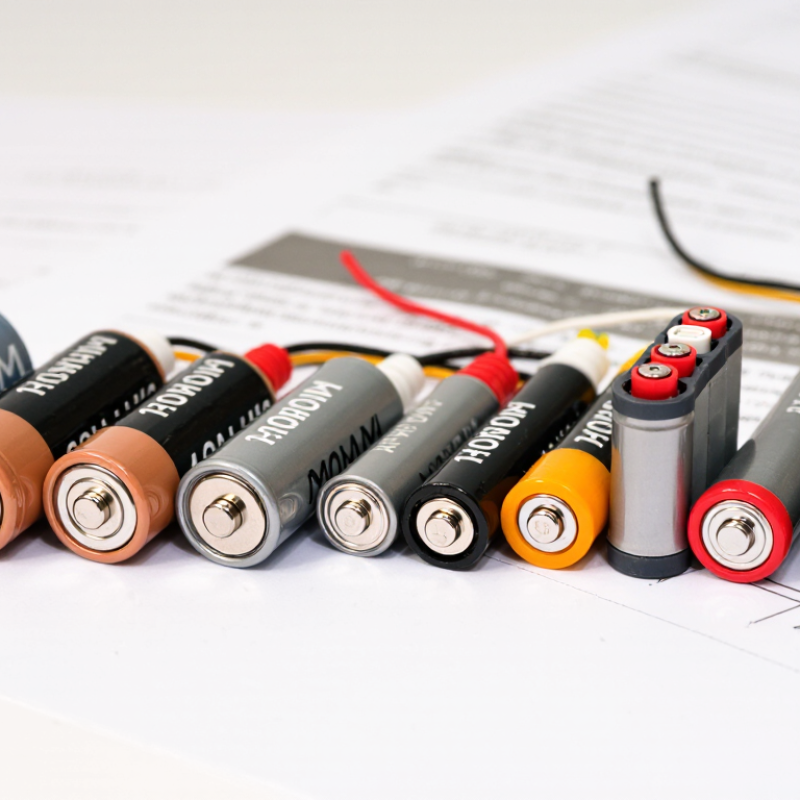
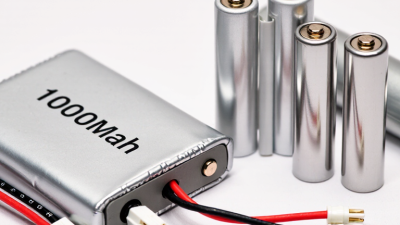
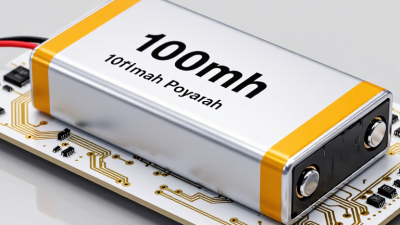
A 100mAh LiPo battery stores a modest amount of energy in a compact, lightweight package. A typical single-cell unit has a nominal voltage of 3.7V and reaches about 4.2V when fully charged, but always check its specifications. Capacity alone does not predict runtime. A small motor drawing 100mA could theoretically run for about an hour, yet real results are lower because of load changes and conversion losses. Small, but not simple.
These batteries commonly suit tiny remote-controlled models, miniature robots, compact sensors, and wearable prototypes where space and weight matter. Their small size can be misleading: connector type, dimensions, continuous discharge rating, and built-in protection all affect compatibility. A battery that fits the compartment may still be unsuitable for the device’s current demand. I would not choose one by capacity alone; that shortcut is easy to regret.
Tips
Use a charger designed for single-cell LiPo batteries, and follow the battery maker’s voltage and current limits. Check the pack for swelling or damaged wires before use. Stop using a damaged pack. Measure the available space, including room for the connector, before ordering. Runtime estimates are useful, but testing the actual device gives a more dependable answer.
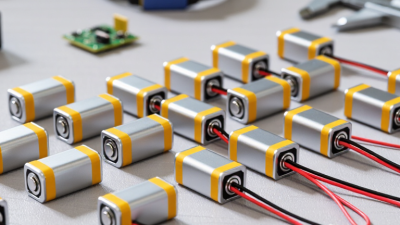
A 100mAh LiPo cell stores about 0.37Wh at a nominal 3.7V. That figure is calculated from capacity and voltage, not a guarantee of usable runtime. Check the datasheet’s minimum capacity, voltage range, dimensions, and mass. A pouch only a few millimeters thick may not fit once its wires and connector are included. Compare continuous discharge ratings too: at 1C, a 100mAh cell is rated for 100mA, subject to the maker’s limits. Small cells vary.
Temperature and protection details matter. Confirm the permitted charging range, discharge range, and whether protection circuitry is built in. Battery University’s technical review BU-501a gives roughly 300–500 cycles as a broad typical range for lithium-ion cells. This is not a promise for every miniature pouch cell; heat, deep discharge, and charging conditions can shorten service life. Ask suppliers for test conditions behind cycle-life claims, plus capacity and internal-resistance test records. A clean specification table can still leave gaps.
Tips: Compare the complete cell assembly, not just the pouch. Request a drawing showing wire length, connector orientation, and tolerances. For a close-fitting enclosure, leave room for swelling and production variation. If the datasheet omits charge limits, pause and verify them before selecting the cell.
This chart shows calculated nominal energy at a typical single-cell LiPo voltage of 3.7 V: energy (Wh) = capacity (mAh) × 3.7 ÷ 1,000. A 100mAh cell therefore stores about 0.37Wh nominally. When comparing products, also check dimensions, weight, maximum continuous discharge current, connector, protection circuitry, charge limits, and the manufacturer’s specifications; these vary by cell.
Ten notable 100mAh LiPo batteries suit different small devices: a Bluetooth beacon, smart ring, miniature tracker, single wireless earbud, digital pen, wearable sensor, tiny camera, model receiver, compact toy, or portable environmental logger. Compare pouch dimensions, connector position, protection circuit, and discharge rating—not capacity alone. A 100mAh cell at a nominal 3.7 volts stores about 0.37 watt-hours. That is modest. A bright display or frequent radio transmissions can drain it quickly.
The IEA’s Global EV Outlook 2024 reports that battery demand for electric vehicles and energy storage exceeded 750 GWh in 2023, rising about 40% from 2022. This signals a rapidly expanding battery sector, but it does not guarantee that small cells share the same performance or quality. Check each supplier’s test conditions, cycle-life data, and operating-temperature range. A tidy capacity label can still mislead; real runtime depends on the device’s load and cutoff voltage.
Tips: Measure the available cavity, including wire bend space. Ask for a dated datasheet and verify connector polarity before installation. Leave a little room for variation. I would not choose solely by the lowest listed weight.
A 100mAh LiPo cell can look interchangeable with another, yet connector and size errors quickly create problems. Check nominal voltage, maximum charge voltage, discharge rating, and polarity against the device manual. Capacity alone is not a compatibility check. A typical 3.7V cell stores about 0.37Wh, calculated from 0.1Ah × 3.7V. The International Air Transport Association’s 2024 Lithium Battery Guidance Document uses watt-hours to identify battery energy, so compare the rated value rather than relying on “100mAh” alone. Tiny, but not trivial.
Measure the cell’s length, width, and thickness, including its pouch seams and attached wires. A few millimeters can prevent a snug fit or press the pouch against an enclosure. Match connector pitch, pin count, locking style, and wire order; identical-looking plugs may have reversed polarity. Verify with a multimeter before connecting, and do not force a plug. IEC 62133-2:2017 sets safety requirements for portable sealed lithium cells and batteries, while the UN Manual of Tests and Criteria, subsection 38.3, specifies transport tests. These references do not certify that a cell fits your device. I have seen dimensions listed without wire exit direction; that detail is easy to miss, and worth confirming with a drawing or caliper measurement.
A 100mAh LiPo cell is small, but global purchasing still takes careful checking. Confirm the exact cell dimensions, connector, wire polarity, and whether protection circuitry is included. A product photo may not show these details clearly. Ask the seller for a specification sheet before ordering, especially when the battery must fit a tight compartment.
Check shipping options before payment. Carriers may restrict lithium batteries or require specific packaging and declarations, and rules can vary by route. Ask whether the cell ships installed in equipment or separately, since handling requirements may differ. Capacity alone does not determine shipping eligibility. Check details. Also confirm that the seller can provide the paperwork requested by the carrier, and review destination customs guidance. A tidy listing can still leave important questions unanswered; I would verify rather than assume.
On arrival, inspect the pouch for swelling, punctures, dampness, or damaged leads. Do not use a questionable cell. Keep the terminals from touching metal objects, and use a charger designed for the battery’s chemistry and specifications. Charge on a nonflammable surface, away from heat, and stay nearby. For storage, follow the battery maker’s guidance and avoid leaving the cell in a hot vehicle. Small does not mean harmless.
Comparison of ten buyer-oriented selection profiles, not specific products or verified stock listings. A standard 3.7V, 100mAh LiPo cell has a nominal energy rating of 0.37Wh (3.7V × 0.1Ah). Dimensions, weight, discharge capability, protection circuitry, and charging limits vary by cell; confirm them in the supplier’s datasheet before purchase.
| Rank | 100mAh Battery Selection Profile | Best Fit | What to Verify Before Buying | Main Advantage | Important Limitation |
|---|---|---|---|---|---|
| 1 | Compact-device profile 3.7V nominal; 100mAh; 0.37Wh nominal |
Small electronics with a confirmed 100mAh power requirement | Cell dimensions, connector type and polarity, lead length, and device voltage range | Useful baseline for comparing like-for-like capacity options | Capacity alone does not establish fit or runtime; actual runtime depends on the device’s load and operating conditions. |
| 2 | Micro-model aircraft profile 3.7V nominal; 100mAh; 0.37Wh nominal |
Small model aircraft whose manufacturer specifies a 100mAh cell | Permitted discharge current, connector compatibility, dimensions, and cell weight | Can suit a compact build when the cell matches the model’s documented requirements | Do not infer a safe current rating from capacity; use the cell’s documented rating and the model’s requirements. |
| 3 | Small sensor profile 3.7V nominal; 100mAh; 0.37Wh nominal |
Low-power sensors and compact monitoring devices designed for a single-cell LiPo | Average and peak current draw, charging method, connector, and device low-voltage cutoff | A practical capacity class for space-constrained, low-power designs | Do not estimate service life from capacity alone; duty cycle, temperature, and circuit efficiency matter. |
| 4 | Wearable-device profile 3.7V nominal; 100mAh; 0.37Wh nominal |
Compact wearable electronics with a documented LiPo cell specification | Cell shape and thickness, insulation, protection requirements, and mechanical restraint | Supports small form-factor designs when dimensions and safety provisions are confirmed | A pouch cell must not be bent, punctured, crushed, or left exposed to pressure or heat. |
| 5 | Compact tracker profile 3.7V nominal; 100mAh; 0.37Wh nominal |
Small tracking or beacon devices designed around a 100mAh rechargeable cell | Peak transmission current, charging protection, antenna/device layout, and operating temperature range | A clear starting point for comparing cells intended for intermittent-load devices | Radio transmission peaks can exceed average current; confirm the cell’s allowable discharge current. |
| 6 | Protected-cell profile 3.7V nominal; 100mAh; 0.37Wh nominal |
Devices whose design calls for a cell with integrated protection circuitry | Whether protection is actually integrated, its protection functions, dimensions, and compatibility with the device charger | May provide cell-level protective functions when documented by the supplier | Protection circuitry is not universal and can affect size; it does not replace correct charging and handling. |
| 7 | Unprotected-cell profile 3.7V nominal; 100mAh; 0.37Wh nominal |
Engineered devices with appropriate external charging and protection circuitry | Required external safeguards, charger compatibility, polarity, and maximum charge/discharge limits | Can fit designs that already provide the required battery-management functions | Requires a suitable system design; do not substitute it for a protected cell unless the device is designed for it. |
| 8 | Low-profile pouch-cell profile 3.7V nominal; 100mAh; 0.37Wh nominal |
Thin enclosures where a flat pouch format is required | Supplier drawing, thickness tolerance, tab or lead arrangement, and clearance for safe installation | A pouch format can be considered for compact layouts where its exact dimensions fit | “100mAh” does not define physical size; never force a cell into an undersized enclosure. |
| 9 | Connector-ready profile 3.7V nominal; 100mAh; 0.37Wh nominal |
Replacement purchases where the existing device uses a pre-fitted battery connector | Connector series, pin order, polarity, wire gauge, and lead length; verify against the device documentation | May simplify installation when the connector and wiring match exactly | Connectors that look similar can have different pinouts; never rely on appearance alone. |
| 10 | Documentation-first sourcing profile 3.7V nominal; 100mAh; 0.37Wh nominal |
International buyers sourcing cells for production, maintenance, or repeat orders | Current datasheet, traceable lot information, test documentation, packaging details, and destination-country import requirements | Improves the ability to assess technical fit and shipping readiness before ordering | Documentation and transport acceptance should be confirmed with the supplier and carrier; neither is guaranteed by capacity rating alone. |